

If you’re searching for the best GPS tracker for dogs 2026, you’ve likely hit the same wall many smart pet owners face: choosing between devices that promise “real-time tracking without monthly fees” and finding out after purchase that real-time means “whenever the device feels like updating,” or that “no subscription” hides activation fees, cellular dropout zones, and vague warranty terms. The market for no-subscription GPS dog trackers is booming as pet owners push back against recurring payments, but the gap between marketing claims and actual field performance is wide, costly, and rarely discussed in detail.
Key Takeaways
- No-subscription GPS trackers use three distinct architectures (prepaid cellular, direct radio with handheld, or Bluetooth-only), each with different range, accuracy, and “real-time” definitions.
- Manufacturers rarely publish 5-year total cost breakdowns, including activation, SIM ownership, hardware replacement pricing, or warranty exclusions.
- Critical specs like update frequency under network fallback modes, waterproof ingress testing, and documented failure rates are missing from most reviews and product pages.
- Why “no monthly fee” GPS trackers are trending
- Types of no-subscription / lifetime-fee solutions (how they actually work)
- Real-world performance: accuracy, update frequency, and battery life
- The 5-year cost-of-ownership checklist (what to confirm before you buy)
- Top technical specs reviewers often skip — what you should test
- Emerging tech to watch (and whether 2026 releases will make older models obsolete)
- Common scenarios where “real-time” claims fail (practical failure modes)
- Durability, lifespan, warranty and replacement realities
- Practical buying recommendations (match device class to user case)
- Research gaps — questions the writer should press manufacturers and reviewers to answer
- Conclusion
- FAQ
Why “no monthly fee” GPS trackers are trending
The pet tech market is riding a subscription fatigue wave. Dog owners who’ve paid $10 to $20 monthly for years are realizing that over five years, they’re spending $600 to $1,200 on top of the device price. The North America dog GPS tracker market was valued at USD 53 million in 2024, with a projected CAGR of 13.2% from 2024 to 2031, driven partly by buyers seeking the best GPS tracker for dogs 2026 that eliminates recurring fees.
Manufacturers have responded with “lifetime connectivity” and “no monthly fee” models, baking cellular or satellite costs into upfront pricing. But here’s the catch: the market data above includes subscription-based giants like Garmin, Tractive, and Whistle Labs, and no one has published segmented adoption rates or revenue specifically for no-subscription models. That opacity makes it hard to verify whether these products are proven at scale or niche experiments.
Marketing language like “lifetime fee” sounds definitive, but what does “lifetime” mean? The device’s lifespan? The cellular network’s lifespan? Your dog’s lifespan? These questions are unanswered in most product listings.
Types of no-subscription / lifetime-fee solutions (how they actually work)
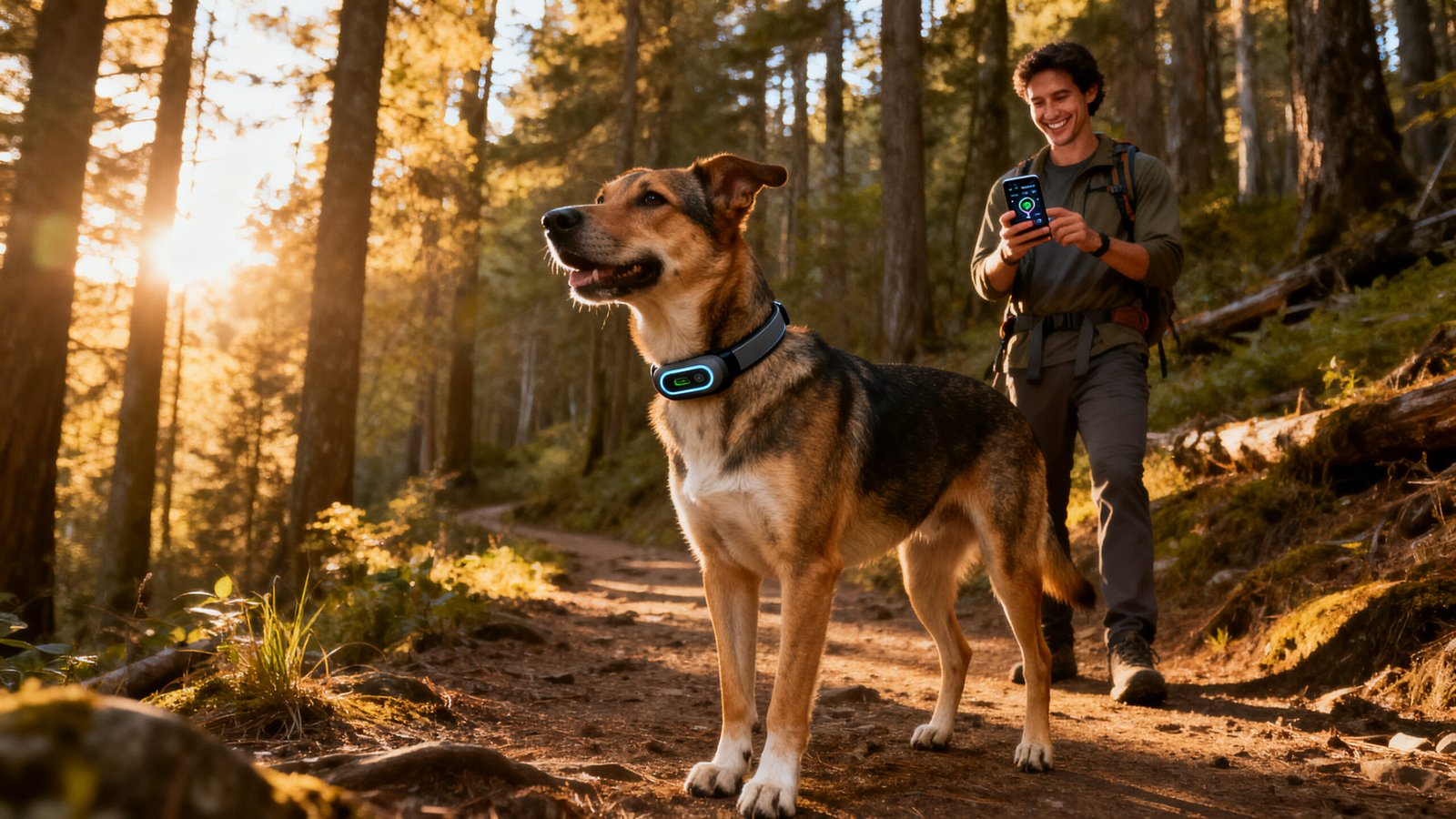
Not all dog GPS tracker no monthly fee systems work the same way. Understanding the architecture behind each type will help you avoid buying a device that doesn’t match your use case.
Lifetime prepaid SIM / integrated cellular
These trackers embed a multi-carrier 4G/LTE SIM with prepaid connectivity included in the purchase price. Lifetime-fee models like Jagger Lewis integrate connectivity costs into the upfront price, promising no recurring bills. They work anywhere cellular networks exist, making them suitable for suburban and urban environments. The trade-off: if the carrier sunsets the network technology (like 3G phase-outs), you may need hardware replacement.
Direct radio with handheld receiver (hunting systems)
Models like the Garmin Alpha TT 25 F use direct radio frequencies paired with GPS and Galileo satellites. These systems do not rely on cell towers, making them ideal for remote hunters and rural users. Garmin Alpha TT 25 F offers 80 hours battery life and 2.5-second updates via radio and satellites but requires a handheld device and does not operate standalone. You must carry a handheld unit to see your dog’s location, and the effective range is typically under 10 miles in open terrain, shrinking dramatically in dense forest or hills.
Simple Bluetooth / GPS-only units
Budget no-fee options range from $55 to $75 upfront. These devices use Bluetooth for short-range proximity alerts and log GPS coordinates without live transmission. They do not provide true real-time tracking unless your phone is within Bluetooth range (typically under 300 feet). These are best for yard monitoring or dogs that stay close, not for runners or escape artists.
The key distinction: only lifetime prepaid SIM models deliver standalone, app-based, real-time tracking without a handheld or subscription. The other two types trade convenience or range for upfront savings.
Real-world performance: accuracy, update frequency, and battery life
The phrase “GPS dog collar real time tracking” appears on nearly every product page, but “real-time” is not standardized. For some manufacturers, it means updates every 2.5 seconds. For others, it means every 30 seconds, or “when the device detects movement,” or “when you open the app.”
According to research findings, no direct 2024 or 2025 user complaints on real-time tracking accuracy, battery runtime failures, or durability are documented for no-monthly-fee GPS dog collars in available search results. That absence of complaints is not proof of reliability; it’s proof that independent, aggregated user data for these models doesn’t exist in the public domain.
What we do know: the Garmin Alpha TT 25 F updates every 2.5 seconds via radio and satellites and delivers 80-hour battery life. But it requires a handheld unit, so it’s not truly standalone. Lifetime prepaid SIM models claim real-time updates but do not publish exact update intervals, fallback behavior when LTE drops, or battery runtime under constant GPS lock.
Battery performance is especially opaque. Most spec sheets list “up to X hours” under ideal conditions, but real-world battery drain depends on update frequency, signal strength, temperature, and whether the tracker is searching for a network. No manufacturer publishes real-use runtime curves or standardized discharge tests.
The 5-year cost-of-ownership checklist (what to confirm before you buy)
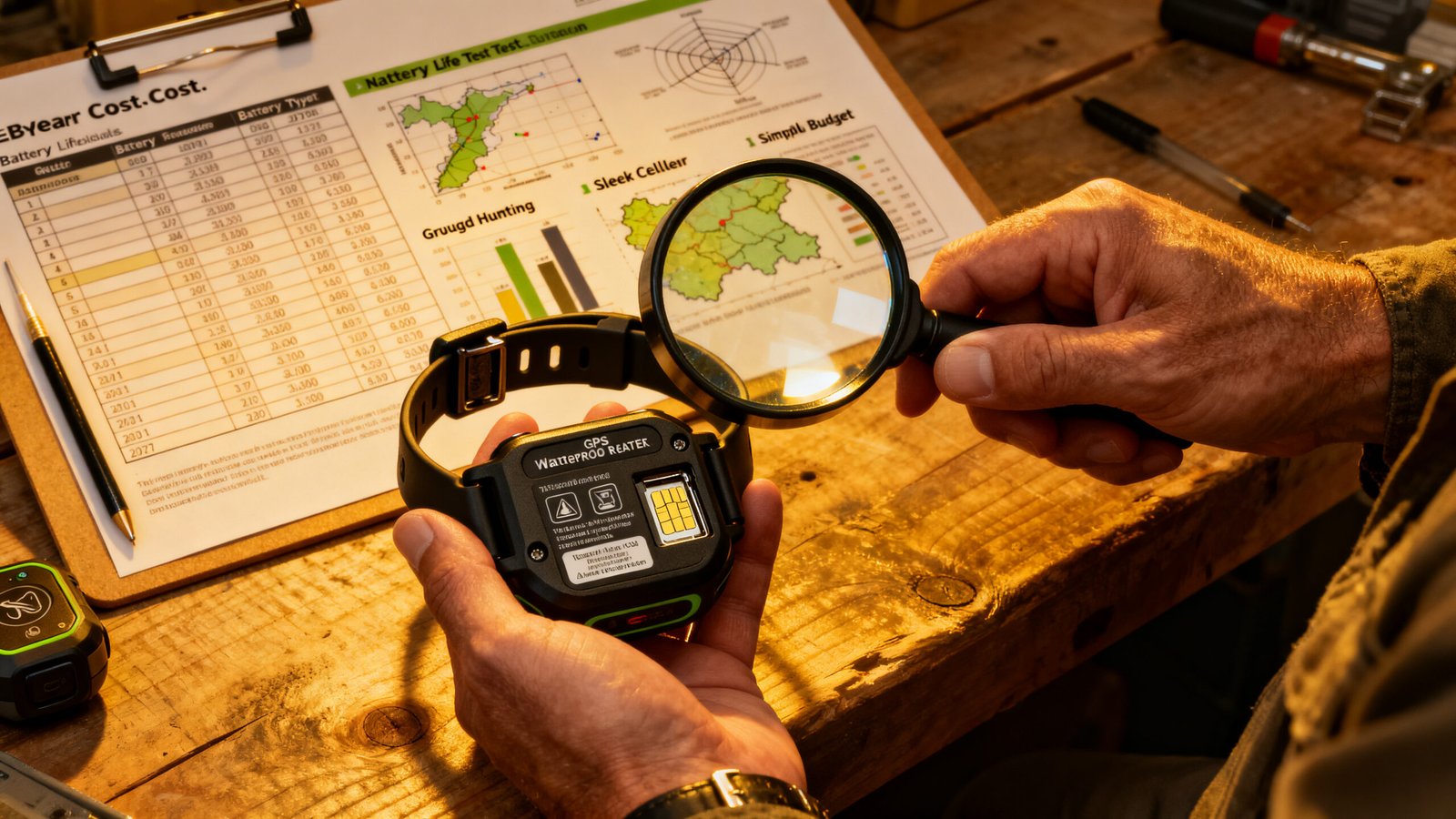
The promise of the best GPS tracker for dogs no subscription is simple: pay once, track forever. The reality is messier. No full itemized 5-year cost breakdown is provided for lifetime-fee models in public product listings or reviews. Here’s what you must verify before purchase:
- Upfront device price: budget $55 to $75. Premium lifetime SIM models range from $150 to $300 or more.
- Activation fee: Some “no subscription” devices charge a one-time activation fee. Confirm this in writing.
- Included network lifetime promise: Does “lifetime” mean the device’s physical lifespan, a fixed number of years, or as long as the carrier network exists? Get this in the warranty terms.
- Transferability: If you sell the device or give it to another dog owner, does the lifetime connectivity transfer, or is it locked to the original buyer?
- SIM/IMEI ownership: Who owns the SIM and IMEI? If the manufacturer does, they control whether the device continues to work.
- Potential hardware replacement: When the battery degrades or the case cracks, what is the out-of-warranty replacement cost? Some manufacturers sell refurbished units at steep discounts; others charge nearly full retail.
- Warranty exclusions: Does the warranty cover water damage, chewing, or battery degradation? Most don’t.
According to research, Jagger Lewis lifetime-fee model has connectivity baked into the purchase price, but the exact price is unspecified. Budget no-fee options range from $55 to $75 upfront, with no activation or service charges noted, but again, no documentation of what happens after year three or five.
Top technical specs reviewers often skip — what you should test
Most reviews focus on price, app usability, and marketing claims. Here are three under-tested metrics that determine whether a device will work for your dog in your environment:
Update frequency under different network modes
Does the tracker update every 2.5 seconds on LTE, but drop to 60 seconds on 3G fallback? What happens if the device loses cellular signal entirely—does it log GPS coordinates locally and upload them when reconnected, or do you lose tracking data forever?
Network technology fallback behavior and range maps
What happens when your tracker moves from LTE to 3G, or from cellular to satellite? Does the device switch automatically? Does it alert you? Reviews highlight network technology (direct radio with GPS/Galileo satellites, no cell towers; or built-in 4G/LTE prepaid SIM) but do not test fallback transitions or publish real-world range maps by terrain type.
Waterproof rating and real-use ingress testing
Waterproof ratings like IPX7 or IP68 are lab certifications under controlled conditions. Real dogs swim in muddy ponds, roll in wet grass, and get caught in thunderstorms. Reviews do not mention waterproof ratings across most sources, and no independent tests simulate saltwater, abrasion, or prolonged submersion. Demand this data or test it yourself before trusting the device on a beach or lake trip.
Emerging tech to watch (and whether 2026 releases will make older models obsolete)
No manufacturers confirm specific emerging technologies like chip-to-device networks or low-orbit satellite integration for 2026 releases. Current 2026 no-subscription models use direct radio with GPS and Galileo satellites (up to nine-mile range, no cell service) or built-in multi-carrier 4G/LTE prepaid SIMs.
The broader pet tech market is exploring biometric sensors and app integration, but these innovations are not yet tied to no-fee tracking models. If you’re buying a device in 2026, the risk of obsolescence due to emerging tech is low, but the risk of cellular network phase-outs (like the 3G sunset) is real. Confirm that your tracker uses 4G LTE or newer, and ask the manufacturer for a written network upgrade policy.
The best rated dog GPS tracker 2026 will likely be the one that offers transparency about network compatibility, not the one with the flashiest app interface.
Common scenarios where “real-time” claims fail (practical failure modes)
No data from veterinary professionals, search and rescue handlers, or rural versus urban user aggregates detail real-time tracking failures in public research. But based on how these devices work, here are the most common failure modes:
- Terrain and vegetation: Dense forest canopy, deep ravines, and urban canyons block GPS signals. Radio-based trackers lose range. Cellular trackers lose signal.
- Network gaps: Rural areas often lack LTE coverage. Lifetime prepaid SIM models that rely on cellular will fail in these zones unless they include satellite fallback (most don’t).
- Battery depletion: If your dog runs farther than expected, the battery may die before you find them. Always know the runtime at maximum update frequency.
- Device separation: Some trackers require a base station or handheld unit. If you forget the handheld, the collar is useless.
- Urban versus rural differences: Urban environments favor cellular-based lifetime SIM models. Rural and remote users need radio plus handheld or satellite-capable devices.
Testing these scenarios before an emergency is critical. Take the tracker on a multi-hour hike in your actual environment, not just around the block.
Durability, lifespan, warranty and replacement realities
No average lifespan, failure rates, warranty terms, or replacement costs are specified for market-leading no-subscription models. Sources promote durability features like 80-hour battery in the Garmin Alpha TT 25 F and standalone operation in other trackers, but provide no quantitative hardware reliability data.
What you should ask manufacturers:
- Rated lifetime: How many years is the device designed to last under normal use?
- MTBF (mean time between failures): What percentage of units fail within the first year, three years, five years?
- Warranty period and coverage: What’s covered (defects, battery, water ingress)? What’s excluded (chewing, drops, normal wear)?
- Repair versus replace: Can the battery be replaced, or must you buy a new unit?
- Out-of-warranty replacement pricing: If the device fails after warranty expiration, how much does a replacement cost?
Most manufacturers do not publish this information. That lack of transparency is a major gap and a significant hidden cost risk.
Practical buying recommendations (match device class to user case)
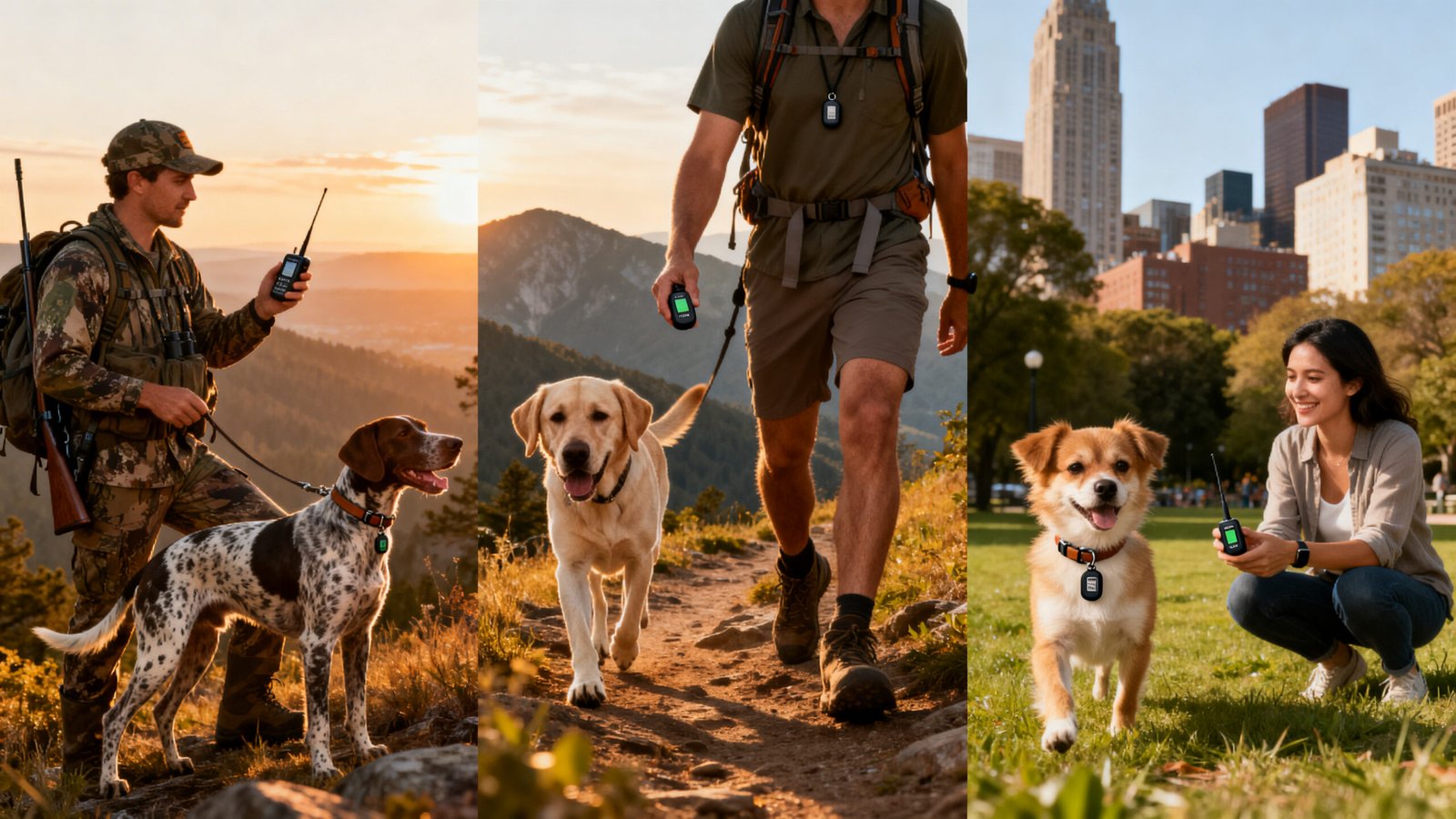
Choosing which GPS tracker is best for dogs depends on your environment, budget, and tolerance for trade-offs. Here’s a practical breakdown:
Hunters and remote users
Choose a radio plus handheld system like the Garmin Alpha TT 25 F. You get 80-hour battery life, 2.5-second updates, and no reliance on cellular networks. The downside: you must carry the handheld unit, and range is limited to under 10 miles in open terrain.
Buyers wanting true standalone lifetime connectivity
Opt for lifetime prepaid SIM units. Verify in writing that the manufacturer guarantees lifetime network access, specifies the carrier, and explains what happens if the network is decommissioned. Confirm update frequency, battery runtime, and whether the SIM can be transferred if you sell the device.
Budget casual users
If your dog stays close and you need occasional location checks, budget $55 to $75 no-fee trackers work. Accept the trade-offs: limited range, slower updates, and reliance on Bluetooth proximity. These are not for escape artists or off-leash runners.
Non-negotiables before purchase
- Written proof of lifetime connectivity (carrier name, network type, term definition)
- Warranty terms in writing, including exclusions
- Documented update frequency in seconds, not marketing terms
- Battery runtime at maximum update frequency
- Waterproof rating with independent test links
- Out-of-warranty replacement cost
If a manufacturer refuses to provide these details, walk away.
Research gaps — questions the writer should press manufacturers and reviewers to answer
The dog GPS tracker no monthly fee market has significant transparency problems. Here are the concrete questions that need answers:
- Segmented market adoption: What percentage of the $53 million North America market in 2024 is no-subscription models? What are the 2026 projections?
- Itemized 5-year cost breakdowns: Publish upfront price, activation fee, included years of service, and replacement unit pricing for every model.
- Confirmed 2026 tech roadmaps: Are any manufacturers integrating low-orbit satellite networks or next-gen cellular standards? If not, say so.
- Documented failure rates and warranty replacement pricing: Publish MTBF, warranty claim rates, and out-of-warranty costs.
- Independent waterproof and ingress testing: Fund third-party tests and publish results for saltwater, mud, chewing, and drop impacts.
Until these gaps are filled, buyers must demand documentation directly from manufacturers and avoid trusting marketing copy alone.
Conclusion
The best GPS tracker for dogs 2026 is not the one with the slickest app or the boldest “no monthly fee” claim. It’s the one that matches your dog’s behavior, your environment, and your willingness to verify every spec before purchase. The market is growing fast, but transparency is lagging. Lifetime connectivity promises are only as good as the fine print, and real-time tracking is only real if the device updates fast enough and works where your dog actually runs.
Before you buy, demand written answers to cost-of-ownership, warranty, update frequency, network fallback, and replacement pricing questions. Test the device in your actual use environment, not just your backyard. And remember: no subscription doesn’t mean no cost. It just means the costs are hidden differently.
If you want a tracker that works when it matters, ask the hard questions now, not after your dog is already lost.
FAQ
What does “lifetime connectivity” actually mean for GPS dog trackers?
It varies by manufacturer. Some define it as the physical lifespan of the device, others as a fixed number of years (often undisclosed), and some tie it to the carrier network’s existence. Always get the definition in writing before purchase, including what happens if the cellular network is decommissioned.
Can I use a no-subscription GPS tracker in remote areas without cell service?
Only if the tracker uses direct radio and satellites, like the Garmin Alpha TT 25 F. Lifetime prepaid SIM models rely on cellular networks and will not work in areas without LTE or 4G coverage unless they include satellite fallback, which most do not.
How often should a real-time GPS dog tracker update location?
True real-time tracking should update every 2 to 5 seconds. Anything slower than 10 seconds is not real-time for a running dog. Always confirm the exact update interval in seconds from the manufacturer, not vague terms like “frequent” or “live.”
What happens if my no-subscription tracker breaks after the warranty expires?
Most manufacturers do not publish out-of-warranty replacement costs. You may be forced to buy a new unit at near-full retail price. Always ask for this pricing in writing before purchase, and check whether the battery or other components can be replaced separately.
Are budget GPS trackers under $75 reliable for dogs that run off-leash?
No. Budget no-fee trackers typically use Bluetooth and have limited range (under 300 feet). They are suitable for yard monitoring or dogs that stay very close, but not for off-leash runners, escape artists, or remote hiking. Invest in a radio-based or lifetime cellular model for those scenarios.