

If you are shopping for a pet camera treat dispenser, you have probably noticed the same problem I did: every product page makes big promises about keeping your dog happy while you are away, but almost none of them back those claims with hard numbers. That gap between marketing and measurable performance is exactly what this guide addresses.
I spent weeks digging through spec sheets, user reviews, and independent test data to understand what buyers can actually verify before handing over $150 to $300 for a treat tossing camera. What I found was surprising. The evidence base is thin in ways that matter for real world reliability. This post walks through every gap I uncovered and gives you practical tests to run yourself.
Key Takeaways
- No published laboratory data exists that measures treat toss success rates or command to release latency for any major pet camera model on the market today.
- You can and should run simple at home tests to verify toss consistency, jam recovery, and real world latency before you commit to keeping a device.
- Anti jam hopper design and easy cleanability are the two most underdiscussed reliability features, and they directly affect whether your pet stays engaged with the device over time.
- What a treat dispensing pet camera actually does and why research falls short
- How to prioritize features and run your own QA tests before buying
- Common pain points, feature gaps, and latency realities nobody talks about
- Making a confident purchase despite the data gaps
- Frequently asked questions
What a treat dispensing pet camera actually does and why research falls short
A treat tossing camera for dogs serves three core use cases that simpler pet cameras cannot match. First, it gives you a way to actively comfort a dog showing signs of separation anxiety. You see them pacing, you launch a treat, and the positive interruption can break the anxiety loop. Second, it enables remote training reinforcement. You can reward calm behavior from across town, which is powerful for dogs learning to settle without their owner present. Third, it turns alone time into interactive play, which matters for high energy breeds that need stimulation throughout the day.
These are not niche scenarios. Remote workers returning to hybrid offices and frequent travelers make up a fast growing segment of pet owners who need more than a passive camera. They need a tool that lets them interact, not just watch. That is why treat tossing capability commands a premium over simple dispensers that just drop a treat straight down with no arc or distance.
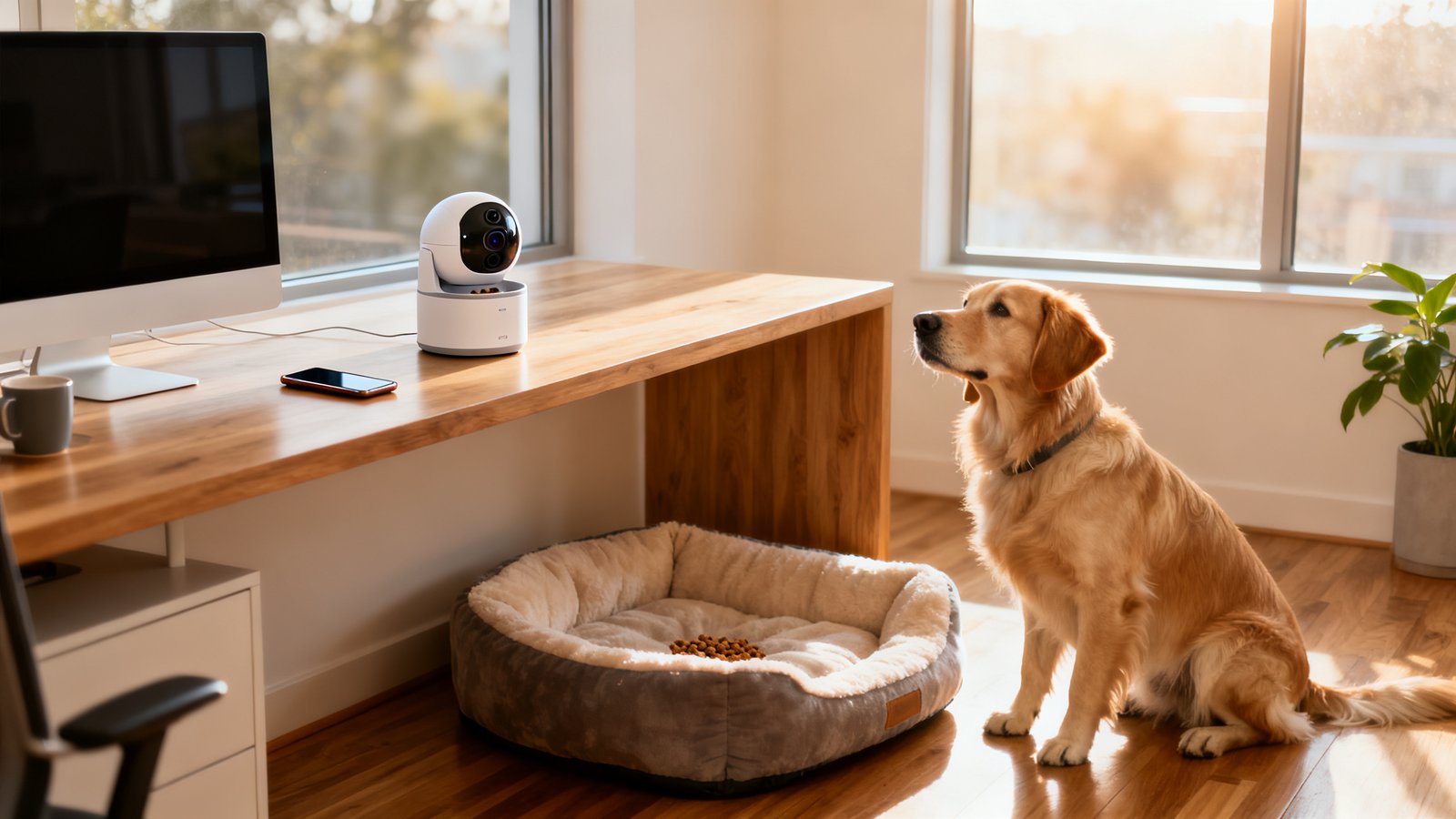
Now here is what nobody tells you in the product listings. The independent research backing up treat toss performance claims is essentially nonexistent. According to ToolSmarts 2025, “Evidence is limited. None of the provided sources contain measured, laboratory tested treat toss success rates for any camera model.” That is not a minor footnote. It means every advertised claim about tossing range, accuracy, and consistency rests on manufacturer assertions alone.
The same pattern holds for latency. JapanLifeLab 2026 reports that “None of the sources report a measured latency in seconds between issuing a treat command and the actual treat release.” Descriptions like “instantaneous” or “on command” appear throughout marketing materials, but without timestamped data, you have no way to compare one model to another on responsiveness. A half second delay and a three second delay both get described as “instant” in product copy.
This does not mean treat cameras are ineffective. It means buyers have to become their own testers. The good news is that verifying performance at home is straightforward once you know what to look for. I will walk you through exactly how to do that.
How to prioritize features and run your own QA tests before buying
When I evaluate a pet camera that throws treats, I start with the features that most directly determine whether the device will work reliably day after day. These are not the flashy app features or the marketing bullet points. They are the mechanical and software fundamentals that separate a tool you will use for years from one that ends up unplugged in a closet.
The anti jam hopper design comes first. Treats come in different shapes, sizes, and moisture contents. A hopper that jams on day three with your dog’s favorite kibble is useless. ToolSmarts 2025 recommends that you “Check for robust anti jam technology in the hopper design to ensure reliable feeding, regardless of kibble shape.” Look for hoppers with agitators, wide feed channels, and visible access panels that let you clear a jam without tools.
Adjustable toss power matters more than most buyers realize. A small apartment and a large open plan living room need different launch distances. If the camera launches treats too far in a tight space, treats bounce under furniture and your dog loses interest. Too short in a big room, and the interactive play element disappears. Models with multiple distance settings give you room to tune the experience.

App responsiveness is the third pillar. Even the best mechanical design fails if the app takes 10 seconds to connect or drops commands. During your evaluation period, test the app on both WiFi and cellular data. Command the camera to toss a treat while on a video call or streaming music. Real world network conditions are messier than lab benches, and that matters.
Two way audio clarity often gets overlooked in treat camera reviews, but it is central to the interactive experience. Your dog needs to hear your voice clearly. Tinny or delayed audio confuses them and reduces the calming effect you are trying to achieve. Test this by having someone else stand near the camera while you speak through the app from another room. Ask them to rate clarity on a simple scale.
Hygiene and cleanability affect both your pet’s health and your willingness to use the device regularly. Treat dust, slobber, and kibble oils accumulate inside the hopper and on the launch mechanism. If cleaning requires disassembling six screws and a ribbon cable, you will not do it often enough. Look for tool free access to the treat path and hopper interior. Dishwasher safe components are a bonus.
The camera field of view determines whether you can see your dog in their favorite spots. A narrow FOV means blind spots. A wide FOV often comes with some fisheye distortion but gives you fuller coverage. Test this by placing the camera where you intend to mount it and checking the app view. Can you see the couch, the dog bed, and the water bowl all at once? If not, you may need to reposition or choose a model with pan and tilt capability. For a deeper look at camera options, our Furbo 360 camera review covers rotating lens models that address the FOV problem directly.
Common pain points, feature gaps, and latency realities nobody talks about
User reviews across multiple retail platforms reveal recurring complaints that align with the evidence gaps I have already flagged. The most common frustration involves camera placement and viewing angle. Consumer Reports notes that in one example, “The position of the camera on the bottom of the tall, bulky device provides a limited viewing angle.” When the camera sits low on a tall unit, you see your dog’s ankles instead of their face. That defeats half the purpose of a pet camera.
Device bulkiness comes up repeatedly. Some treat tossing cameras are surprisingly large, which limits placement options. A device that dominates a side table or bookshelf may not survive an enthusiastic dog bumping into it. Check the physical dimensions against the space you have in mind before ordering.
Occasional jamming appears in small sample complaint sets across multiple brands. No model seems immune. The difference between a minor annoyance and a dealbreaker is how easily you can resolve the jam remotely versus needing to be physically present. This is where the feature gap between jam recovery and dispenser hygiene becomes critical.
| Feature | Why It Matters | What To Verify |
|---|---|---|
| Anti Jam Recovery | A jam while you are away means zero treats until you return. Remote unjamming or self clearing mechanisms prevent long gaps in interaction. | Can you clear a jam through the app? Does the hopper have an agitator that runs automatically? |
| Dispenser Hygiene | Residue buildup breeds bacteria and mold. A dirty dispenser can cause digestive issues for your pet over time. | Are cleaning instructions included? Can you access all treat contact surfaces without tools? |
| Toss Consistency | Inconsistent toss distance or direction confuses dogs and reduces engagement. | Run a 20 toss test. Measure landing spots. Calculate the percentage that hit your target zone. |
| Command Latency | Long delays between tapping the app and treat release break the cause and effect link your dog needs for training. | Time it. Use a stopwatch. Test on both WiFi and cellular. Record results. |
Latency is the silent killer of treat camera effectiveness. JapanLifeLab 2026 confirms that no manufacturer publishes measured latency figures. They all say “instant” or “on command” without defining what those words mean. For a dog, the difference between 500 milliseconds and 3 seconds is enormous. A treat that arrives 3 seconds after you say “good dog” through the speaker has lost its training value. The dog no longer connects the reward to the behavior.
Here is a simple DIY latency test you can run at home. Set up your phone to record the camera’s speaker and treat launch in the same frame. Open a stopwatch app on a second device. Tap the treat command in the app while simultaneously starting the stopwatch. Stop the watch when you see or hear the treat launch. Repeat this 10 times under the same WiFi conditions. Then repeat it on cellular data. Average the results. Now you have a real number instead of a marketing adjective.
When you are ready to make a purchase decision, arm yourself with specific questions for manufacturers. Ask them directly: what is your measured toss success rate and what test method produced that number? What is the average command to release latency in milliseconds under stated network conditions? Can you share details about your anti jam design and the specific testing you performed with different kibble shapes? What cleaning instructions and recommended disinfectants do you provide? What does your warranty cover when it comes to jam failures or motor burnout?
ToolSmarts 2025 states plainly that “No quantitative success rate data, for example ‘x percent of tosses achieved target distance,’ appears in any source.” Until manufacturers start publishing these numbers, the burden falls on you to ask the questions and run the tests. For a broader perspective on pet tech evaluation, our pet tech buying guide covers evaluation frameworks that apply across categories.
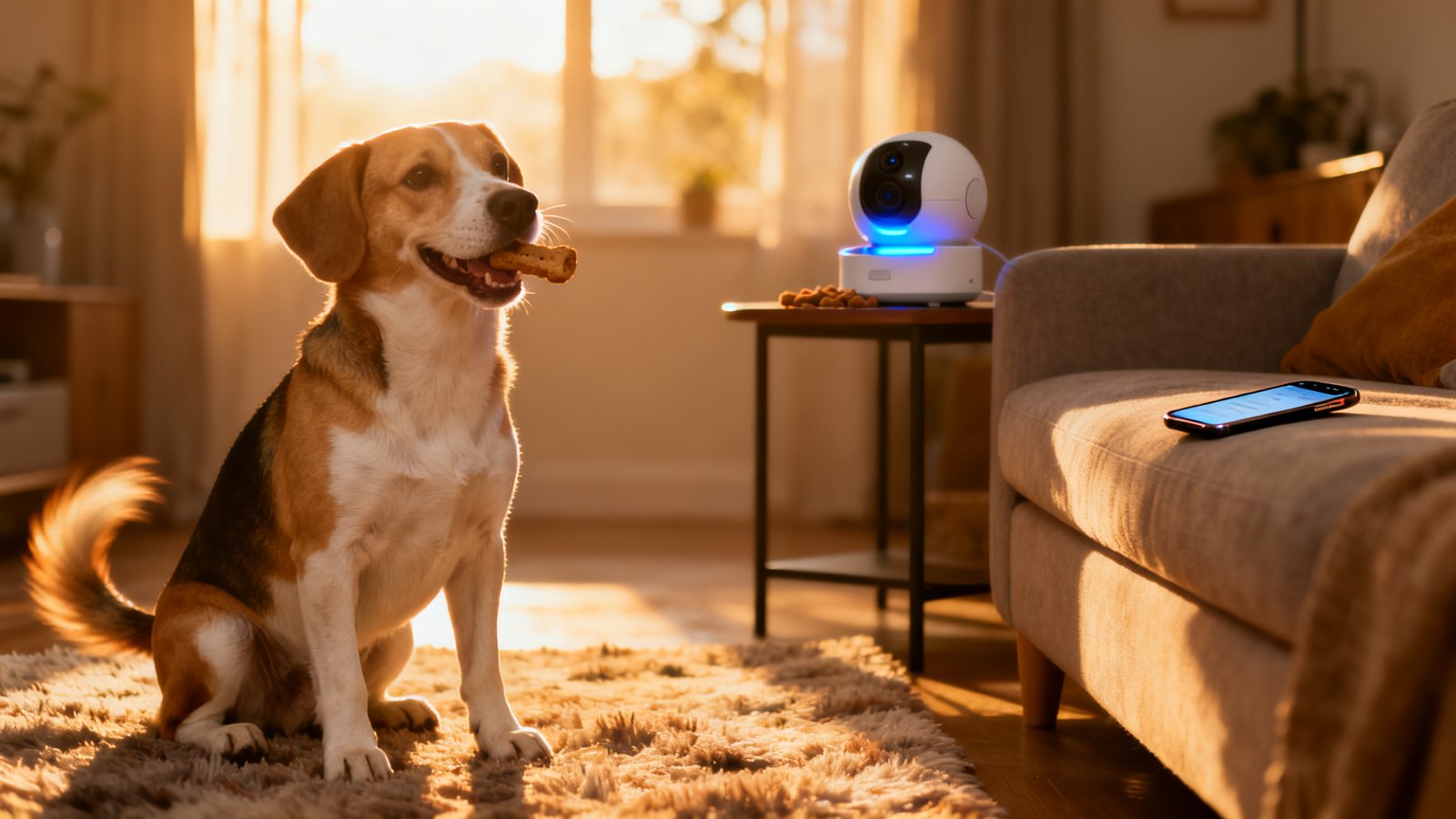
If you are weighing this against simpler pet monitoring options, our best pet camera 2026 guide covers the full landscape including non tossing alternatives. For dog owners who also want location tracking when their pet is outdoors, the Fi smart collar review and our Tractive GPS review cover the leading wearable trackers with detailed accuracy comparisons.
Making a confident purchase despite the data gaps
The pet camera treat dispenser market is growing fast, but the evidence base for performance claims has not kept pace. No independent lab has published standardized toss success rates. No manufacturer volunteers latency measurements. No aggregated complaint dataset exists to help you weigh one model’s weaknesses against another’s. These are not reasons to avoid the category. They are reasons to approach your purchase with a testing mindset.
Prioritize anti jam design and easy cleaning if reliability and hygiene matter most to you. Prioritize wide field of view and low latency if interactive training is your main use case. Run the 20 toss consistency test during your return window. Time the latency yourself under your own network conditions. Ask manufacturers the hard questions and see who answers with specifics rather than reassurances.
A pet camera treat dispenser can genuinely improve your dog’s quality of life when you are not home. The key is choosing one that performs as promised, and the only way to verify that right now is to test it yourself. The tools and checklists in this guide give you everything you need to do exactly that.
Ready to start testing? Pick a model that offers a solid return policy, run the QA checklist from this post within the first week, and do not settle for a device that jams on your dog’s food or delivers treats three seconds too late. Your dog deserves better, and you now know how to demand it.
Frequently asked questions
What is the most reliable pet camera treat dispenser on the market right now?
No independent lab has published reliability data comparing treat dispensing pet cameras head to head. The most practical approach is to check user reviews for jam frequency complaints, look for models with documented anti jam hopper designs, and run your own 20 toss consistency test during the return period. The “best” model is the one that works with your dog’s specific treat shape and your home WiFi setup.
Do treat tossing cameras work for cat owners too?
Some treat tossing cameras can work for cats, but most are designed primarily with dogs in mind. Cats are often more skittish around the mechanical sound of the launcher. If you want a pet camera for a cat, look for models with quieter launch mechanisms and test whether the sound startles your cat before committing. Many cat owners find that simpler treat dispensing cameras without the tossing arc work better for feline companions.
How do I prevent my dog from knocking over the treat camera?
Mount the camera on a sturdy elevated surface or use wall mounting hardware if the model supports it. Some devices come with weighted bases specifically to resist tipping. If your dog is particularly determined, consider placing the camera on a shelf or mantel that they cannot reach, and verify that the toss arc still lands treats where you want them from that height.
Can I use any type of treat in a treat tossing pet camera?
Most treat tossing cameras work best with small, dry, uniformly shaped treats roughly the size of a pea or small kibble piece. Soft, crumbly, or irregularly shaped treats are more likely to jam the hopper. Check the manufacturer’s recommended treat size and shape before buying. Testing your specific treat brand during the return window is the only way to confirm compatibility.
Is a WiFi pet camera with treat toss worth the extra cost over a basic pet camera?
If you want to actively interact with your pet rather than just watch them, the treat tossing feature is worth the premium. It enables remote training reinforcement, separation anxiety intervention, and genuine play. If you only need passive monitoring, a simpler camera without the treat mechanism will save you money and eliminate the mechanical complexity that can lead to jams and failures.