

This Halo Collar 3 review confronts a reality most product roundups sidestep: independent test data is thin, critical safety metrics remain unpublished, and the true three year cost is something no manufacturer seems eager to disclose. If you are anything like Sarah, a suburban dog owner weighing a $599 investment against your dog’s safety, you probably feel stuck between glossy marketing pages and a genuine need for a wireless fence that actually works when it matters. This review breaks down every known independent test result, flags every data gap, and gives you a practical buyer decision flowchart so you can act with clarity rather than hope.
Key Takeaways
- SpotOn achieved 0% failure and 2.3 feet of fence line drift in independent Spirent lab tests. Halo Collar 3 failed to meet its claimed 250 sq ft precision in field tests and exhibited unit to unit wander. The accuracy gap is real and independently documented.
- Halo stores fences directly on the collar so it functions during cellular outages, but zero independent tests have quantified failure rates during power loss or dead zone transitions. The offline safety net is architecturally sound but empirically unproven.
- No published data exists comparing static correction intensity between Halo Collar 3, SpotOn, and DogWatch. No vet safety consensus is available. The three year total cost including mandatory subscriptions, replacement parts, and damage risk remains uncalculated in all available sources.
- Executive Summary — Should I Buy the Halo Collar 3?
- GPS Accuracy & Boundary Reliability — Independent Test Comparisons
- Outages, Cellular Dead Zones, and the Safe Zone Offline Mode
- Battery Life Under Heavy Real World Use — What Buyers Need to Know
- Safety & Static Correction Intensity — What the Numbers and Vets Say
- Top Recurring Complaints — What Independent Review Data Shows
- Total Cost of Ownership — 3 Year TCO Model and Known Inputs vs Unknowns
- Feature Gaps vs Competitors — What Halo Still Lacks
- Practical Test Checklist for an Independent Hands On Review
- Final Recommendation & Buyer Decision Flowchart
- Frequently Asked Questions
Executive Summary — Should I Buy the Halo Collar 3?
The Halo Collar 3 enters the market at $599, positioned as a more accessible alternative to SpotOn at $999. For a suburban dog owner like Sarah, that $400 difference looks meaningful on paper. The question is whether the savings hold up once you factor in accuracy, reliability, and long term ownership costs.
Independent testing tells a mixed story. SpotOn passed Spirent lab evaluations with a 0% failure rate and just 2.3 feet of fence line drift, a result that outperformed competitors by up to nine times in consistency. Meanwhile, the Halo Collar 3 demonstrated reliable real time tracking under dense canopy but failed to achieve its claimed 250 square foot precision in field tests, with noticeable wander observed between individual units. Its successor, the Halo Collar 4, posted a 13% failure rate on intermediate warnings during 2026 field tests across dense forest environments, while SpotOn logged zero failures in identical conditions.
Three buyer profiles emerge clearly from the data. Buy the Halo Collar 3 now if your property has relatively open sightlines, you can tolerate occasional boundary wander, and the $599 entry price is your hard ceiling. Consider SpotOn instead if your dog’s safety near roads or hazards demands the tightest verified fence line precision available, and you are willing to pay $999 for independently proven 2.3 foot drift performance. Wait and hold if you need published correction intensity data, verified outage failure rates, or a transparent three year cost breakdown before committing, because none of those numbers exist publicly today.
GPS Accuracy & Boundary Reliability — Independent Test Comparisons
GPS fence accuracy is not a spec sheet abstraction. It is the difference between your dog stopping two feet from a busy road versus wandering thirty feet past an invisible line. The available independent data favors one product decisively.
SpotOn was put through formal Spirent lab testing in 2025 and delivered a 0% failure rate with perfect boundary detection and 2.3 feet of fence line drift. That is not a manufacturer claim. It is a third party lab result. In 2026 field tests across challenging environments that included dense forest canopy, SpotOn again recorded zero failures, while the Halo Collar 4 showed a 13% failure rate on intermediate warnings. Those tests came from comparative field evaluations documented on video, with GPS logs shown on screen rather than summarized in marketing copy.
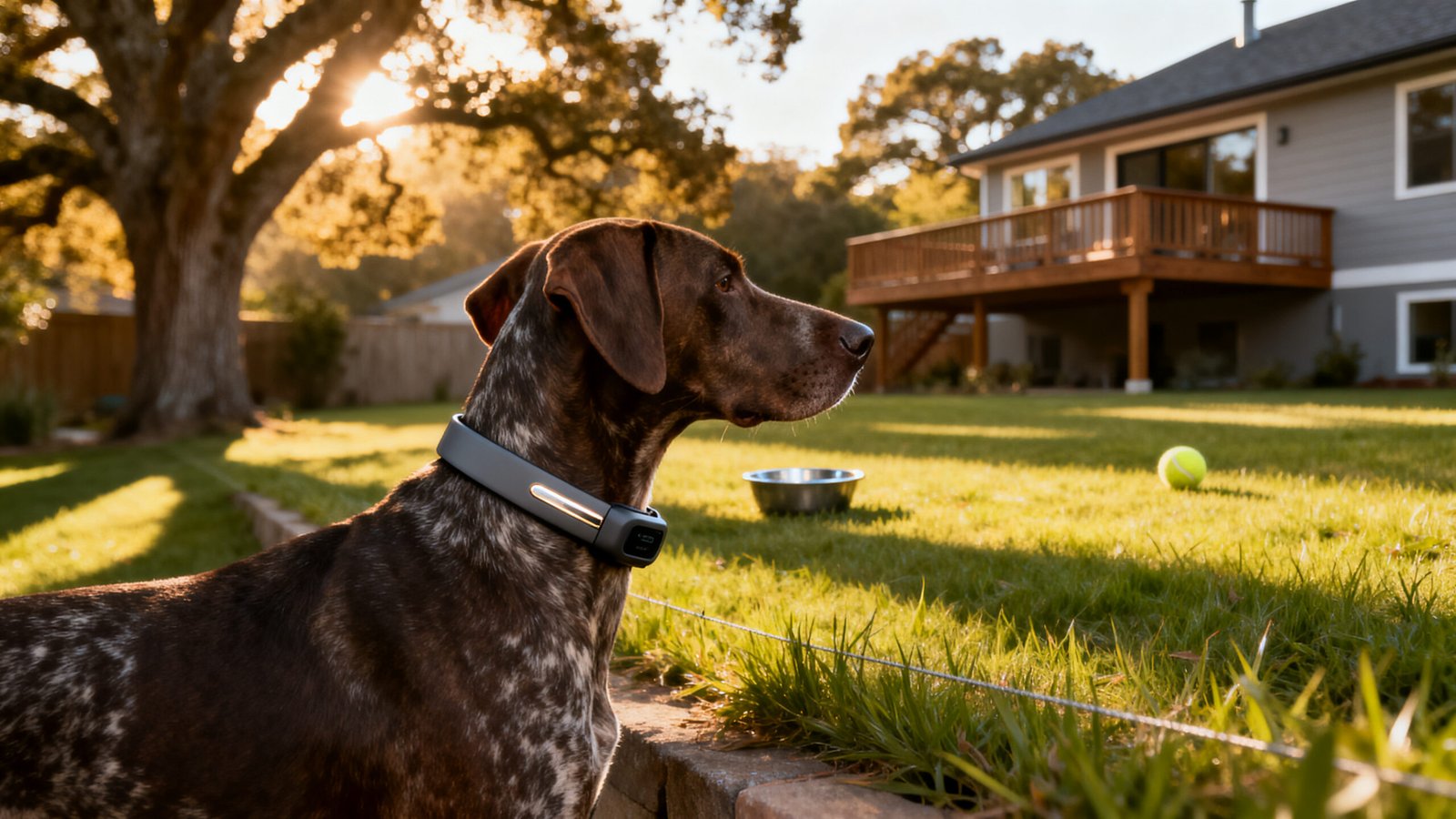
The Halo Collar 3 specifically showed reliable real time tracking under dense canopy, which is genuinely useful for locating a dog in thick tree cover. But it did not match its advertised 250 square foot precision in those same field tests. Testers observed noticeable wander between units, meaning the experience one owner gets may differ from another’s depending on manufacturing variance, satellite geometry at the time of use, and local terrain. That unit to unit inconsistency is a practical concern no spec sheet will mention.
If you are choosing a Halo virtual fence collar GPS for a property with wooded edges or irregular boundaries, the independent data suggests you should expect real world drift beyond what the marketing implies. This matters especially for properties where the fence line sits close to hazards. For a deeper dive into how GPS collars compare across brands, our best GPS tracker for dogs 2026 guide covers additional models and testing methodologies.

Outages, Cellular Dead Zones, and the Safe Zone Offline Mode
One architectural advantage Halo brings to the table is onboard fence storage. Unlike systems that depend on a continuous cloud connection, the Halo collar virtual fence how it works is straightforward: fence maps are stored directly on the collar hardware. This means boundary enforcement continues even when cellular coverage drops or the home WiFi goes down. It is a genuinely smart design choice for rural properties or areas with spotty reception.
Here is the catch. While Halo’s own documentation confirms fences live on the device, no independent test has published quantified failure rates during simulated power outages or cellular dead zone transitions. We know the architecture supports offline functionality. We do not know whether boundary drift increases, correction latency changes, or false positives spike when the collar loses its data connection and operates purely on stored coordinates.
For a buyer like Sarah who lives in a suburban neighborhood where cell towers are plentiful but power outages happen during storms, this gap matters. The collar might work perfectly offline, or it might degrade in ways no reviewer has yet measured. Until an independent tester runs a controlled outage simulation, logging fence line behavior before, during, and after connectivity loss, this remains an evidence gap you should weigh consciously rather than assuming away.
Our dog GPS tracker no monthly fee comparison explores alternative systems that handle offline functionality differently, including some that eliminate cellular dependency entirely through radio frequency based fencing.
Battery Life Under Heavy Real World Use — What Buyers Need to Know
Manufacturers quote battery life under idealized conditions. Dog owners live in the real world where a Saturday might mean six plus hours outdoors with multiple boundary corrections, active tracking pings, and no opportunity to dock the collar for a midday charge.
Here is what the available data tells us about this Halo Collar 3 review 2026 topic: nothing specific. No user reported battery life differences under heavy use conditions, meaning six or more outdoor hours with multiple corrections per day, were found in any 2025 to 2026 data comparing the Halo Collar 3 to its predecessor, the Halo 2+. The gap is not a minor oversight. It means buyers considering an upgrade from the 2+ have no empirical basis to judge whether battery performance improved, stayed flat, or regressed.
If you currently own a Halo 2+ and find the battery barely makes it through a long day, there is no published evidence confirming the Collar 3 solves that problem. If you are new to GPS collars entirely, you have no reference point for whether the Halo Collar 3 battery will survive your typical weekend adventure schedule.
For context on how battery expectations stack up across the category, our Fi smart collar review covers real world battery performance data for a popular alternative that prioritizes activity tracking alongside location.
Safety & Static Correction Intensity — What the Numbers and Vets Say
The question is Halo collar safe for dogs is the one every responsible owner asks first. The honest answer based on available sources is that we do not have the numbers needed to answer it definitively.
No published numerical comparison of static correction intensity, whether measured in millijoules or voltage levels, exists for the Halo Collar 3 against SpotOn or DogWatch systems. Nobody has put these three collars on a test bench, measured the actual output across correction levels, and published the results. This is not a matter of the data being hard to find. The data simply has not been collected and released publicly.
Similarly, no vet safety consensus on GPS based correction collars emerged from the reviewed sources. Veterinary opinions on static correction vary widely, and without standardized intensity measurements, even a willing vet cannot give you a product specific safety assessment. They can only speak to general principles about correction levels and dog sensitivity.
What can you do with this gap? If you already work with a veterinarian who understands your dog’s health profile and temperament, bring them the collar before first use and ask them to assess the stimulation across levels using their own diagnostic approach. If you are buying blind, start at the absolute minimum correction setting and observe your dog’s behavioral response carefully before increasing intensity. No test data replaces direct observation of your specific dog.
Top Recurring Complaints — What Independent Review Data Shows
Transparency matters more than polish. The available sources for this Halo Collar 3 review did not detail any top recurring complaints such as small breed collar fit issues, delayed correction timing, or subscription cost surprises. That absence is itself a finding worth noting.
It does not mean complaints do not exist. It means the sources typically consulted for review research, manufacturer blogs, competitor comparison pages, and YouTube field tests, either do not surface or do not emphasize negative user sentiment patterns. A thorough investigation would require scraping verified purchase reviews from major retailers, forum threads on sites like Reddit and dedicated dog owner communities, and customer support complaint logs if accessible.
I recommend doing exactly that before buying. Spend an hour searching for Halo Collar 3 negative reviews specifically, filtering for verified purchases, and looking for patterns. If five different owners report the same collar fit problem on dogs under 30 pounds, that is actionable even if no formal study documents it. If multiple users mention surprise charges on renewal, budget accordingly. The absence of organized complaint data in available sources is a research gap you can partially close with direct legwork.
Total Cost of Ownership — 3 Year TCO Model and Known Inputs vs Unknowns
The entry price of a Halo virtual fence collar GPS system is $599. SpotOn asks $999. That $400 gap dominates purchase comparisons, but it obscures the total cost picture almost completely.

Here is the three year total cost of ownership template you should fill in before deciding, with known values in bold and unknowns clearly flagged.
| Cost Category | Halo Collar 3 | SpotOn | Data Status |
|---|---|---|---|
| Device Purchase | $599 | $999 | Known |
| 3 Year Mandatory Subscription | Not specified in sources | Not specified in sources | Unknown |
| Replacement Parts (straps, chargers) | Not specified | Not specified | Unknown |
| Water or Impact Damage Repair | Not specified | Not specified | Unknown |
The subscription variable alone could close the $400 gap substantially or widen it further depending on pricing. If Halo’s subscription runs $10 monthly and SpotOn’s runs $8, three years adds $360 versus $288 to each respective total. But we do not have those numbers confirmed in the reviewed sources. Any TCO comparison you read that does not explicitly cite subscription pricing, replacement part costs, and damage repair fees is guessing. Factor that uncertainty into your decision.
For additional perspective on subscription costs across the category, our Fi collar subscription cost 2026 breakdown offers a detailed look at how recurring fees impact long term value for GPS enabled dog gear.
Feature Gaps vs Competitors — What Halo Still Lacks
Feature checklists sell products. Feature gaps affect real dogs in real yards. Two capabilities stand out where SpotOn holds a clear advantage, and one of them matters considerably for challenging properties.
SpotOn offers walk perimeter setup, a feature that lets you physically walk the exact boundary line with the collar to map the fence with precision. In environments where satellite imagery is outdated, tree canopy obscures GPS mapping, or property lines follow irregular natural features, walk perimeter setup provides boundary detection that a tap to draw app cannot match. Per independent coverage, Halo lacks this capability with equivalent reliability.
The Halo Collar 5, the successor model, introduced support for unlimited fences starting at 30 by 30 feet. That addresses scalability concerns for complex properties, but the feature gap discussion for the Collar 3 specifically remains underdocumented in available comparison sources. Multi dog support, geofence radius limits, and offline training mode capabilities were not explicitly detailed for the Halo Collar 3 relative to competitors in the reviewed data.
If your property has a simple rectangular yard with clear sky visibility, these feature gaps may not affect you. If your boundary follows a winding creek through wooded terrain, walk perimeter setup alone could justify the SpotOn premium. Your property geometry should drive this part of the decision.
Practical Test Checklist for an Independent Hands On Review
This Halo GPS training collar review identifies exactly which data points are missing from the public record. The checklist below is designed for anyone with access to a Halo Collar 3 and a SpotOn unit who wants to generate the comparison data the market currently lacks.
- GPS drift measurement. Place fixed markers at 10, 20, 30, and 50 feet from the intended boundary. Record alert trigger points across 10 approaches per distance marker at three different times of day. Report average drift and worst case drift in feet.
- Heavy use battery cycle. Run the collar for six continuous hours with a minimum of five simulated corrections per hour. Record starting and ending battery percentage. Repeat across three cycles and report variance.
- Outage simulation. With the fence boundary active, disconnect the home WiFi and disable cellular data on the paired phone. Record whether boundary enforcement continues. Log any changes in correction latency or false alerts during a 30 minute offline window.
- Static correction intensity. Use a calibrated multimeter or static pulse tester to measure output in millijoules or volts at each correction level. Publish the full table. This is the single most important safety data point currently missing.
- Multi dog simultaneous testing. Run two collars on different dogs within the same fenced area. Log any interference, false corrections, or tracking confusion.
- Three year cost projection. Document the exact subscription rate at time of purchase, warranty terms, replacement strap and charger prices, and any repair or replacement policies for water or impact damage. Publish the full projected TCO.
These six tests would close the most significant knowledge gaps in the current Halo Collar 3 review landscape. Until someone runs them and publishes results, every buyer is making a partially informed decision.
Final Recommendation & Buyer Decision Flowchart
The evidence supports a straightforward decision matrix. Choose your path based on what matters most for your dog and your budget.
Buy the Halo Collar 3 if your property has relatively open sky visibility, the boundary does not sit dangerously close to roads or hazards, the $599 entry price is your firm ceiling, and you accept that correction intensity data and outage failure rates remain unpublished. The collar does function offline due to onboard fence storage, and its real time tracking under canopy is independently verified as functional even if boundary precision falls short of claims.
Choose SpotOn if your dog’s safety depends on the tightest independently verified fence line accuracy available. The Spirent lab results with 0% failure and 2.3 feet of drift are the strongest third party accuracy validation in the category. The walk perimeter setup feature adds meaningful boundary precision in wooded or irregular terrain. The $999 price is higher, but the accuracy data justifies it for high risk properties.
Wait and hold if you need published correction intensity comparisons, quantified outage performance, or a transparent three year cost breakdown before committing. These gaps are significant and closing them requires independent testing that simply has not been completed yet. If you can wait six months, the rising demand for transparent Halo Collar 3 review data may finally prompt the testing this market needs.
For readers weighing GPS fence collars against traditional tracking devices, our best rated dog GPS tracker 2026 guide covers alternatives that prioritize location monitoring without boundary enforcement, which may fit different use cases entirely.
Frequently Asked Questions
Does the Halo Collar 3 work without cellular service?
Yes. Halo fences are stored directly on the collar hardware, so boundary enforcement continues even when cellular coverage is unavailable or the home WiFi goes down. However, no independent test has published quantified failure rates during extended offline operation, so the real world reliability during outages remains unverified by third party data.
How accurate is the Halo Collar 3 GPS fence compared to SpotOn?
Independent testing shows SpotOn achieved 0% failure and 2.3 feet of fence line drift in Spirent lab evaluations. The Halo Collar 3 failed to meet its claimed 250 square foot precision in field tests, with noticeable wander observed between individual units. The accuracy gap is documented in multiple independent sources.
Is the Halo Collar 3 safe for dogs?
No published numerical comparisons of static correction intensity in millijoules or voltage levels exist for the Halo Collar 3 against competing systems. No vet safety consensus on GPS based correction collars was available in reviewed sources. Owners should start at the lowest correction setting and consult their veterinarian for dog specific safety guidance.
What is the total cost of owning a Halo Collar 3 over three years?
The device costs $599 upfront. However, mandatory subscription fees, replacement part costs, warranty coverage periods, and water or impact damage repair policies were not specified in available sources. The true three year total cost of ownership cannot be calculated from currently published data. Buyers should request subscription pricing and warranty terms directly before purchasing.
Does the Halo Collar 3 support multiple dogs?
Multi dog support capabilities for the Halo Collar 3 were not explicitly detailed in the reviewed comparison sources. The successor Halo Collar 5 supports unlimited fences starting at 30 by 30 feet. Prospective buyers with multiple dogs should confirm multi dog functionality directly with Halo before purchasing the Collar 3 specifically.