

Track dog without cell service is a challenge every hiker, hunter, or rural dog owner faces when exploring off-grid locations. If you depend on a standard pet GPS relying on cell towers, you’re risking blackouts—and your dog’s safety. This realistic guide focuses on proven, field-tested solutions that do not rely on cellular coverage, balancing cost, battery life, and no-nonsense reliability.
Key Takeaways
- Most mainstream dog GPS trackers fail in areas without cell service—choose offline radio or satellite-based models for real off-grid tracking.
- Garmin Alpha T-20 excels for hunting and hiking (≈9 miles/15 km line of sight), while LoRa models offer up to 20 km range and ultra-long battery life (6 months–1 year) with no fees—ideal for rural or farm settings.
- Always expect reduced range in forests or valleys, and plan for charging or spare power to avoid battery surprises during extended trips.
- TL;DR — Best Offline Dog Trackers in 2024 and When to Pick Each
- How Offline Dog Tracking Technologies Actually Work (Satellite vs. LoRa/Radio vs. Cellular)
- Deep Comparison — Cost, Battery Life, and Real-World Coverage (Top Models)
- Real-World Performance & Common Pain Points in No-Signal Areas
- Feature Gaps Competitors Rarely Cover
- Buying Checklist — How to Choose the Right Offline Tracker for Your Dog
- Practical Setup and Usage Tips to Maximize Range and Battery
- Test Plan for a Review (What to Measure and How)
- Quick Recommendations by Scenario
- FAQ — Short Answers to Common Buyer Questions
- Sources & Further Reading
TL;DR — Best Offline Dog Trackers in 2024 and When to Pick Each
For those serious about being able to track dog without cell service, these are the offline GPS tracker for dogs and their ideal use cases:
- Backcountry hiking: Garmin Alpha T-20 — unmatched handheld performance, ≈9 mile (15 km) line of sight, proven satellite/handheld combo.
- Hunting: Garmin Alpha T-20 — fast response, live dog direction, global GNSS, durable in harsh conditions.
- Large rural property/farm: LoRa radio trackers (Loko, SpecFive Trace, Aorkuler) — up to 20 km open/2–5 km forest range, battery up to 1 year, no monthly fees.
- Budget/no subscription: LoRa models (Loko/Aorkuler/SpecFive Trace) — $180–$250, no ongoing costs, reliable radio signal to handheld/base.
Stat: Garmin Alpha T-20 priced ≈ $399, ≈9 miles (15 km) line-of-sight range; LoRa devices $180–$250, up to 20 km open terrain, typical real-world rural/forest use is 2–5 km.
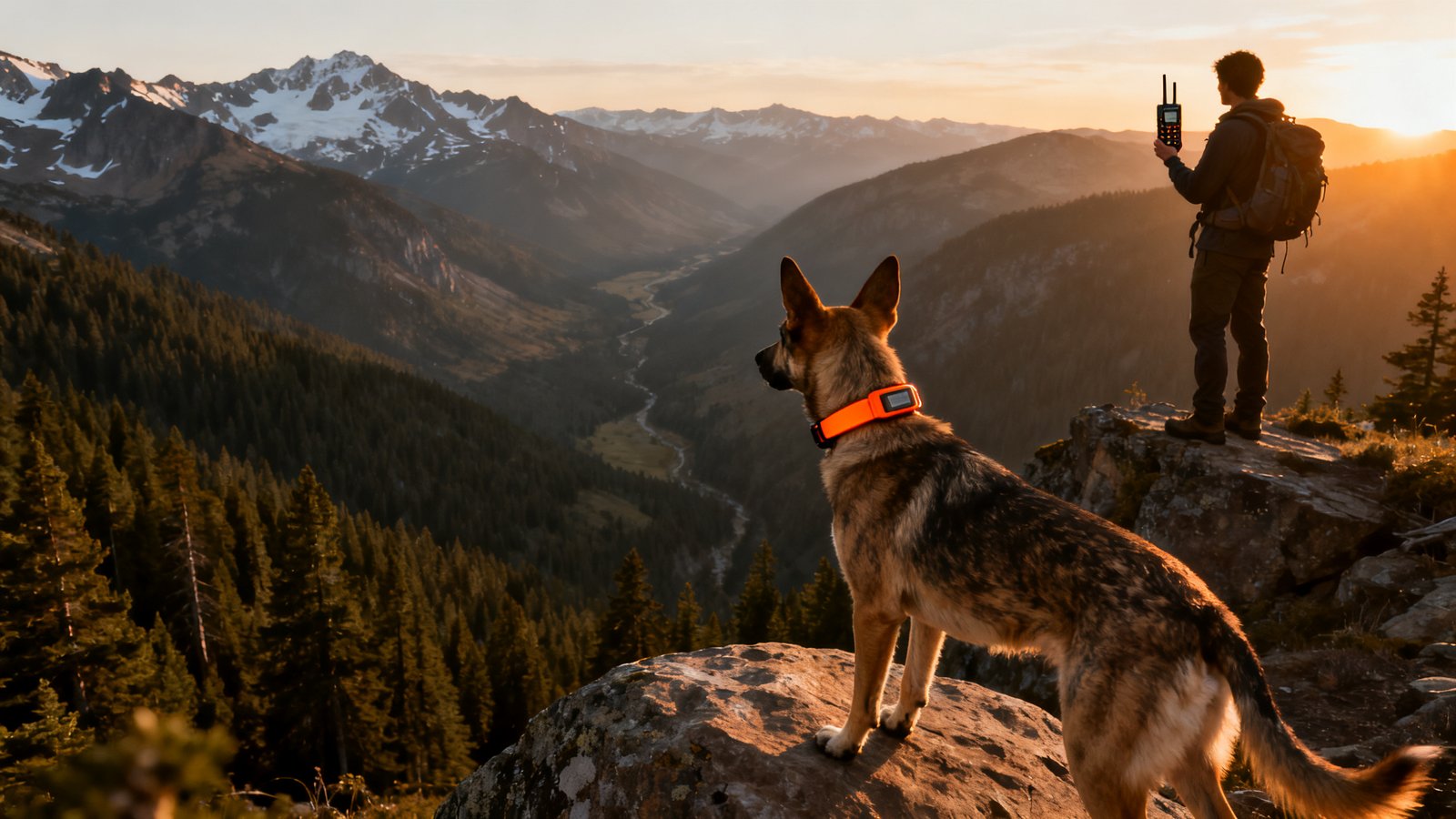
How Offline Dog Tracking Technologies Actually Work (Satellite vs. LoRa/Radio vs. Cellular)
Most pet GPS trackers use GNSS (like GPS and GLONASS) to determine a dog’s position, but how they relay that location makes the difference. Here is what matters for those seeking a GPS tracker dog no cell coverage:
- Cellular GPS trackers (Tractive, Fi, Whistle): Position is determined via satellite but transmitted through nearby cell towers. If you lose cell reception, tracking fails, leaving dead zones for your dog.
- Satellite/handheld systems (Garmin Alpha series): Collar gets position from GNSS satellites, then sends location directly to your handheld receiver via radio signal—no cellular required. You are never dependent on mobile towers.
- LoRa/radio trackers (Loko, SpecFive Trace, Aorkuler): Like Garmin, these use GNSS and transmit positions over dedicated LoRa (long-range radio) direct to a handheld device or local base station. Again, no cell coverage needed.
- Bluetooth trackers (e.g., AirTag): Only work within close range and require other Apple devices nearby for updates. Not viable off-grid.
Most GPS collars claim “global” coverage, but the actual relay method defines if you can truly track dog without cell service. Stat: Radio/satellite systems (like Garmin or LoRa) bypass coverage dependency and always send location directly to you. [Source]
Deep Comparison — Cost, Battery Life, and Real-World Coverage (Top Models)
| Model | Type | Price | Battery Life | Claimed Range | Monthly Fee | Best Use-Case |
|---|---|---|---|---|---|---|
| Garmin Alpha T-20 | Satellite/Handheld (GNSS+Radio) | ~$399 | ~2 weeks (continuous) Up to 6 months (standby) |
~9 miles (15 km) line-of-sight | None | Hunting, hiking, recovery in backcountry |
| Loko / Aorkuler / SpecFive Trace (LoRa) | LoRa Radio (GNSS+direct) | $180–$250 | 6 months–1 year | Up to 20 km (open); 2–5 km (forest/mountain) | None | Farms, rural property, budget setups |
Compared to mainstream GPS collars that require ongoing subscriptions, the above units demand a higher up-front cost but save you hundreds per year in fees. Just remember: all “up to X km” claims assume open line-of-sight and will be lower in dense trees or hills. [Source]
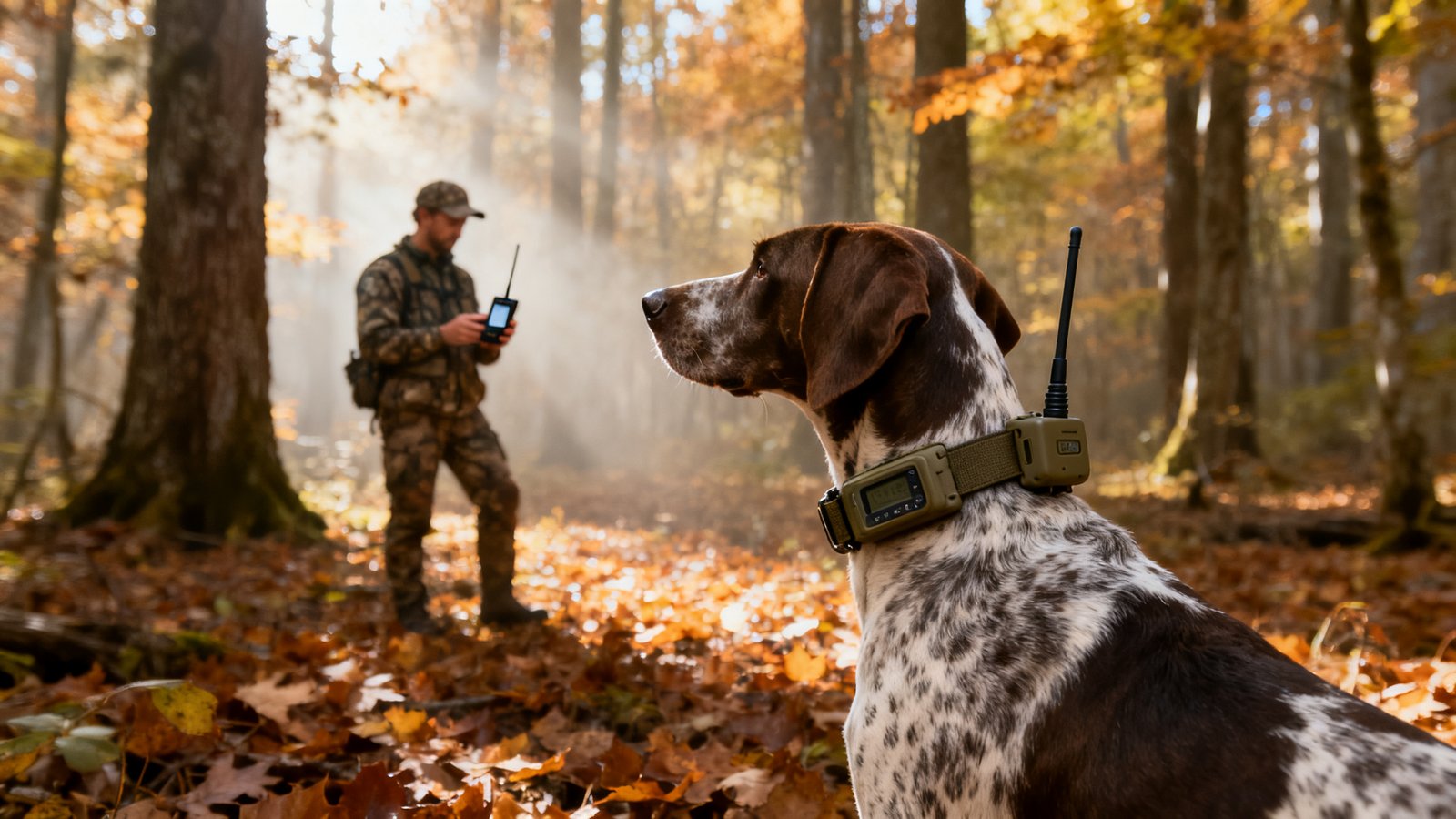
Real-World Performance & Common Pain Points in No-Signal Areas
Field reviews from hikers, farmers, and hunters reveal where even the best GPS dog tracker rural areas can struggle:
- Line-of-sight limits: In thick woods or valleys, radio range drops fast. Real user tests show LoRa/handheld units reach 2–5 km (not 20 km) in forests.
- Battery drain in live tracking: “Live mode” or frequent pinging shortens battery life sharply—some users see drains to a day or two in worst-case use.
- Bulk and ergonomics: Handheld receivers can be heavy or awkward to pack. The collars themselves are bulkier than urban-focused models.
- No health/activity data offline: Most offline systems lack step counting, health insights, or LED/two-way alerts standard in cellular models.
Field vignette: Last fall, a hunter in western Colorado lost visual contact with his dog on dense ridgeline trails. The LoRa radio tracker updated erratically past 2 km in thick woods—but once he reached higher ground and regained line-of-sight, he quickly pinpointed the dog’s location and performed a safe recovery. He noted the process simply would not have been possible with any cell-dependent product.
Explore more real-world reviews: Jakoba German Shepherds—Best GPS Trackers for Dogs 2026
Feature Gaps Competitors Rarely Cover
Most review sites focus on city/cellular dog GPS units, overlooking critical features for rural pros:
- Offline geofencing: Only a handful of trackers create and enforce boundaries with no data or app required.
- Multi-dog mesh networking: Some newer LoRa collars support direct dog-to-dog relays, increasing coverage—vital for multi-dog hunting or farming.
- Solar assist charging: A few trackers offer built-in or add-on solar charging for months of unattended uptime on backcountry deployments.
- Direct satellite-to-phone links: Premium units with Iridium or similar tech can send location even where no handheld is in sight.
- Low-latency offline mapping: Preloaded maps and fast GNSS tech allow fast position fetch with no cell or Wi-Fi needed.
Most reviews and buyers guides focus on subscriptions and phone apps—if you’re rural-first, dig deeper for these practical, offline-ready features.
Buying Checklist — How to Choose the Right Offline Tracker for Your Dog
- Hunting: Prioritize range, live responsiveness, antenna durability (like Garmin Alpha T-20).
- Backcountry hiking: Look for battery life, GNSS accuracy, ruggedness of collar and receiver.
- Farm/rural property: Multi-dog support, unattended operation, and zero monthly fees (LoRa trackers are standouts).
- Physical form: Check the ergonomics and bulk—handheld size, collar weight, attachment reliability for rough use.
- Maintenance: Can you easily recharge, swap batteries, or add solar?
Review our full no-subscription GPS buying guide for deeper tips.
Stat: LoRa trackers (Loko/Aorkuler) are ideal for farm owners due to no subscription and long battery; Garmin Alpha T-20 stands out for hunting and challenging terrain thanks to its long line-of-sight and robust handheld controls.
Practical Setup and Usage Tips to Maximize Range and Battery
- Set trackers for infrequent updates (“ping intervals”) to stretch battery life, switching to live mode only if your dog is lost.
- Test different collar placement positions before your main trip—signal can change if the antenna is blocked by fur, backpack, or brush.
- Pre-download offline maps to your handheld or app, to avoid needing cell data for navigation.
- When possible, maintain elevation advantage—higher ground improves radio line-of-sight in valleys/forests.
Field tests show battery drops sharply with frequent live pings, but using longer intervals or “locate-on-command” modes pushes operation to months per charge. [Aorkuler source]
Test Plan for a Review (What to Measure and How)
- Open field line-of-sight: Walk/drive away from the collar up to 5, 10, and 15 km—note max distance with reliable updates.
- Forested/mountain test: Repeat the above in deep woods or rolling terrain; expect range to drop to 2–5 km for radio models.
- Continuous live-track mode: Run device in “real-time” mode and log battery drain over 12–48 hours. Compare to official figures.
- Recovery scenario: Have a partner hide the dog (collar on) and time a full “search and find” under offline conditions—measure update delays and navigation accuracy.
Actual real-world numbers often diverge from the “up to X km” marketing. Always document and share field test settings and weather conditions for honest results.
See extended test protocols and best practices in our How to Choose GPS Tracker Dog guide.
Quick Recommendations by Scenario
- If you hunt: Garmin Alpha T-20 — rock-solid tracking and live updates up to ≈9 miles/15 km line-of-sight. No cell, no problem.
- If you hike/backcountry: Garmin Alpha T-20 or LoRa device with the best battery life — pick based on trip length and gear weight.
- If you need low-maintenance on a farm: LoRa models (Loko, SpecFive Trace, Aorkuler) — ultra-long battery, no subscription, support for multiple dogs.
- Budget/no-subscription: LoRa trackers—save on monthly fees and still get miles of range in open or semi-open terrain.
For deeper breakdowns, compare with our Best GPS Tracker For Dogs 2026 guide.
FAQ — Short Answers to Common Buyer Questions
Will an AirTag work for off-grid dog tracking?
No. AirTags rely on other iPhones nearby to relay location. In rural, mountain, or remote environments with no people/devices, AirTags become useless.
How far will these trackers reach in woods or valleys?
Expect 2–5 km range in heavily wooded or mountainous areas for LoRa and radio units. Handheld systems (like Garmin) may also lose signal far below their open-field rating if there’s no clear line-of-sight.
Do I need a subscription to use these offline trackers?
No. Top offline radio (LoRa) and Garmin Alpha units require no ongoing fees—they send location direct to your handheld. Cellular-based trackers do require a subscription and will fail without coverage.
Can I track multiple dogs offline?
Yes. Both Garmin and newer LoRa systems allow you to register more than one collar with a single handheld, and some LoRa models even support mesh networking among collars.
Is setup hard for non-techies?
If you can pair Bluetooth headphones, you can set up a LoRa or Garmin handheld. Most come pre-paired or with step-by-step guides; just make sure to test in your backyard before heading out.
Sources & Further Reading
- LoRa GPS Tracker for Dogs | No Cell Service | Loko GPS Tracker: Why off-grid radio matters
- Dog GPS Tracker No Subscription: Honest Buyer’s Guide – Aorkuler: Live field test and battery comparison
- 7 Best GPS Dog Collars of 2026 (Tested and Reviewed): In-depth Garmin Alpha T-20 test
- Best GPS Tracker For Dogs 2026: Proven Ways To Choose No-Subscription Devices
- How To Choose GPS Tracker Dog: Best Buyer Strategies
Stat Recap: Garmin Alpha T-20: ~$399, ≈9 miles line-of-sight, ~2 weeks continuous or 6 months standby. LoRa devices: $180–$250, up to 20 km open/≈2–5 km forest, battery 6–12 months depending on settings.
For a side-by-side cost breakdown and subscription-free alternatives, read our in-depth dog GPS buying guide. For how satellite and AirTag tech compare, see our GPS Collar Vs AirTag Dog guide.
Conclusion
Tracking your dog without cell service is absolutely possible—if you choose dedicated radio or satellite handheld systems and respect the real limits of battery, range, and line-of-sight. Make the investment in an offline GPS tracker for dogs that matches your terrain and travel style, and you’ll never be left without options if your dog wanders out of sight. Ready to protect your dog on your next backcountry, farm, or hunting trip? Track dog without cell service with confidence—explore our top guides and get started today.