

If you are weighing Fi vs Halo collar for your dog, you are probably staring at two very different promises: one says “three months of battery and passive tracking,” the other says “wireless fence that corrects your dog in real time.” Both sound compelling. Neither tells you the full story until you live with the device for a few weeks and discover the gaps between marketing and reality. This guide walks through what actually matters when you are choosing between these two systems: real costs, real battery life, real fence reliability, and the hidden tradeoffs most comparison articles skip entirely.
Key Takeaways
- Fi costs roughly $14 to $17 per month per collar with a mandatory membership, while Halo runs roughly $6 to $30 per month depending on the plan tier you pick.
- Fi notifies you after your dog leaves a zone. Halo actively corrects your dog on the collar. These are fundamentally different tools, not direct competitors.
- Neither company publishes failure rates or standardized fence accuracy data. Real world performance depends heavily on your property layout, tree cover, and cell signal.
- Quick Verdict: Which Collar Fits Your Priorities?
- True Monthly Cost & Total Cost of Ownership
- Hardware & Battery: Marketing Claims vs Real World Runtime
- Virtual Fence: Fi Safe Zones (alerts only) vs Halo Wireless Fence (on collar enforcement)
- GPS Accuracy & Connectivity: Where Each System Struggles
- Failure Rates, Warranty & Support Realities
- Multi Dog Geofencing & Day to Day Management
- Three Important Topics Most Comparisons Miss
- Real World Buyer Checklist: Tests to Run Before You Commit
- Decision Matrix & Final Recommendation (by Use Case)
- Conclusion
- Frequently Asked Questions
Quick Verdict: Which Collar Fits Your Priorities?
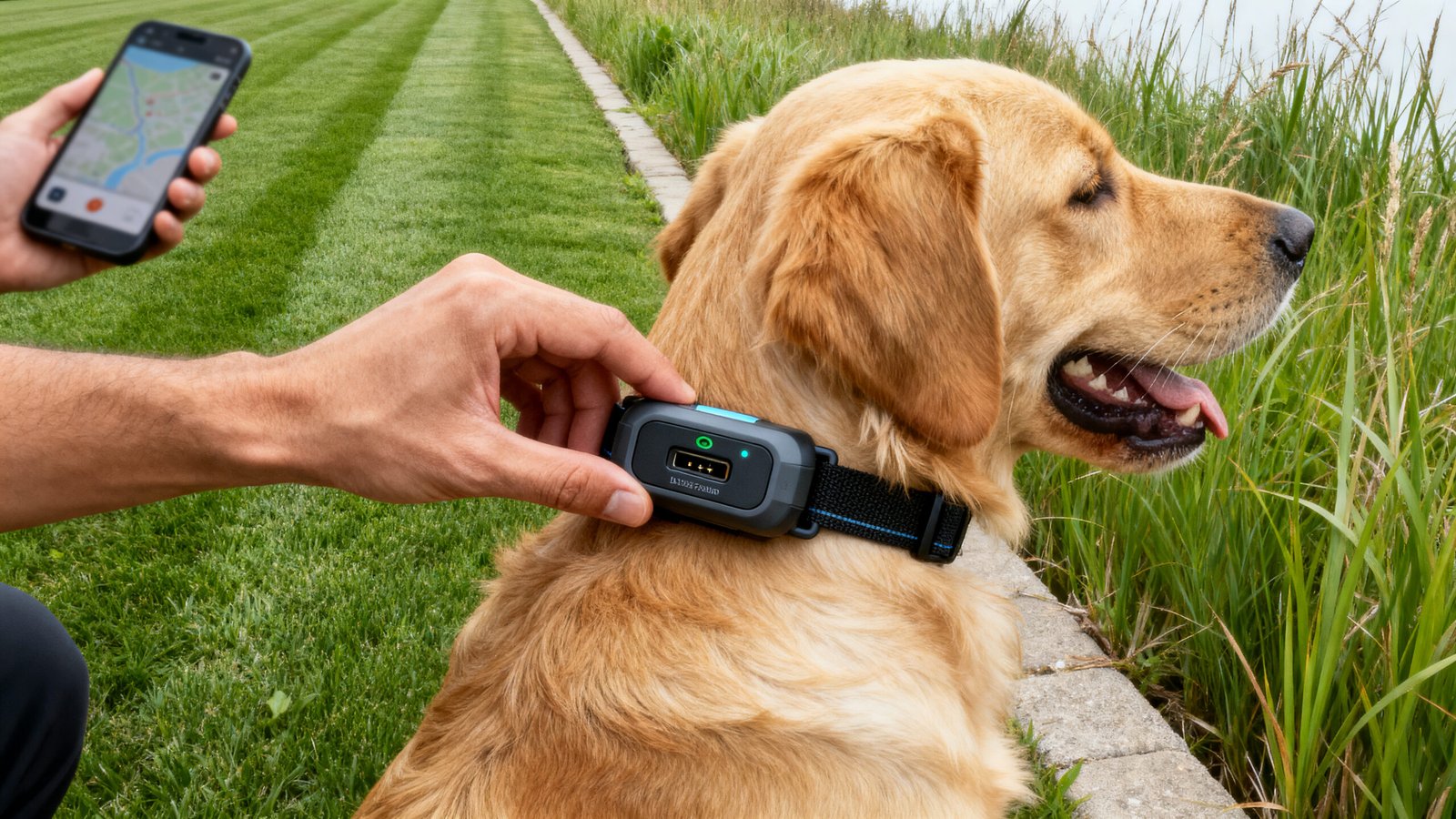
Fi is the better pick when you want long battery life, passive location tracking, and a lightweight module that you charge every few weeks. It excels as a “where is my dog right now” tool and an activity monitor. Halo is the better pick when you need on collar containment: the collar itself warns and corrects your dog without waiting for you to check your phone. But Halo demands daily or every other day charging and its GPS fence reliability varies significantly based on your terrain. The subscription cost picture also tilts the decision: Fi runs about $14 to $17 per month per collar with a mandatory membership and a $20 activation fee, while Halo subscription tiers historically range from roughly $6 to $30 per month depending on the plan you choose. Both require per collar subscriptions and neither publicly guarantees a permanent multi pet discount.

True Monthly Cost & Total Cost of Ownership
Most buyers fixate on the hardware price and overlook what the collar actually costs over two or three years. That is a mistake. The subscription is the real expense, and it never stops.
Fi requires a membership to activate and use the Series 3 or Series 3+ collar beyond the 30 day trial. According to Fi’s official billing page, the plans break down as follows: $99 every six months, which works out to $16.50 per month; $189 per year at $15.75 per month; or $339 every two years at $14.13 per month. On top of that, you pay a one time $20 activation fee per new collar. There is no GPS only free tier, a change from the older Series 2 days when an optional GPS subscription cost roughly $99 per year and basic activity tracking was free without any recurring charge. As noted in our Fi smart collar review, this shift to mandatory membership surprised many long time users.
Halo uses a tiered subscription model. The Basic plan, required for location and fence features, has historically been advertised around $5.99 to $7.99 per month when paid annually. Silver plans adding enhanced training content run roughly $9.99 to $14.99 per month. The Gold tier with the full Cesar Millan training library sits around $29.99 per month. Halo frequently bundles promotional discounts and extended trials, so the exact price you see depends heavily on the current campaign. Our Halo Collar 3 review covers these pricing dynamics in more detail.
Year over year, Fi’s effective recurring cost has risen from roughly $8 to $10 per month as an optional add on during the Series 2 era to roughly $14 to $16.50 per month as a mandatory membership now. Halo’s pricing has stayed in the $6 to $30 per month band with more training content added to justify higher tiers. Neither brand publishes a transparent historical price schedule, so these figures come from archived reviews and current support pages like Fi’s membership billing page and retail partner listings.
Hardware & Battery: Marketing Claims vs Real World Runtime
Fi advertises “up to 3 months” of battery life. Real users report something very different. In low use scenarios where the dog stays mostly at home within Wi-Fi and Bluetooth range, expect roughly 3 to 8 weeks between charges. Under heavy live tracking or in areas with poor cell coverage, battery life plummets to as little as 3 to 7 days. The estimated battery capacity sits around 400 to 600 mAh, and Fi uses AT&T LTE-M, a lower power cellular variant. But continuous GPS pinging during a lost dog event drains the battery in hours, not days. For a deeper dive, see our Fi smart collar battery life analysis.
Halo users commonly report charging every 12 to 36 hours with normal active use. The collar runs GPS continuously for fence enforcement, and frequent corrections through sound or vibration add to the power draw. Some long term reviews note battery degradation within 6 to 12 months, leading to even shorter runtimes. The tradeoff is deliberate: Halo prioritizes real time fence enforcement over extended battery life. If you want a best GPS tracker for dogs 2026 that prioritizes battery longevity, Fi is the clear winner in this category.
| Feature | Fi Series 3/3+ | Halo 3/3+ |
|---|---|---|
| Advertised Battery | Up to 3 months | Not specified |
| Real World Runtime | 3 to 8 weeks (low use), 3 to 7 days (heavy tracking) | 12 to 36 hours (active use) |
| Cellular Technology | AT&T LTE-M (low power IoT) | LTE (details not fully published) |
| Water Resistance | IP68-like, swim safe | IP67-like, swim safe |
| Estimated Battery Capacity | ~400 to 600 mAh (reviewer estimate) | Not disclosed |
Virtual Fence: Fi Safe Zones (alerts only) vs Halo Wireless Fence (on collar enforcement)
This is the single biggest functional difference between the two products, and misunderstanding it leads to the most negative reviews. Fi Safe Zones are notification only geofenced areas. When your dog leaves a defined zone, Fi sends a push notification to your phone. That is it. There is no correction, no warning tone on the collar, no attempt to stop the dog. The latency on those notifications typically ranges from about 30 seconds to 3 minutes in urban conditions, and some users report delays of 5 to 10 minutes depending on phone settings and cell coverage. False alerts happen frequently when the dog is near the edge of Wi-Fi range or when the collar briefly loses its Bluetooth connection to the base station.
Halo is designed as a primary containment tool using GPS geofences with on collar audible cues, vibration, and optional static stimulation. Corrections happen locally on the collar, so they are near real time at sub second speeds. The problem is not latency: it is position accuracy. Halo’s boundary wobble is commonly reported at 10 to 50 feet, which means dogs can receive corrections well inside the intended safe area or cross the fence without any warning at all in certain blind spots. Trainers report that the system works best in open suburban or rural yards with clear sky visibility and minimal tree cover. In dense urban environments, the multipath GPS interference from buildings makes fence behavior unpredictable. For an honest assessment of how this technology performs, read our Halo virtual fence collar GPS breakdown.
GPS Accuracy & Connectivity: Where Each System Struggles
Both collars suffer from the same fundamental limitation: consumer GPS is not centimeter precise, and neither company has magically solved physics. Fi users report location readings 5 to 50 plus meters off in dense urban areas, under heavy tree cover, or in valleys. Cold start GPS lock after a long idle period can take several minutes. During active “lost dog” searches, the map pin sometimes lags by 1 to 5 minutes or jumps between last known points instead of displaying a smooth track.
Halo users report position offsets of 10 to 50 feet routinely. This matters enormously because the fence boundary is only as reliable as the GPS fix. When the collar thinks the dog is 30 feet from where it actually is, corrections happen at the wrong place. Multipath reflections off buildings and tree canopies cause the boundary to “wobble” day to day based on satellite geometry and weather. Some users report push notification delays of 5 to 10 minutes in certain scenarios, though on collar corrections remain sub second because they process locally. If you need GPS dog collar real time tracking that is truly real time, you need to understand that neither product achieves perfect instantaneous updates in challenging environments.
Failure Rates, Warranty & Support Realities
Neither Fi nor Halo publishes formal failure rate statistics or hardware reliability data. This is not unusual in consumer electronics, but it means every buyer is operating on incomplete information. According to research, no quantitative public failure or claim rates are available for either brand.
Fi advertises unlimited warranty replacements for active memberships, alongside a standard 1 year limited warranty. Anecdotal reports suggest some users receive multiple replacements within a year for issues like LTE connectivity failure, GPS acquisition problems, or battery degradation. Because Fi’s business model allows unlimited replacements, the replacement count is not a reliable proxy for failure rates. Some replacements get approved for inconsistent performance rather than clear hardware defects.
Halo typically offers a 1 year limited warranty. User reports mention collars failing to hold a charge or failing to power on within the first year, along with variable RMA response times. Replacement is usually for the entire collar since the electronics are integrated into the strap. The is Halo collar safe for dogs question often surfaces in the context of these hardware reliability concerns, particularly when owners worry about a collar failing during a containment scenario.
Multi Dog Geofencing & Day to Day Management
If you have two or more dogs, both systems require a separate subscription for each collar. Neither brand advertises a permanent multi pet discount, though promotional bundles sometimes soften the blow. Our best rated dog GPS tracker 2026 guide covers alternatives if per collar costs are a dealbreaker.
Fi’s Safe Zones are account level, meaning a home zone applies to all dogs unless you configure otherwise. Each dog generates its own alert when leaving or entering a zone, which can lead to notification clustering when multiple dogs trigger alerts simultaneously. In crowded urban areas, phone notification throttling may delay some alerts.
Halo allows assigning fences per dog and customizing training and correction levels individually, even when dogs share the same fence boundaries. The complexity is higher: each dog’s collar uses independent GPS, so two dogs in the same yard can show slightly different boundary positions. Users report occasional confusion when multiple dogs trigger alerts at once, especially if their names or assigned fences look similar in the app.
Three Important Topics Most Comparisons Miss
Research highlighted three subtopics that almost every Fi vs Halo comparison article skips, and they matter a lot depending on how you plan to use the collar.
Off grid and poor coverage performance. Neither Fi nor Halo publishes comprehensive off grid behavior specifications in their consumer documentation. For Fi, it is unclear whether the collar locally logs a breadcrumb trail and uploads it later when LTE-M becomes available. For Halo, the critical question is what happens when GPS reception drops mid fence enforcement: does the system fail safe and stop corrections, or does it continue based on the last known good position? If you hike off grid or live in a rural area with marginal connectivity, ask support these exact questions before buying.
Data privacy and ownership. Both collars collect GPS tracks, activity metrics, health indicators, and dog profile data. Neither brand prominently discloses retention policies, data sharing practices with analytics partners, or whether anonymized data may be used for research or insurance purposes. Check whether you can export or delete your dog’s location history. Most buyers skip this entirely and later realize they have no control over years of movement data.
Third party integrations and APIs. Do not expect either collar to integrate with Apple Home, Google Home, Alexa routines, IFTTT, or smart home automation. Neither Fi nor Halo publishes a broad public API for location or health data. If you want to trigger a porch light when your dog leaves the yard or sync activity data with Apple Health, you will likely be disappointed. This is a closed ecosystem on both sides.

Real World Buyer Checklist: Tests to Run Before You Commit
Do not rely on specs. Run these four field tests during your trial period and the results will tell you more than any review.
Live tracking battery drain test. Activate live tracking and watch your dog for a full hour. Measure the battery percentage drop. Fi live tracking can reduce battery life to 3 to 7 days under heavy use. If the drain is faster than you can live with, that is a dealbreaker.
Boundary walk test. Walk your intended fence boundary at three different times of day: morning, noon, and evening. Watch for position wobble, false corrections, or missed boundary crossings. Halo boundary testing commonly exposes 10 to 50 foot deviations in tree lined or urban areas. Do this on both sunny and overcast days since satellite geometry changes.
Lost dog response time test. Take your dog to the far corner of your property and trigger a “left zone” scenario. Time exactly how long it takes for the notification to reach your phone. If the delay exceeds 3 minutes in a real escape, the collar may not give you enough time to react.
Support responsiveness test. Send a support ticket during your trial asking about replacement shipping times and pro rated refund policies. How fast they respond and how clear their answer is will tell you what long term ownership support actually looks like.
Decision Matrix & Final Recommendation (by Use Case)
Match your situation to the recommendation that fits. There is no universal “better” collar, only the one that aligns with your environment and priorities.
| Your Use Case | Better Pick | Why |
|---|---|---|
| Long battery and passive tracking | Fi | Effective cost $14 to $17/mo per collar, weeks long battery in normal use, lightweight module, good for “where is my dog” monitoring |
| Trained containment on open suburban or rural property | Halo | On collar correction capability, best performance with open sky and large simple polygons, subscription $6 to $30/mo depending on tier |
| Urban multi dog with unreliable GPS | Consider alternatives or hybrid approach | Both systems struggle in dense urban environments with tall buildings and multipath interference. A physical fence with a tracking collar as backup may be more reliable |
| Budget sensitive, minimal monthly fees | Fi (2 year plan) | $14.13/mo effective rate on 2 year prepay is the lowest recurring cost among mandatory subscription options. Halo Basic at ~$6/mo is cheaper monthly but offers no correction capability at that tier |
If your priority is which GPS tracker is best for dogs purely for location monitoring with minimal charging hassle, Fi wins. If you need active containment because a physical fence is not an option and you are willing to manage daily charging and careful training, Halo is the functional choice for open suburban or rural properties.
Conclusion
The Fi vs Halo collar decision ultimately hinges on a single question: do you need a notification when your dog leaves, or do you need the collar to stop your dog from leaving in the first place? Fi delivers longer battery life and solid passive tracking at roughly $14 to $17 per month per collar. Halo delivers on collar containment with the tradeoff of daily charging and GPS accuracy limitations that vary significantly by terrain. Neither system publishes hard failure rates or standardized fence performance data, so your real world testing during the trial period is essential. Before you buy, ask support about trial length, pro rated refunds, and replacement shipping times. Those three answers will shape your ownership experience more than any feature list ever could.
Still researching? Check out our best GPS tracker for dogs 2026 guide for a broader comparison of tracking options, or read our in depth Fi collar Gen 3 worth it analysis and Halo Collar 3 review for deeper dives on each device.
Frequently Asked Questions
Does the Fi collar actually last 3 months on a single charge?
No. Fi’s “up to 3 months” claim assumes the dog stays mostly at home within Wi-Fi and Bluetooth range with minimal GPS or LTE use. Real world users typically report 3 to 8 weeks under normal conditions, and as little as 3 to 7 days under heavy live tracking or poor cell coverage. When a dog is lost and the collar is continuously pinged in LTE and GPS mode, the battery can drain in hours rather than days.
Can Halo replace a physical fence entirely?
It can, but only if your property has open sky, minimal tree cover, and relatively simple boundaries. Halo performs best on large suburban or rural properties. In dense urban areas with tall buildings, GPS multipath interference causes boundary wobble and unreliable corrections. Even in ideal conditions, the system requires consistent training. Most negative Halo reviews come from owners who expected ‘install and forget’ containment.
Do I really need a separate subscription for each dog?
Yes. Both Fi and Halo require per collar subscriptions. Fi memberships are mandatory for each Series 3 or Series 3+ collar and are not account wide. Halo also bills per dog per collar. Neither brand advertises a permanent multi pet discount, though promotional bundles sometimes offer temporary savings.
Which collar works better for hiking and off grid use?
Neither is ideal for true off grid use. Fi relies on AT&T LTE-M for location updates, and it is unclear whether the collar locally stores a breadcrumb trail when cellular is unavailable. Halo depends on continuous GPS for fence enforcement, and its behavior during GPS dropouts is not well documented. If your dog spends significant time far from cell towers, ask each company’s support team about offline behavior before purchasing.
What is the typical response time for a warranty replacement?
Neither company publishes average replacement shipping times. Fi offers unlimited warranty replacements for active memberships, and anecdotal reports suggest relatively fast processing for clear hardware failures. Halo users report variable RMA response times, with some experiencing delays during peak seasons. Send a test support ticket during your trial to gauge responsiveness before committing long term.