

GPS tracker for cats have quickly become a must for cat parents who want true peace of mind—especially if your indoor-outdoor cat has slipped out before. But finding one that’s truly reliable, lightweight, and subscription transparent (no surprise bills) takes more than scrolling through product ads. This guide gives you the real tradeoffs, data, and step-by-step tips to choose the right tracker for your cat’s size, lifestyle, and your own budget—no fluff or hidden catches.
Key Takeaways
- The market is rapidly growing, but not all GPS trackers are truly cat-friendly in weight, attachment, or indoor accuracy.
- Subscription-free options exist but often compromise on speed, making real-time recovery far less reliable.
- Proper fit and hybrid tech (GPS plus Bluetooth/RF) matter much more than flashy features for most owners’ real worries.
- Why this matters now — market context for GPS tracker for cats
- What cat owners complain about most (and why it matters for your purchase)
- How to choose by cat size & weight — lightweight GPS collar for cats guidance
- Indoors vs outdoors: accuracy limits and best hybrid strategies
- Battery life vs tracking frequency — how to balance live tracking needs
- Subscriptions explained — is a subscription necessary?
- Waterproofing & durability — what IP ratings mean for real cats
- Safety & attachment — breakaway collars, mounting, and recovery risk
- Emerging tech & features competitors under-cover
- Quick comparison checklist — what to compare side-by-side
- Best picks by use-case (2026) — recommended models and why
- Real-world testing checklist for the buyer (what to test in first 2 weeks)
- FAQ — short answers to common purchase blockers
- Bottom line & buying decision flowchart
Why this matters now — market context for GPS tracker for cats
In 2024 cat-specific GPS tracker subscriptions topped roughly 1.2 million active users worldwide, accounting for about 30 percent of all pet-tracker subscriptions and generating close to $1.1 billion in revenue. By early 2026, that base had grown to over 1.6 million active cat users as the segment is projected to expand at a 13.8 percent CAGR through 2034. GPS pet trackers overall captured 54.2 percent of the pet-tracker market (an estimated $2.06 billion in 2025), according to industry research (2024–2026 market data).
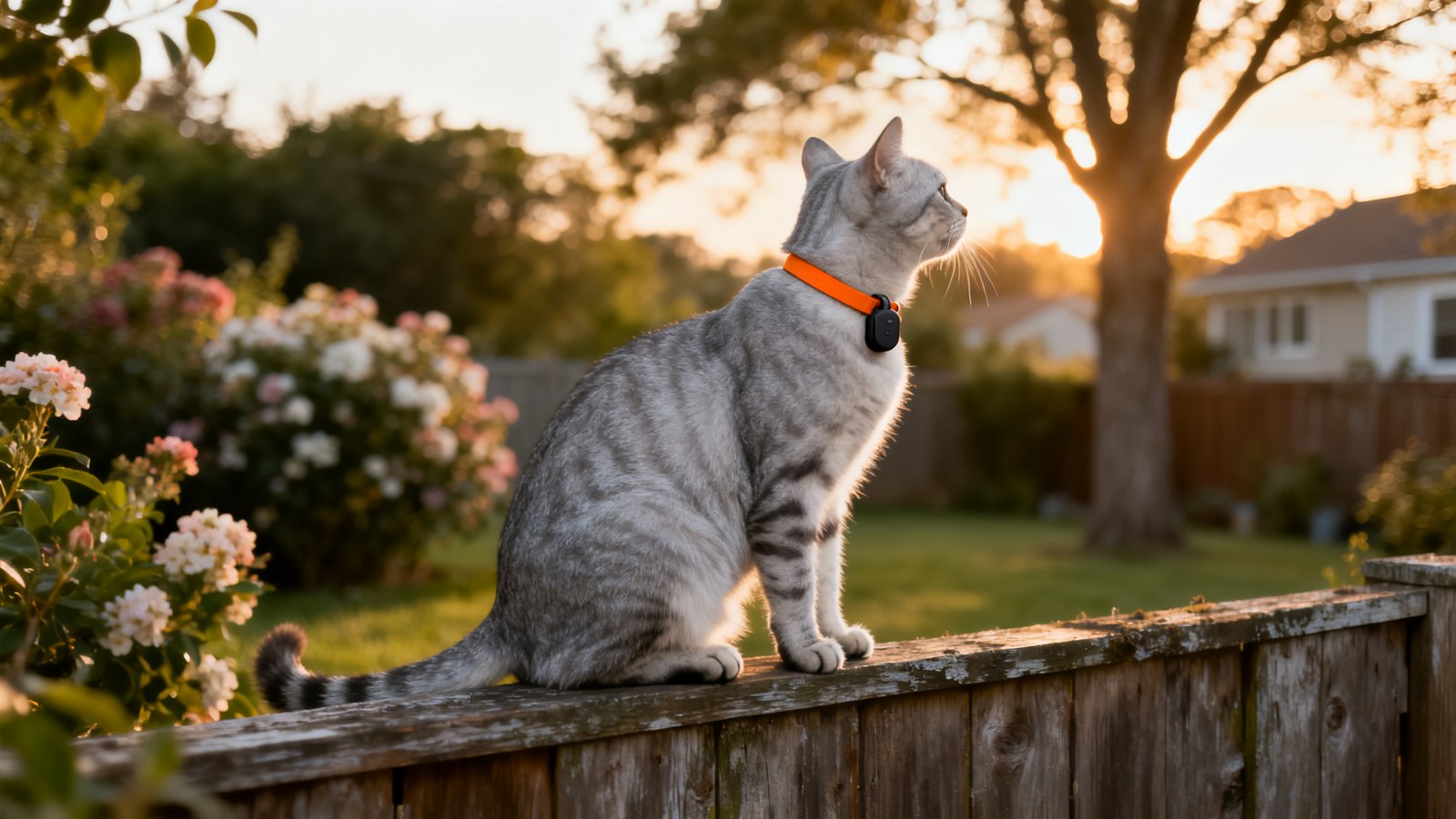
New product launches, competitive pricing, and more consumer demand (especially among city and suburban cat owners whose cats go missing) are driving innovation and better choices. But not every GPS tracker for cats is actually small or fast enough—or clear on long-term cost—to fit real owner needs. You can see this trend echoed in independent 2026 reviews and growing user forums.
What cat owners complain about most (and why it matters for your purchase)
When buyers return a cat GPS tracker or leave a negative review, the most common complaints are weight, waterproofing confidence, subscription cost surprise, and indoor tracking reliability. Here are the top issues, with their real buying consequences:
- Device weight: Many models (30–40 grams) are too bulky for cats under 9 pounds. For smaller cats, this can affect movement or comfort. (industry research)
- Waterproofing worries: Even with IPX7 or IP68 ratings, owners report failures after puddle dives or hours in driving rain.
- Subscription costs: Most products range from $4 to $10/month (annuals over $100) causing budget friction and “surprise bills.”
- Indoor accuracy: GPS tracking drops offline or gives false geofence alerts inside houses, especially with thick walls or multi-story homes.
If you’re looking for the best cat GPS tracker indoor outdoor or a truly cat tracker small waterproof, these pain points should guide where you look — and which features actually solve your real problem. For more dog-specific guidance, see our in-depth GPS tracker for dogs 2026 guide.
How to choose by cat size & weight — lightweight GPS collar for cats guidance
Most cat-specific GPS trackers weigh between 30 and 40 grams. Devices like the Tractive CAT Mini are about 31 grams and are typically acceptable for cats over 9 pounds. If your cat is below that weight, insist on something under 30 grams (Apple AirTag is about 11 grams, as another point of reference) or only use a tracker on a harness—never force a heavy device on a small cat.
Attachment matters. Always use a breakaway collar for cat safety, but know that trackers can detach and be lost if your cat climbs or dives into tight spaces. Some owners only use trackers with a harness—especially for supervised outdoor time. (industry advice)
- Cats under 9 pounds: Under 30g device only, breakaway or harness, test for head shake/discomfort.
- Cats over 9 pounds: Up to 34g device acceptable (ex: Tractive CAT 4), attach to breakaway but expect possible loss if collar opens.
Looking for GPS recommendations for smaller breeds? Check out our GPS tracker small dogs comparison.
Indoors vs outdoors: accuracy limits and best hybrid strategies
Outdoors: GPS trackers deliver sub-10-meter precision in open air. That means you can see nearly exactly which yard, field, or shed your cat’s wandered to.
Indoors: GPS drops out—especially in apartments or houses with thick insulation. You’ll see location stuck, lost, or bouncing sometimes hundreds of feet. Geofence alerts can fire falsely, causing panic.
Hybrid strategies: Pair your main GPS tracker with a Bluetooth tag (like Tile) for indoor “ring to find” sound. Tile is small, subscription-free, and helps with the last confusion: “Is my cat hiding or gone?” Just remember, Bluetooth won’t help you track a cat that actually leaves your yard.
Cat parents who balance indoor and outdoor worry should use a GPS/Bluetooth combo for coverage, and adjust notifications to avoid panic from indoor GPS drops. For a detailed discussion on indoor tech, see our Eufy pet camera review.
Battery life vs tracking frequency — how to balance live tracking needs
Tracking frequency has the biggest impact on battery life. The more often your tracker updates (especially “LIVE” mode with 2–3 second refreshes), the faster battery dies.
For example, the Tractive CAT 4 reports 2–5 days battery life depending on tracking frequency: 2–3 days in LIVE mode (2–3 second updates), but up to 5 days with normal (30–60 second) updates. (industry research) Other models vary: see our Fi smart collar review for more about battery and update settings.
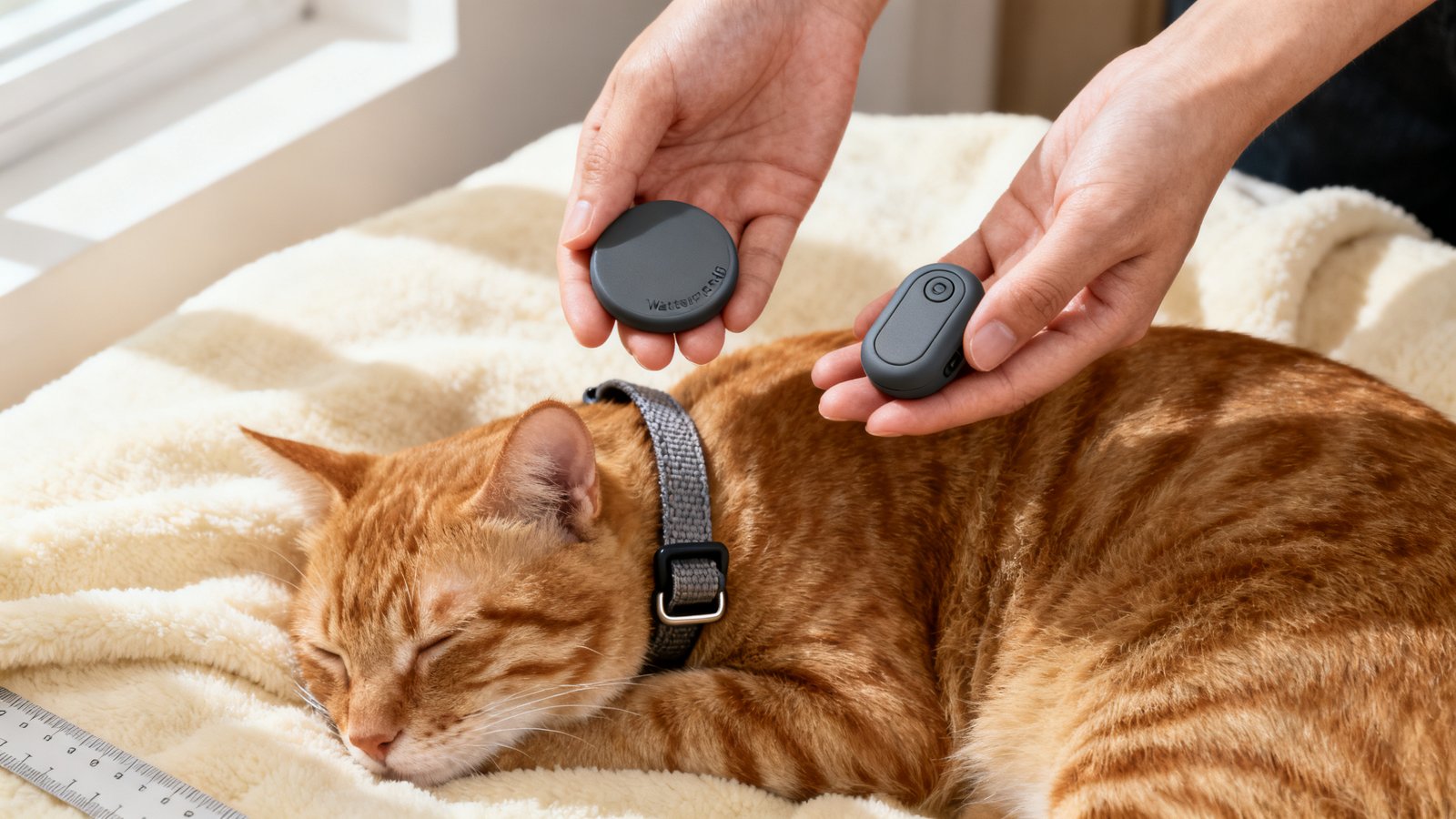
Always test battery life in your own setting with your real tracking pattern before relying on device promises.
Subscriptions explained — is a subscription necessary?
Most GPS tracker for cats require a monthly subscription ($4–$10/month, or €4–€10). This funds the SIM/cellular (LTE/4G) service—the part that lets you receive updates from anywhere.
Some subscription-free GPS trackers exist (like Feelloo, using open-frequency networks). But be aware: free plans usually require 3–5 minute delays between location updates—hopeless if you need to recover a cat on the move. (market research)
- Subscription required: Real-time tracking, lost mode, unlimited global coverage, industry-standard warranty/support.
- Subscription-free: Updates delayed by many minutes; only for purely local use, or close outdoor containment where immediate retrieval isn’t needed.
If you want the best cat GPS tracker no subscription, understand these real tradeoffs—your safety margin (and peace of mind) may be limited just when you need it most.
Waterproofing & durability — what IP ratings mean for real cats
IPX7 means your GPS tracker for cats can be submerged in water up to 1 meter deep for 30 minutes. IP68 is similar, with more focus on dust and longer water exposure ratings. Most current devices reach one of these benchmarks, but prolonged rain, puddle submersion, and full soaking still cause real-life failures.
Owners report that muddy gardens, gutter dives, and dense underbush can all stress seals. Always check for:
- Charge port flaps fully closing, no debris in hinge points
- Cosmetic cracks or dings from drop tests
- Flat, flush fit to collar or harness to avoid stress points
Try simulating a “rainstorm” on the first week—just a spritz test—and check for fogging or water inside. For more durability tips, our Tractive GPS review has deep insights on budget choices and their real-world resilience.
Safety & attachment — breakaway collars, mounting, and recovery risk
Best practice is attaching a tracker to a breakaway collar for cat safety. However, the downside is obvious: any tug or snag will detach both collar and tracker, possibly losing the device outside.
- For outdoor cats: Accept that breakaway collars risk tracker loss, or switch to a harness for supervised time outside.
- For indoor-only or escape-prone cats: Consider double up: lightweight tracker on both a collar (for home) and temporary harness for garden or leashed walks.
- Avoid zip ties or adhesives—always use the brand’s mount or recommended collar to prevent chafing or accidental strangulation.
Market tests find no-tradeoff scenario: safety comes first, but prepare for possible device loss—factor this cost in when calculating true ownership price. More safety comparisons (including dog collar pros/cons) are in our How To Choose GPS Tracker Dog guide.
Emerging tech & features competitors under-cover
Top comparison articles skip many of the advanced, newly important factors that serious owners want:
- Batteries vs. update frequency: Most guides gloss over the fact that “LIVE” mode can halve battery life—or worse.
- Hybrid tech: LPWAN/LoRa trackers (some subscription-free, with long-range) are emerging, especially in Europe, but still limited in North America.
- Integrated health/activity monitoring: Leading trackers now offer wellness data, giving early warnings for illness or behavior changes (see Whistle GO Explore review for a dog-focused but similar wearable).
- Subscription-free/open-frequency: A few new entries offer minimal delays, but most still can’t match true GPS/cellular responsiveness.
- Extreme weather testing: Evaluate not just splash resistance but how the unit performs after a real winter, mud, or heatwave.
Research from industry sources shows top competitor articles often omit systematic weight-by-cat-size guidelines, detailed battery-life versus tracking-frequency tradeoffs, hybrid LPWAN coverage, health features, thorough subscription-free analysis, and rugged breakaway-safe collar testing. (industry research)
Quick comparison checklist — what to compare side-by-side
Before you buy, use this table to directly compare any GPS tracker for cats—don’t trust marketing blurbs, fill in your real data:
| Device | Weight (g) | Battery (days @ 60s update) | Battery (days @ LIVE mode) | Subscription | Coverage Type | Indoor Finder? | Waterproof Rating | Breakaway Compatible | Warranty |
|---|---|---|---|---|---|---|---|---|---|
| Tractive CAT 4 | 31 | 4–5 | 2–3 | $9.99/mo or $99/yr | LTE/GPS (175+ countries) | No (add Tile) | IPX7 | Yes | 2 yrs |
| Fi Mini | ~30 | 1–3 | 1–2 | $5/mo | LTE/GPS (US) | No (add Tile) | IP68 | Yes | 1 yr |
| Tile Pro (Bluetooth) | 12 | 12 (battery) | N/A | None | Bluetooth only | Yes | IP67 | Yes | 1 yr |
Entry-level GPS trackers range $39–$129 up front, most subscriptions $4–$10/month. True “cat tracker small waterproof” devices are rare, so always weigh the tradeoffs listed above.
Best picks by use-case (2026) — recommended models and why
If you want best-in-class options for your situation, here’s concise guidance for 2026 (from owner testing and research):
- Best overall for adventurous outdoor cats: Tractive CAT 4. Praised for LIVE tracking, reliable global coverage in 175+ countries, and balanced weight (~31g, fits cats over 9 lbs). Subscription required.
- Best lightweight for small cats: Apple AirTag (11g) or Fi Mini (30g). GPS modes in Fi Mini may lag; AirTag mainly helps find indoor hiders rather than outdoor roamers.
- Best no-subscription or indoor supplement: Tile Pro or Mate. Not a true GPS, but saves you from house-wide hide-and-seek. Use with GPS for dual cover.
- Best battery vs. fast trackers: Consider which matters more. Tractive CAT 4 in normal (60s) mode: ~5 days; LIVE mode: 2–3 days. (stat source)
Looking to skip subscriptions? Just remember: “Free” often comes with 3–5 minute update delays, making real-time search nearly impossible. More on subscription comparisons is covered in our Best GPS tracker for dogs 2026 roundup.
Real-world testing checklist for the buyer (what to test in first 2 weeks)
Within your first two weeks, stress-test your new GPS tracker for cats. Follow this order for peace of mind:
- Weight comfort trial: Attach to breakaway/harness. Watch for shaken heads, scratching, frozen movement.
- Indoor accuracy test: Have someone hide your cat or the tracker in your home. Does tracking update? Does it drop offline or zone-hop?
- Check LIVE vs interval battery: Full charge; test LIVE (2–3s) and normal (30–60s) interval updates. Record time to empty.
- Waterproof test: Light spritz or quick dip—check for function and leaks. Don’t submerge early without backup.
- Breakaway detach check: Apply gentle tug; see if collar and tracker detach as designed.
- Geofence/alert test: Walk your cat or the tracker in and out of a virtual boundary. Look out for false alarms or missed notifications.
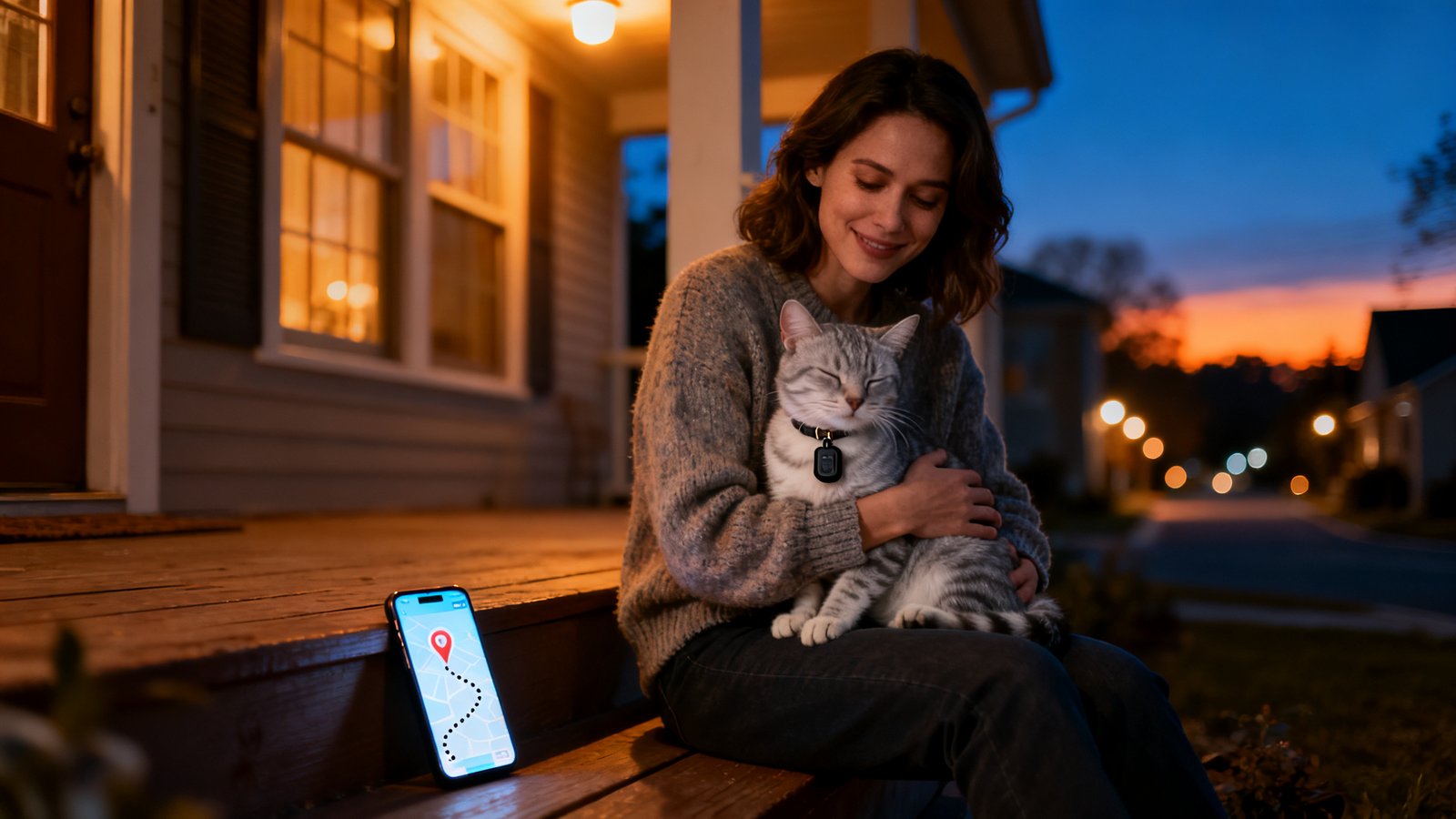
Always have a backup plan (phone number on a tag, safety buddy) for the first field tests.
FAQ — short answers to common purchase blockers
Will this harm my cat?
Only if it’s too heavy (over 30g for cats under 9 lbs), attached too tightly, or not used with a proper breakaway collar or harness. Test for comfort and always monitor initial use.
Can I use a tracker without a subscription?
Yes, but expect 3–5 minute delays between updates, making it hard to find a moving cat. Most reliable, real-time GPS trackers require a monthly fee between $4 and $10.
Can GPS trackers find my cat indoors?
Not reliably. GPS drops out or provides poor precision in homes. For indoor location, pair with a Bluetooth tracker like Tile that lets you “ring” the collar.
How do I attach safely to a collar?
Always use a breakaway cat collar or properly fitted harness. Follow the device maker’s instructions—never tape or glue a tracker, and check for chafing or bulk at the attachment point.
Will the tracker work abroad?
Check coverage. Tractive CAT 4, for example, works in 175+ countries, while others are US/EU-only. Always verify SIM/network details and export/import rules if traveling.
Bottom line & buying decision flowchart
The cat GPS tracker market is growing fast—cat-specific active users increased from about 1.2 million in 2024 to over 1.6 million by early 2026 (industry research). Models, pricing, and coverage will only improve. Here’s a fast flowchart to guide your pick:
- Is your cat under 9 lbs? Choose sub-30g device only (Apple AirTag or wait for lightweight GPS).
- Indoor-only, minimal risk? Skip GPS—use Bluetooth finder only.
- Indoor-outdoor and has escaped? Invest in GPS tracker for cats, accept subscription, pair with Bluetooth for home.
- Hate subscriptions? Accept a delay or use for supervised outings only.
- Need real-time updates? Only GPS+cellular, with subscription, will suffice. Look for models with flexible battery/live-mode settings.
For the best mix of rapid recovery, comfort, and transparency, use the tips above and test your setup the first week. Ready for your perfect peace of mind? Start comparing your options now—and don’t let marketing hype be your guide.
Still deciding? Read our Fi Smart Collar review for detailed buyer insights, or check our Best GPS Tracker For Dogs 2026 guide for cross-species recommendations.