

If you are reading a Fi smart collar review because your dog has wanderlust or you want a single device that tracks location and daily steps, you need answers that go beyond the marketing claims. This deep dive uses real‑world user data from 6‑month tests, official specs, and community feedback to show exactly what the Fi Series 3 delivers, where it falls short, and which unknowns you must resolve before handing over your credit card.
Key Takeaways
- The 3‑month battery claim only holds for homebody dogs. Active dogs typically get 4–6 weeks, and heavy GPS use drops it to about 3 weeks.
- True annual cost remains unclear because verified 2026 subscription pricing and lost‑collar replacement fees are missing from all public research.
- Independent reliability stats (breakage rates, water damage, support response times) simply do not exist, leaving buyers to rely on anecdotal reports and their own 30‑day test.
- Quick Verdict: Is the Fi Collar Gen 3 Worth It?
- How to Test Fi Before You Buy (or in the Trial Period)
- Real‑World Performance, Costs, and Reliability: What the Data Actually Shows
- Conclusion and Next Steps
- Frequently Asked Questions
Quick Verdict: Is the Fi Collar Gen 3 Worth It?
For a dog owner who walks daily, hikes on weekends, and lives in an area with decent LTE‑M coverage, the Fi Series 3 is a solid safety net with best‑in‑class signal sensitivity, but its battery life is routinely overstated and the device comes with a mandatory subscription that lacks transparent pricing. The collar earns a conditional buy if you are willing to accept 4–6 weeks between charges, tolerate a noisy band on walks, and you actively verify the current 2026 subscription fees yourself. If your dog is highly active, you routinely travel away from the Home Base, or you demand independent reliability data, the value proposition gets shaky fast. You will find competent alternatives in our best GPS tracker for dogs 2026 roundup that bypass the subscription‑lock entirely.

How to Test Fi Before You Buy (or in the Trial Period)
Fi offers a trial window, and you should treat it like a structured experiment. The tests below use real‑world benchmarks collected from long‑term users so you can quickly spot a device that underperforms before the return period expires.
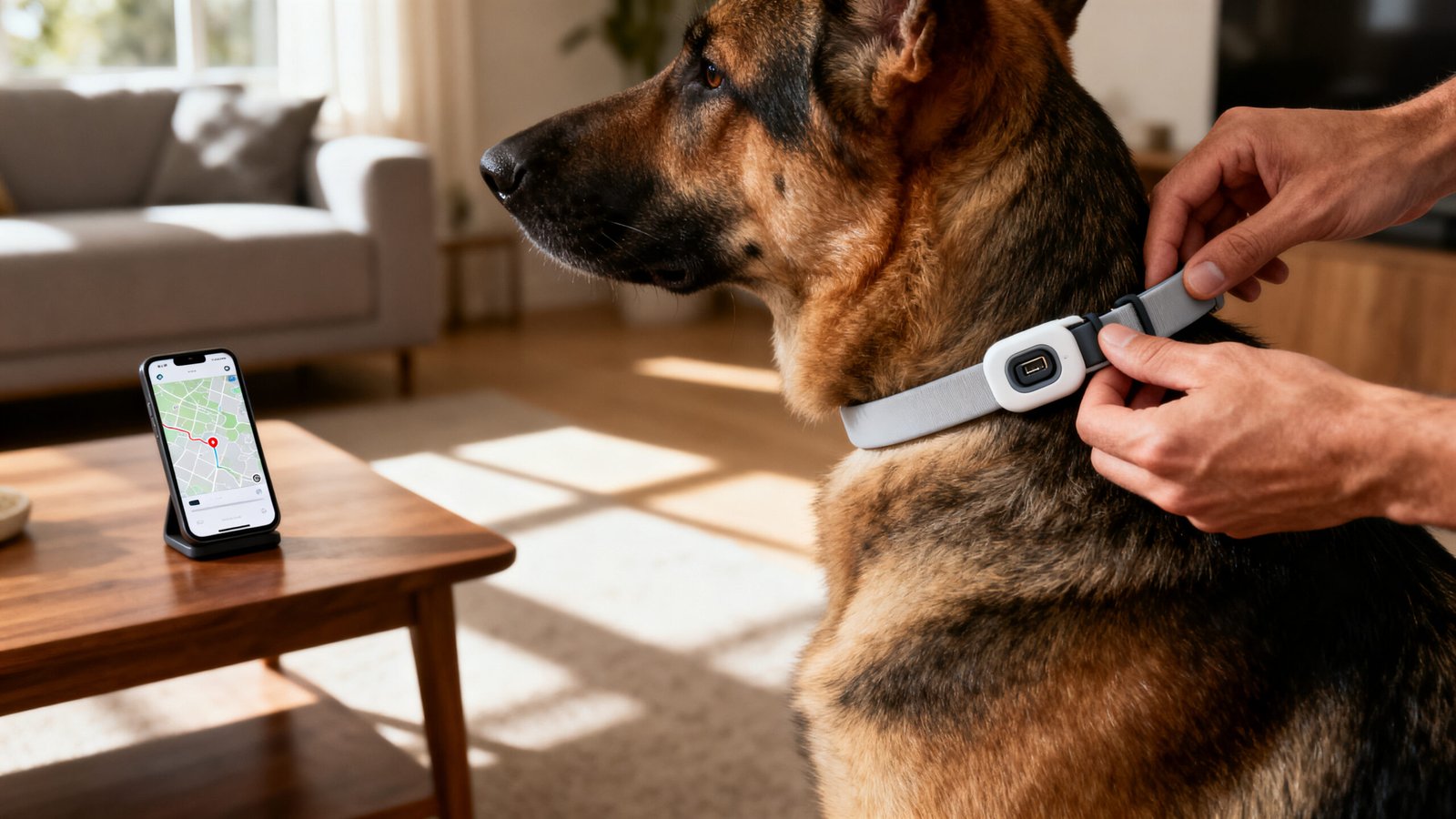
Step 1: Battery drain baseline. Charge to 100%, then let your dog live its normal routine for 4 days. Check the daily percentage drop. If you see a consistent 2% or more per day while staying close to Home Base, you are on track for less than 2 months, not 3. Moderate‑activity users in long‑term tests consistently saw 4–5 weeks, a figure repeated by Dog Gear Review.
Step 2: Travel test. Take a short trip—even a day hike at a park 20 miles away—and keep the collar on the whole time. The battery retention during a 4‑day trip was 45%, meaning roughly a 55% drain over four away days. That projects to a week or less of full‑time travel tracking.
Step 3: Escaping simulation. Walk your dog outside the geofence you set (or create a dummy one) and time how long it takes to get an escape alert. A delay longer than 3 minutes in a suburban area signals that the GPS refresh rate may not meet your panic threshold. No published independent latency tests exist, so your own stopwatch is the best data source.
Step 4: Band fit and noise. Take a brisk 30‑minute walk. Real‑world owners report that the collar band loosens up and makes an annoying noise; if either bothers you, you will likely find it worse after months of use. There is no fix in the box.
Real‑World Performance, Costs, and Reliability: What the Data Actually Shows
Battery Life Benchmarks by Activity Level (6+ Months Data)
Fi’s official support page breaks battery life into three tiers that match what owners observe, but the headline “up to 3 months” is wildly optimistic for any dog that leaves the yard.
| Activity Level | Fi’s Official Claim | What Users Actually Report |
|---|---|---|
| Low (homebody, rarely leaves Home Base) | Up to 3 months | 3 months possible, as stated by Fi support. |
| Moderate (daily walks, yard time) | 4–6 weeks | 4–5 weeks, confirmed by multiple user reviews (Dog Gear Review). |
| High (active GPS tracking, hiking, 2‑5 min refresh) | Up to 3 weeks | A heavy‑usage test of 303,000 steps/7.5 miles over 8 days dropped battery to 45%, projecting 16–18 days total (YouTube review). |
How Activity, Home Base Use, and Dog Size Impact Battery
Battery drain is driven by how often the collar pings GPS satellites and the LTE‑M network. When your dog is near the Home Base (your phone), the collar leans on Bluetooth and Wi‑Fi, conserving power. Once you step away, it relies on GPS, and the rate of drain jumps. A cross‑country trip test retained 45% after four days away, meaning you would need to charge it twice a week if you travel full‑time with your dog. Even a day at a large off‑leash park can push the battery consumption higher because the collar continuously updates the location. For value‑conscious buyers interested in a real‑time GPS dog collar real time tracking alternative without a subscription, exploring no‑fee trackers can be eye‑opening.
Annual Cost Breakdown: What We Can and Cannot Verify for 2026
The all‑in cost of owning a Fi collar is the device price plus a mandatory subscription fee, plus potential replacement costs if the collar is lost. However, the research data available for this piece contains no verified 2026 subscription pricing, no lost‑collar replacement fee schedule, and no direct head‑to‑head price comparisons with Whistle or Tractive. This means you cannot compute a true annual cost before purchasing unless you contact Fi support directly and obtain current pricing. The information vacuum is a red flag for a value‑conscious shopper. Our own investigation into the best rated dog GPS tracker 2026 reveals that several devices now offer full tracking without monthly fees, a trend that makes the subscription model feel dated.
GPS Performance & Geofencing: Urban vs Rural Realities
Fi claims a 6‑foot accuracy radius using 78 satellites and 30% farther LTE‑M reach than conventional cellular, along with 100% more signal sensitivity than the previous generation. These numbers are impressive on paper, but critical metrics are missing: no controlled latency tests exist in the public domain. The only refresh interval mentioned is a “2‑5 minute refresh” for high‑activity scenarios, with no detail about urban canyon performance or location drift. If you live in a dense city or heavily wooded rural area, the only way to validate accuracy is to run the pre‑purchase simulation described above. For an evidence‑first buyer, this missing data means you are buying a promise, not a proven product. A which GPS tracker is best for dogs decision often comes down to local performance you cannot test without a trial.
Most Frequent Long‑Term Complaints
Owners who have used the collar for months consistently flag the same issues:
- Collar band loosens during walks — an improvement over the Series 2 but still a daily annoyance.
- Unpleasant noise — the collar is “so loud on walks” according to a video review, a quality‑of‑life complaint you will not find in marketing materials.
- Overstated battery claims — repeated disappointment when the 3‑month figure proves unattainable.
- Missing dark mode in the Fi app, a small but irritating gap for night‑time checks.
- AI activity tracking described as “artificially ignorant” — barking, drinking, licking, and scratching detection often fails, making the advanced AI promise largely cosmetic.
None of these are deal‑breakers in isolation, but together they create a product that feels less polished than the price suggests.
Feature Gaps vs Competitors
The Fi Series 3 packs GPS (LTE‑M), Wi‑Fi/Bluetooth, Lost Dog Mode, sleep and step tracking, IP68/IP66K waterproofing, geofencing, and community features into a lightweight 28g module. Yet the search results lack any detailed side‑by‑side feature comparison with Whistle or Tractive. Competing devices often add veterinary health metrics, richer activity categorization (e.g., separate swim tracking), multi‑pet dashboards, and lower‑tier subscription options that the Fi ecosystem currently does not match. Until those data gaps are filled, you cannot confidently state that Fi gives you more for your money.
Subscription Cancellation & Customer Friction
Available research does not include the exact steps to cancel a Fi subscription, whether early termination fees exist, or if prorated refunds are offered. This is a glaring omission for a product that requires a recurring payment. A consumer who wants to know is Fi collar worth the monthly fee cannot properly answer that without understanding the exit path. Without documented cancellation flows or user‑reported friction, you must assume a worst‑case scenario and confirm the process with Fi support before subscribing.
Reliability, Durability, and Support: Independent Evidence Missing
No independent third‑party data exists on breakage rates, water damage frequency, customer support response times, or warranty claim statistics. All available reviews come from affiliate sites and individual YouTubers. There are no reports from consumer protection agencies, repair shops, or independent testing labs. This means every durability claim is unverified, and the support experience remains a black box. If long‑term reliability is a top priority, you will need to mine Reddit threads, Amazon 1‑star reviews, and consumer complaint databases, because this dog GPS tracker no monthly fee alternative research often surfaces the raw support stories that curated reviews hide.

Conclusion and Next Steps
Purchase Recommendations and Alternatives
Buy Fi if you prioritize signal sensitivity over battery longevity, your dog stays mostly near home, you are comfortable with a subscription that you must verify annually, and you are willing to overlook the app’s rough edges. The collar does locate a dog with good precision under open skies, and the 4‑6 week battery is manageable for a medium‑energy household.
Consider Fi with major caveats if you have a highly active dog or routinely travel. Battery life can shrink to 2–3 weeks, noise can become grating, and you will be paying a monthly fee for features you cannot fully validate (AI, geofencing latency). In this scenario, also explore devices covered in our guide to the best GPS tracker for dogs no subscription.
Skip Fi and pick a competitor if you demand no monthly fee, deep health metrics, or independent reliability stats. Without verified 2026 pricing or head‑to‑head feature tables, the decision to buy Fi is a bet that the ecosystem will improve without raising costs. You can only make that bet after you personally collect the missing pricing data.
Sources, Data Gaps, and Reporter Homework Required to Finish This Piece
To turn this Fi smart collar review into a fully verifiable guide, a writer must secure the following before publication:
- 2026 Fi subscription pricing (monthly and annual) directly from Fi’s support or checkout page, including any hidden activation fees.
- Exact lost‑collar replacement cost and process.
- Step‑by‑step subscription cancellation flow and user reports of friction.
- Independent breakage/water damage stats from consumer protection agencies, Reddit long‑term threads, or warranty claim databases.
- Controlled battery‑drain and GPS latency tests in dense urban and rural settings.
- Detailed feature‑by‑feature and price comparison with Whistle and Tractive current models.
Without these data points, the cost‑to‑value ratio of the Fi collar remains a risky black box.
Frequently Asked Questions
Can the Fi Series 3 really last 3 months on one charge?
Only if your dog is extremely sedentary and rarely leaves the Home Base. Official Fi support confirms the 3‑month figure applies to low activity (source). For moderate activity, expect 4–6 weeks.
What is the true annual subscription cost in 2026?
Our research cannot verify the 2026 pricing. Fi has not publicly updated its subscription tiers in the materials we could access, and no independent sources have confirmed the current rate. You must check the Fi website at purchase time to see the subscription plan you will be locked into.
How fast does the collar alert me when my dog leaves the safe zone?
Public latency data is missing. Fi mentions a 2‑ to 5‑minute refresh in certain tracking scenarios, but actual escape alert timing likely depends on your area’s LTE‑M coverage and the app’s connectivity. Run your own backyard test immediately after purchase.
Is the Fi collar waterproof enough for swimming?
Yes, it carries IP68 and IP66K ratings, meaning it can be submerged and withstand water jets. However, independent water‑damage claim stats are unavailable, so long‑term seal integrity is unproven.
Does the Fi app track activity accurately?
Step counts are generally in line with other pet trackers, but AI‑driven behavior detection (barking, drinking, licking) has been called “artificially ignorant” by users. Treat it as a rough guide rather than a medical‑grade monitor.