

If you’re weighing a GPS collar vs AirTag dog tracker for your off leash hiking companion or your suburban escape artist, you’ve probably already realized that marketing brochures won’t tell you what actually happens when your dog bolts into the woods. This guide skips the fluff and gives you a use case driven breakdown of range, reliability, and total annual cost so you can pick the right tool for where your dog actually runs.
Key Takeaways
- An AirTag costs roughly $38 in year one and works as a cheap urban backup, but it can be effectively useless in rural areas where no Apple devices pass within Bluetooth range.
- A dedicated GPS collar like Fi, Tractive, or Garmin provides real time tracking updates every few seconds over LTE or satellite, making it the only reliable choice for escape prone dogs and backcountry adventures.
- Your decision boils down to one question: if your dog runs off today, do you need to know where they are right now, or are you okay hoping someone with an iPhone walks past them?
- Quick bottom line verdict
- Real world range and reliability: why AirTag can be effectively “zero range” in rural areas
- How AirTag tracking actually works (and why that matters for moving dogs)
- Can an AirTag reliably track a dog running fast through dense cover?
- What GPS collars offer that AirTags lack
- Top complaints and real user pain points
- Cost comparison: first year and ongoing
- Practical recommendations and decision flow
- If you choose an AirTag: mitigation tactics and setup checklist
- Conclusion
- Short FAQ: quick answers every owner cares about
Quick bottom line verdict
Here is the decision rule this entire article will justify: use an AirTag only as a cheap secondary backup for urban or low risk scenarios where foot traffic is high and escape distance is short. Use a dedicated GPS collar if your dog is escape prone, if you hike on remote trails, or if you live on rural property where the nearest iPhone might be half a mile away.
An AirTag costs about $38 in year one including a collar holder and battery. A GPS collar like Tractive runs $187 to $199 in year one, Fi Series 3 hits roughly $248, and satellite based options like Garmin can exceed $700 upfront but require zero subscription. If your dog has ever slipped out the front door and kept running, that price gap shrinks fast when you consider what’s at stake.
Ask yourself this: should I use AirTag or GPS for my dog? If your answer depends on whether you need to actually find your dog or just hope for the best, read on.
Real world range and reliability: why AirTag can be effectively “zero range” in rural areas
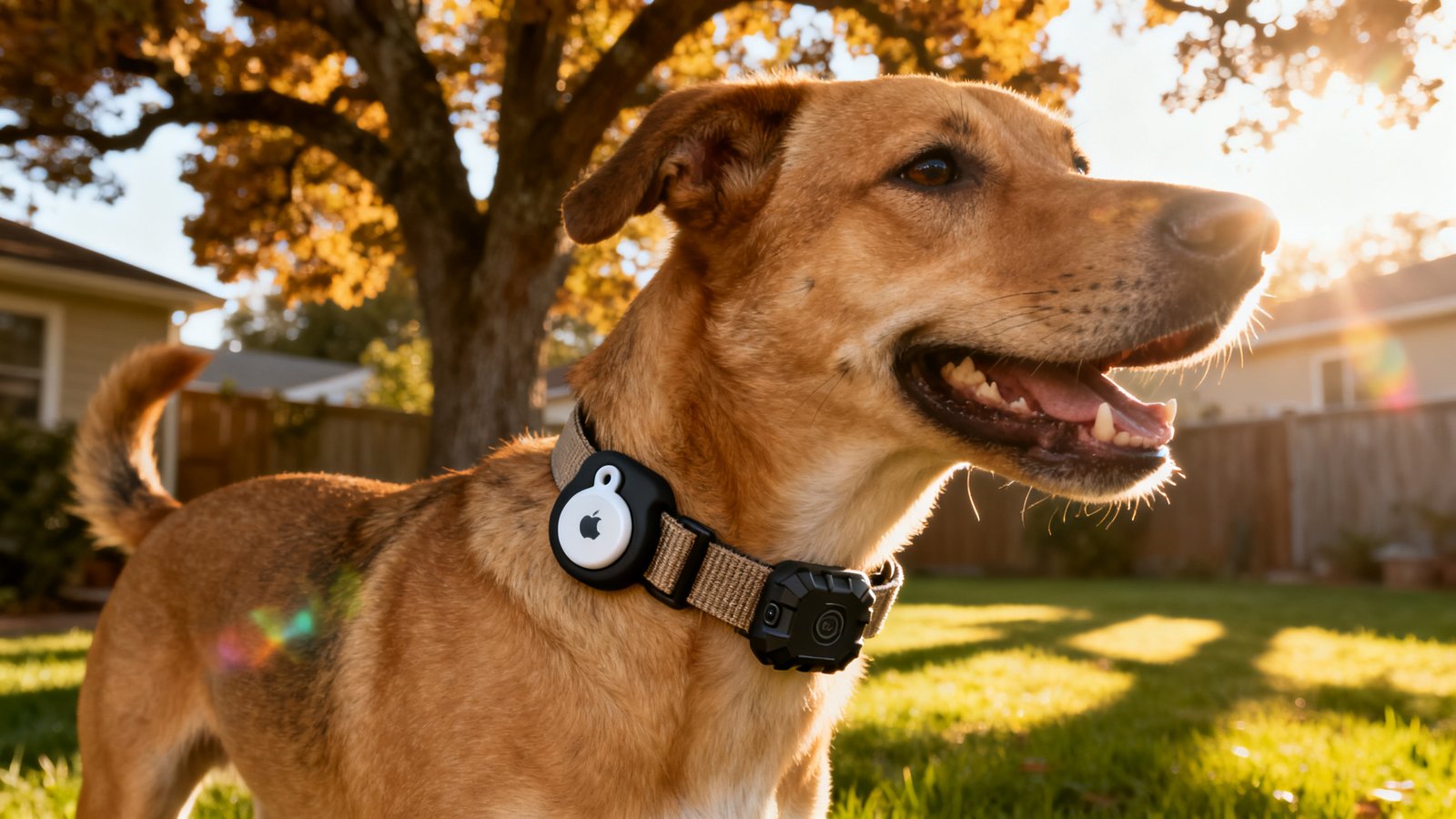
When comparing a real GPS vs AirTag for dog tracking, the single biggest differentiator is how each device gets its location data back to you. An AirTag does not have its own connection to the internet. It relies entirely on pinging nearby Apple devices via Bluetooth, and that Bluetooth range maxes out at roughly 10 to 30 meters (about 30 feet) from any passing iPhone or iPad.
In a city or busy suburb, that’s not a dealbreaker. Dozens of Apple devices pass within range every few minutes. But take that same AirTag to a rural trailhead or a backcountry hiking route and the math collapses. No passing iPhones means no location updates. Your dog could be 200 yards away behind a ridge and the Find My app will show the last known location from three hours ago, if it shows anything at all.
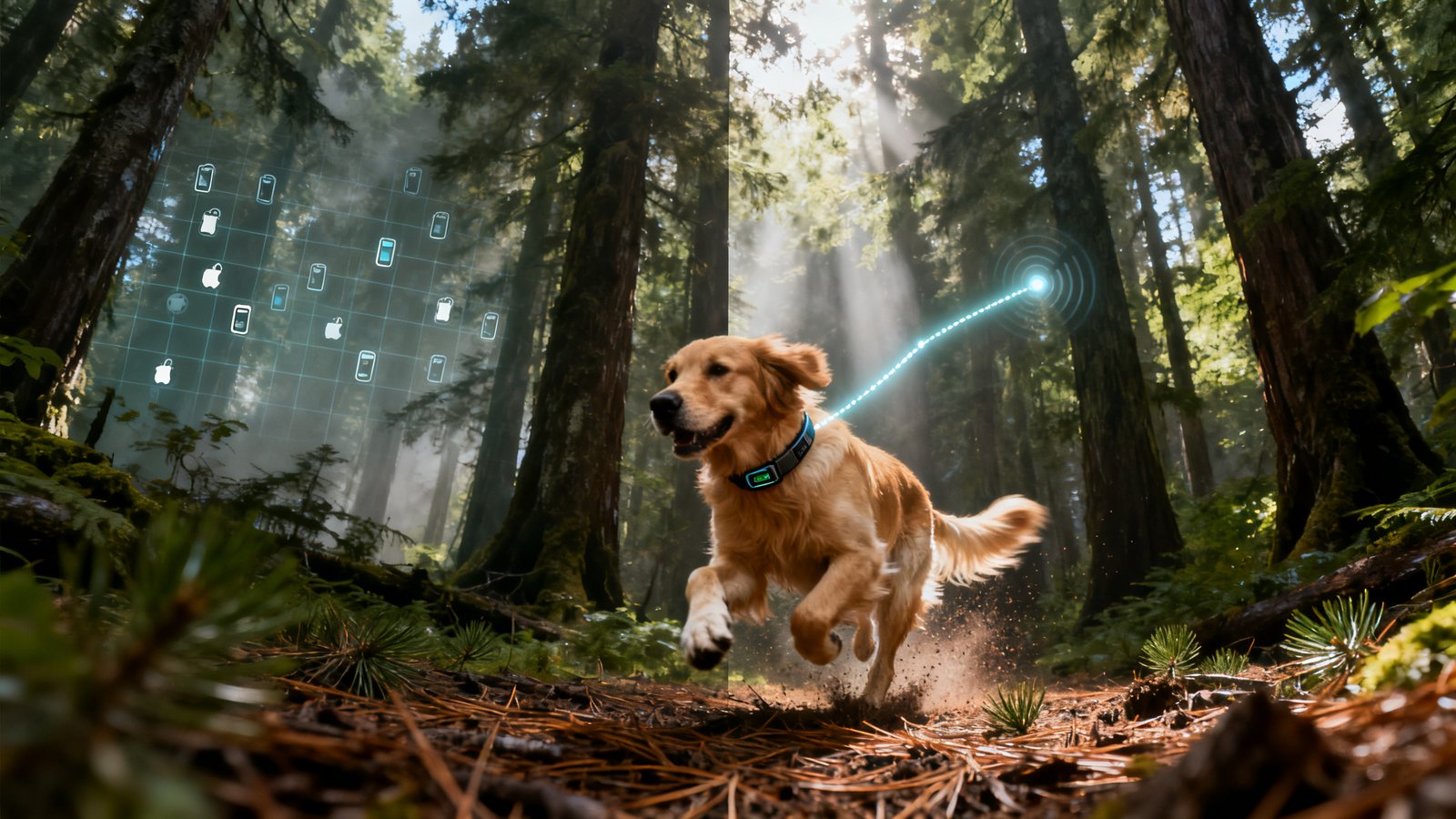
A dedicated GPS collar operates on a completely different principle. It uses onboard GPS to determine position and then transmits that data over LTE cellular networks or, in the case of satellite models like the Garmin Alpha T 20, over dedicated radio frequencies with a tracking range up to roughly 9 miles. No nearby phones required. No hoping someone walks past. The collar reports position continuously as long as it has a sky view and cellular or satellite signal.
Independent tests and user reviews confirm this gap is not theoretical. Whistle GO Explore collars, which relied on AT&T LTE M for backhaul, were documented to lose connectivity entirely in remote or low coverage areas regardless of GPS satellite visibility, according to multiple reviewer reports. Fi collars, by contrast, use multi carrier LTE arrangements that provide more consistent connectivity in marginal coverage zones, as noted in multi product comparison tests.
The takeaway is straightforward: in any area where cell service is spotty or human foot traffic is low, an AirTag effectively has zero functional range. A GPS collar with LTE or satellite capability remains operational. If you hike on weekends or live on acreage, this distinction alone makes the choice clear when you’re evaluating any GPS collar vs AirTag dog comparison.
How AirTag tracking actually works (and why that matters for moving dogs)
Understanding what happens inside an AirTag reveals why Apple’s tracker was never designed for pets. When you’re researching AirTag vs GPS collar for dogs which is better, the technical architecture explains most of the performance gap.
An AirTag broadcasts a rotating Bluetooth identifier that any nearby Apple device can detect. When an iPhone, iPad, or Mac passes within roughly 30 feet, it anonymously relays the AirTag’s location to Apple’s Find My network. You then see that location in your Find My app. There is no continuous tracking. There are no scheduled update intervals. The tag simply waits for a compatible device to wander close enough.
For a moving dog, this creates a fundamental problem. A dog running through a neighborhood at 15 miles per hour can cover a quarter mile in one minute. By the time a passing iPhone detects the AirTag and relays its position, the dog is long gone. The location you see is already stale. On a hike where the nearest Apple device might be back at the trailhead parking lot, your dog’s AirTag won’t update at all until someone with an iPhone physically approaches it.
There’s another wrinkle most buyers don’t consider: Apple’s unwanted tracking protections. If an AirTag is separated from its owner and traveling with someone else (or in this case, on a dog), nearby iPhone users may receive a notification that an unknown AirTag is moving with them. While this feature exists to prevent stalking, it can result in a well meaning stranger disabling the AirTag on your dog’s collar, thinking they’re helping someone.
These limitations are why most experienced dog owners eventually search for an best GPS tracker for dogs 2026 that offers active tracking rather than passive pinging.
Can an AirTag reliably track a dog running fast through dense cover?
The short answer is no. The slightly longer answer is that dense cover, high speed, and remote locations each independently break the AirTag’s tracking model, and combined they render it nearly useless.
In dense woods or heavy undergrowth, two things happen simultaneously. First, the dog moves out of Bluetooth range of any trailside devices almost immediately. Second, tree canopy and terrain block line of sight, which doesn’t affect Bluetooth directly but does mean fewer people are close enough for their phones to matter. As one independent review noted, an AirTag’s location accuracy dropped once the tag got farther than roughly 30 feet from the nearest Apple device during a hike. In remote backcountry, updates might mean no updates for hours, or never.
A fast moving dog compounds this. Even in suburban areas with decent iPhone density, a dog sprinting through backyards and across streets is outpacing the passive update model. You’re chasing a dot that was accurate two minutes ago, and two minutes is enough time for a panicked dog to cross a busy road or disappear into a drainage culvert.
If your primary use case involves off leash hiking, rural property, or a dog with a known tendency to bolt, you need real GPS vs AirTag for dog tracking capability. Passive crowd sourced Bluetooth is not a substitute for active satellite positioning with cellular backhaul.
What GPS collars offer that AirTags lack
When comparing any GPS tracker vs Apple AirTag pets scenario, the feature gap becomes obvious quickly. Here’s what dedicated GPS collars bring to the table that an AirTag simply cannot match.
Real time GPS with frequent updates. GPS collars like Tractive can push location updates every 2.5 to 10 seconds in active tracking mode. Fi collars increase update frequency automatically when a dog leaves a designated safe zone. This means you see where your dog is now, not where they were when someone happened to walk past.
Geofencing and escape alerts. Most GPS collars let you define virtual boundaries on a map. The moment your dog crosses that line, you get a push notification. This is arguably more valuable than tracking after an escape because it lets you intervene before the dog gets far. An AirTag has no geofencing capability whatsoever.
Lost dog mode. When you activate lost dog mode on a Tractive or Fi collar, the device switches to maximum update frequency, often pinging every few seconds and plotting a breadcrumb trail so you can see direction and speed. This is the feature that actually helps you recover a running dog.
Independent connectivity. LTE based collars connect directly to cellular networks. Satellite based models like the Garmin Alpha T 20 work without any cell service at all, using radio communication between the collar and a handheld receiver with a range up to approximately 9 miles. If you hike in areas with no cell coverage, satellite or radio based GPS is your only viable option.
Better durability and waterproofing. Most GPS collars carry IPX8 or IP68 ratings, meaning they can handle submersion in water. The AirTag is rated IP67, which is splash resistant but not designed for a dog that swims regularly or rolls in mud puddles.
Activity and health monitoring. Many GPS collars also function as fitness trackers, logging steps, active minutes, rest patterns, and in some cases behaviors like scratching and licking. For a deeper look at how health features vary across brands, our Fi smart collar review breaks down what to expect from the premium end of the market.
Multi user sharing. Most GPS collar apps let multiple family members monitor the dog simultaneously. Find My sharing exists but is more limited in practical use for live tracking scenarios.
Top complaints and real user pain points
When owners use AirTags as dog trackers and eventually search for an AirTag dog tracker alternative, the same complaints surface repeatedly across forums, Amazon reviews, and Reddit threads. While exact tallies were not available in the sources reviewed, the consolidated pattern of complaints is consistent and instructive.
False sense of security. This is the most frequently cited concern. Owners initially feel protected because they can see their dog’s AirTag on a map, then discover during an actual escape that the location hadn’t updated in 20 minutes. An AirTag is not a real time tracker and was never marketed as one, but the Find My interface can create the illusion of live tracking.
Not made for moving objects. Users consistently report that AirTags work reasonably well for finding misplaced keys on a static surface. Attached to a running animal, the passive update model fails to keep pace with the target’s movement. By the time you arrive at the pinned location, the dog is elsewhere.
Dependency on other people’s iPhones. In rural areas or during off hours when fewer people are out, location updates can stall for hours. Multiple owners have described watching the Find My app show “last seen 3 hours ago” while their dog was actively missing.
No escape alerts. Without geofencing, you won’t know your dog has left the yard until you physically notice they’re gone. By then, they may have traveled a significant distance.
Anti stalking notifications. Several owners have reported that strangers received alerts about an unknown AirTag moving with them, leading to confusion or in rare cases the tag being removed and discarded.
Reduced battery life. Apple advertises up to one year of battery life, but owners of highly active dogs report needing to replace the CR2032 battery closer to every six months due to more frequent pinging when the tag is constantly moving through populated areas.

Cost comparison: first year and ongoing
When owners ask AirTag vs GPS collar for dogs which is better, the price difference is often the first thing they notice. An AirTag is dramatically cheaper upfront. But the total cost picture shifts once you account for what each option actually delivers.
| Device | Year 1 Cost | Annual Ongoing | What You Get |
|---|---|---|---|
| Apple AirTag | ~$38 | ~$1 (battery) | Passive Bluetooth tracking, no alerts, no real time updates |
| Tractive Dog 6 | $187–$199 | $108–$120/yr | Real time GPS, geofencing, escape alerts, activity tracking |
| Fi Series 3 | ~$248 | ~$99/yr | Real time GPS, multi carrier LTE, escape alerts, basic activity |
| Petcube | ~$137 | ~$84/yr | Real time GPS, geofencing, budget friendly subscription |
| Garmin Alpha T 20 | ~$700+ | $0 | Satellite GPS, no cell service needed, ~9 mile range, no subscription |
The AirTag looks unbeatable on price until you ask what you’re actually buying. Thirty eight dollars gets you a device that might help you find your dog in a city park on a busy Saturday afternoon. It will not help you on a Tuesday morning hike when nobody else is on the trail. The GPS collars cost more because they do more, and the subscription fees pay for cellular data and cloud infrastructure that make real time tracking possible.
For a deeper breakdown of subscription free options and how the market has shifted, our guide on the best GPS tracker for dogs 2026 covers what’s available now and what to expect in terms of real world battery life and accuracy. If you’re comparing specific models, our Tractive GPS review walks through what the budget leader actually delivers.
Practical recommendations and decision flow
Here is a simple decision framework based on where and how your dog actually lives. Match your situation to the recommendation and move forward with confidence.
Urban backyard or apartment, dog always leashed or supervised, low escape risk. An AirTag is acceptable as a cheap backup layer. Attach it securely to the collar, pair it with a visible ID tag, and treat it as a just in case measure rather than a primary recovery tool. If your dog does slip out, you’re in a high density area where iPhones are everywhere.
Suburban neighborhood with moderate foot traffic, dog occasionally off leash in fenced areas. An AirTag might work most of the time but a GPS collar provides meaningful safety improvements, especially the geofencing alerts that tell you the moment your dog leaves the yard. If budget allows, step up to a GPS collar like Tractive or Petcube. The how to choose GPS tracker dog guide covers the key specs to look for.
Rural property, weekend hiking, off leash trails, known escape risk. A GPS collar is the only responsible choice. Look for models with LTE coverage that works in your specific area, or invest in a satellite based system like Garmin if you frequently venture beyond cell range. Minimum specifications to look for: real time tracking with updates at least every 15 seconds, geofencing with push alerts, IPX8 or IP68 waterproofing, and a subscription plan you can afford long term.
If you’re still asking should I use AirTag or GPS for my dog, ask yourself one more question: if your dog runs off right now, are you comfortable waiting for a stranger with an iPhone to walk past them, or do you need to know where they are immediately? Your answer tells you everything.
If you choose an AirTag: mitigation tactics and setup checklist
If you decide to use an AirTag as a secondary tracker or a budget stopgap, these steps minimize the known risks. None of them turn an AirTag into a GPS collar, but they reduce the chances of a bad outcome.
Buy a secure collar holder designed for dogs. Do not use the key ring loop or a generic adhesive mount. A properly designed silicone or hard shell holder that threads onto the collar keeps the AirTag attached when your dog runs through brush or rolls around. These cost roughly $8 and are essential.
Pair the AirTag with a visible engraved ID tag. If your dog escapes and someone finds them before you do, a phone number on the collar gets you reunited faster than waiting for the Find My network to deliver a location update. This is your real primary recovery method. The AirTag is the backup.
Check the battery monthly. Apple advertises up to one year but active dogs that trigger frequent pings may drain the CR2032 battery in about six months. Set a calendar reminder and replace it proactively.
Understand anti stalking alerts. If someone with an iPhone finds your dog, they may receive a notification that an unknown AirTag is traveling with them. This could lead to confusion. Consider adding a small label on the holder that says “Dog Tracker” so the finder understands the context.
Know when to upgrade. The moment your dog escapes and the AirTag fails to update in a timely manner, or the moment you start hiking in areas with no foot traffic, it’s time to invest in a proper GPS collar. The $38 you spent on the AirTag was not wasted. It bought you time to learn what you actually need.
Conclusion
The GPS collar vs AirTag dog debate isn’t really a debate once you understand the underlying technology. An AirTag is a passive Bluetooth beacon that depends entirely on the density of nearby Apple devices. A GPS collar actively determines position via satellite and transmits it over cellular or radio networks. One tells you where your dog might have been. The other tells you where they are right now.
Your choice should be driven by your actual risk profile. If your dog is always leashed or contained and you live in a dense urban area, an AirTag costs almost nothing and provides a thin but real layer of backup safety. If your dog goes off leash, hikes with you, lives on rural property, or has ever bolted out an open door, buy a GPS collar. The subscription is cheaper than the emotional cost of not knowing where your dog is when it matters most. Ready to make a confident choice? Check out our how to choose GPS tracker dog guide for a complete buying framework, or read our Fi smart collar review to see how the premium option stacks up in real world use.
Short FAQ: quick answers every owner cares about
Will an AirTag find my dog in the woods?
No. In wooded or remote areas, an AirTag relies on a passing Apple device within roughly 30 feet to relay its location. On an empty trail, that may not happen for hours or at all. A GPS collar with LTE or satellite connectivity is the only reliable option for wooded or backcountry areas.
Is a GPS collar worth the subscription?
Yes, if your dog is ever off leash or has any escape risk. Subscriptions typically range from $84 to $120 per year and pay for the cellular data and cloud infrastructure that enable real time tracking, geofencing alerts, and lost dog mode. Satellite based models like Garmin have no subscription at all.
Can Apple’s Find My network replace GPS?
No. The Find My network is a passive, crowd sourced system designed for stationary objects. It cannot provide continuous location updates, escape alerts, or geofencing. It is not a substitute for active GPS tracking on a moving animal.
How much does it really cost to track my dog?
An AirTag costs about $38 in year one and roughly $1 per year for battery replacements after that. A GPS collar like Tractive costs $187 to $199 in year one with ongoing annual fees of $108 to $120. Fi Series 3 runs about $248 in year one with $99 per year after. Garmin satellite models cost $700 plus upfront but have zero ongoing fees.
What single feature matters most in a dog tracker?
Real time location updates. Without continuous, active tracking, you are reacting to stale data. Look for a collar that updates at least every 10 to 15 seconds in active tracking mode and that works on cellular or satellite networks in the areas where you actually walk your dog.