

Smart pet water fountain adoption is reshaping how busy pet owners support healthier, longer lives for cats and small dogs. Today, making the best buying choice isn’t about flashy tech but about proven hydration, reduced vet visits, and hassle-free maintenance that actually fits your routine.
Key Takeaways
- Smart, filtered fountains measurably boost daily water intake and help prevent costly urinary or kidney issues in pets, according to 2026 research.
- Real cost of ownership factors in recurring filters, power, and maintenance—most users end up replacing filters every 3 to 4 weeks, not 8.
- Market leaders like VEKEN, Petcube, and PetSafe offer robust data tracking, ultra-quiet pumps, and stainless steel options—pick by features, not just price.
- Why a smart pet water fountain matters right now
- How filtered fountains actually improve pet hydration and health
- Hydration tracking & health insights: the “smart” that matters
- Filtration: layers, efficacy, and realistic filter life
- Noise and pump reliability — what users complain about and how to avoid it
- Wi‑Fi and connectivity problems — reality vs marketing
- Materials & durability: stainless steel vs plastic vs ceramic
- True cost of ownership: purchase price, filters, power, and ROI
- How to choose the right model for your household (checklist)
- Best smart water fountains for pets in 2026 — recommended picks by use case
- Setup, maintenance schedule, and troubleshooting quick guide
- FAQ
- Conclusion + CTA (how to buy and what to prioritize)
Why a smart pet water fountain matters right now
The global smart pet water fountain market is in a surge phase, valued at $1.8 billion in 2025 and projected to reach $4.2 billion by 2034 (about 9.8% CAGR) [Research Report]. This revolution is driven by two things: first, pet parents want measurable, real hydration benefits instead of just refilling bowls, and second, new fountains use IoT connectivity and filtration to tackle long-term health risks like CKD and urinary stones.
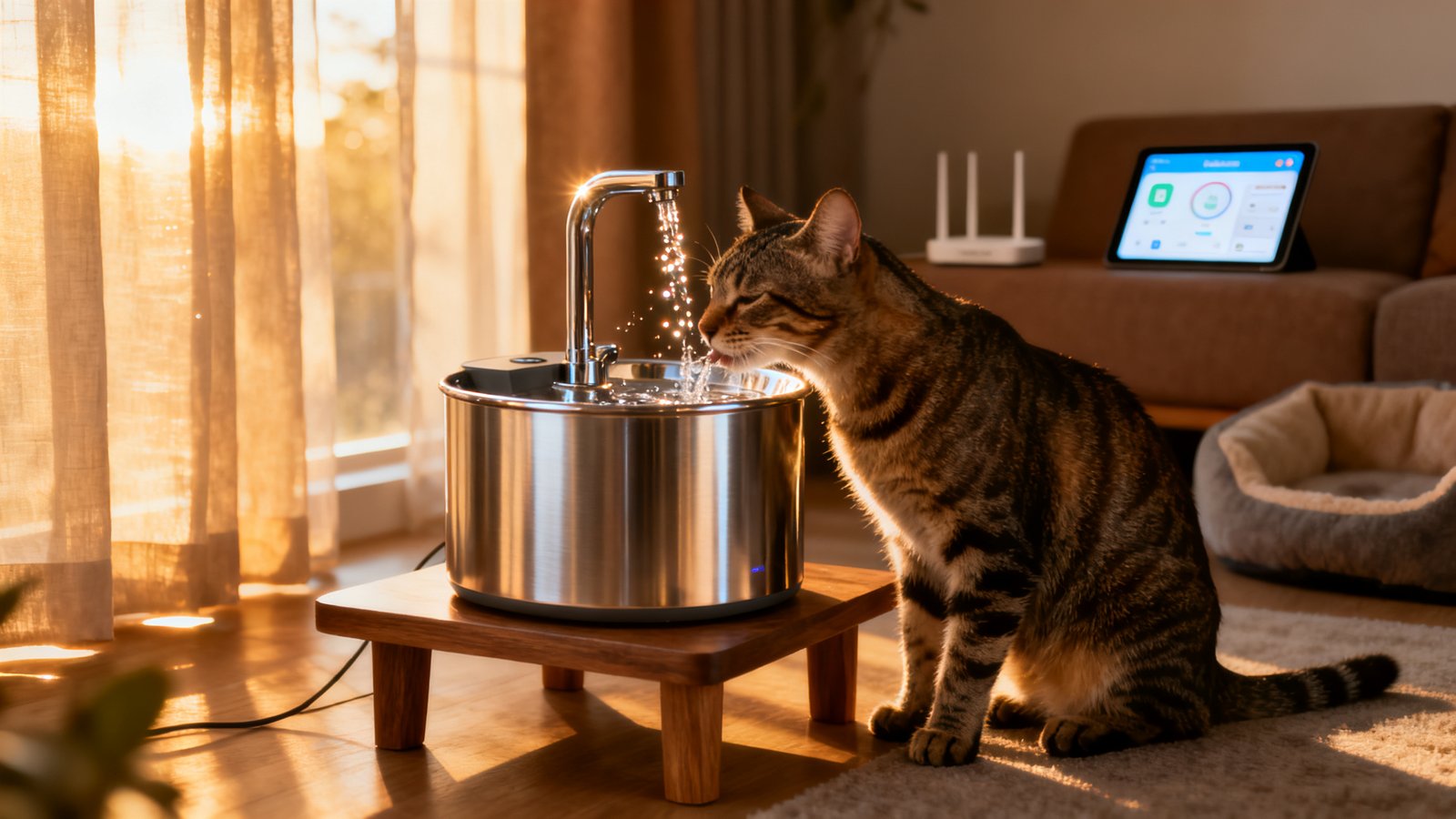
What’s changed isn’t just convenience: these machines actively encourage pets to drink more by keeping water moving, filtering out buildup, and reminding owners to refill or clean before trouble starts. For app-using pet owners, these devices now offer data, not just promises. The bottom line: smart fountains are no longer a luxury—they’re a cost-effective tool for real pet health improvements.
How filtered fountains actually improve pet hydration and health
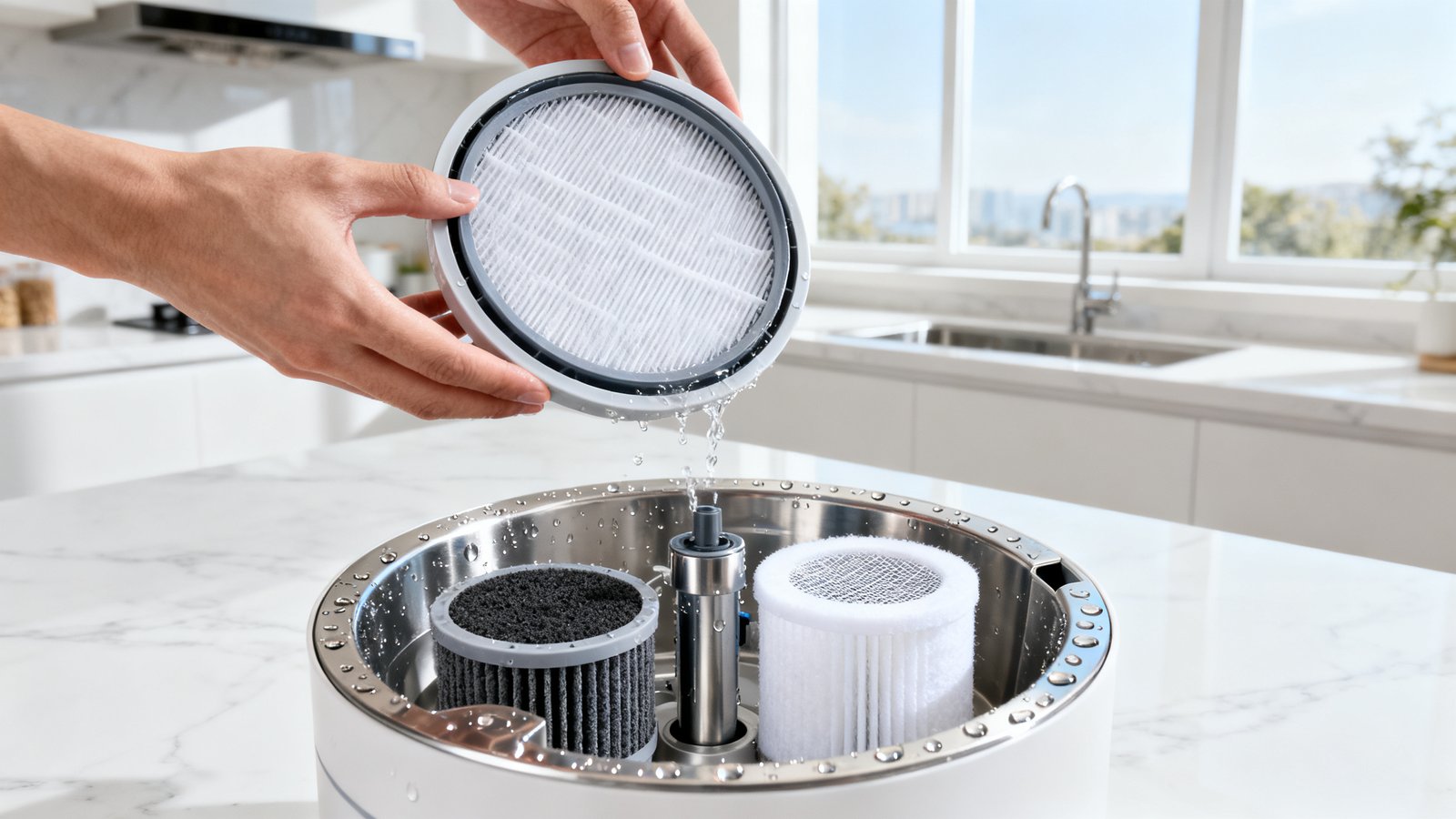
Traditional bowls can harbor bacteria and debris, leading to poor taste and reduced drinking. In contrast, a filtered water fountain cat dog model circulates water continuously and typically runs it through at least two filtration stages: activated carbon plus a mechanical screen [CATLINK Source]. Research is clear: filtered, moving water leads to higher daily intake, especially for cats prone to kidney and urinary issues, and for multi-pet households where cross-contamination is an issue.
The payoff is found in real-world vet bills: preventing one urinary blockage or early-stage CKD can save $500–$1,200 per episode. Plus, many cats and small dogs naturally drink more from fountains due to the fresh taste and sound of running water.
Hydration tracking & health insights: the “smart” that matters
Not all “smart” features are worth your money. Focus on WiFi pet water fountain models that log hourly and daily drinking data per pet, deliver push alerts for filter life and pump status, and reliably sync with a robust app. The best smart water fountain pets 2026 picks like VEKEN and Petcube offer granular data logging, multi-pet insights, and reminders based on actual usage, not arbitrary timers.
Only trust fountains that offer stable WiFi connections or smart Bluetooth fallback. Look for companion apps with history graphs, hourly breakdowns, and health alerts for unusual intake patterns—a potential early warning for health issues.
Compare any prospective unit’s data capabilities against your actual needs: do you want trend-spotting with daily logs, or is a basic “refill reminder” enough? Avoid fountains where smart features are mostly gimmicks or rarely work (look for reviews mentioning “missed notifications” or “lost sync”).
Filtration: layers, efficacy, and realistic filter life
Most modern pet water fountain with filter quiet designs use a dual-layer setup: activated carbon to trap organic gunk and chemicals, plus PP cotton (or a more advanced screen) for hair and particles. Flagship models press even further with 3–4 layers, adding ion exchange resins or UV sterilization (as seen in Petcube and Petlibro options [Forbes]).
Beware filter-lifetime claims. Manufacturers often state 4 to 8 weeks per filter, but real users in multi-pet homes typically replace every 3 to 4 weeks—especially if your pet sheds or you live in areas with mineral-heavy water. Filters left too long compromise water quality, reduce intake, and can even damage pumps over time.
Newer “indicator” systems help by tracking usage and sending timely reminders, but always check for easy filter availability and bulk-buy options when comparing candidates.
Noise and pump reliability — what users complain about and how to avoid it
While nearly every smart pet water fountain advertises “quiet” operation (≤30–35 dB), honest reviews often flag noise spikes: rattling or buzzing pumps as filters clog or water runs low. Baseline dB means little if the fountain intermittently wakes you or your pets.
To avoid headaches, look for pumps rated under 30 dB in real-world conditions (not just on marketing pages), with noise-dampening rubber feet or magnetic impellers. Place the fountain on a stable, hard floor away from corners, and schedule a brief weekly flush.
Just as important is pump access: can you snap out the impeller for a quick clean, or does it require a mini screwdriver and 15 minutes? A good fountain is only as quiet as how easy it is to maintain.
Wi‑Fi and connectivity problems — reality vs marketing
WiFi pet water fountain app control is transformative—when it works. Owners complain most about dropped connections, laggy notifications, or late filter reminders. Look for models that offer local data logging in case WiFi is out, and check if Bluetooth fallback supports critical alerts.
Successful smart pet water fountain picks don’t require constant manual resyncs and work well even in busy network environments (mesh routers or apartment blocks). Always place your fountain within 20–25 feet of the primary router and avoid areas with lots of metal or thick concrete.
Product reviewers call “reliable connectivity” a must, especially if you’re tracking hydration for medical reasons—or just don’t want your app to forget your pet drank all morning.
Materials & durability: stainless steel vs plastic vs ceramic
Material choice directly affects hygiene, taste, and lifespan. Stainless steel pet water fountain options cost more up front, but top brands like VEKEN and ORSDA get rave reviews for resisting scratches, never harboring odor, and enabling true dishwasher cleaning [Cats.com].
Plastic models are more affordable but can develop micro-scratches, leading to bacteria growth and odor retention over time. BPA-free plastic is better, but still not as durable as high-grade 304 stainless steel. Ceramic is the least likely to alter water taste, but can chip if dropped and is mostly found on premium units.
For busy homes or multi-pet setups, stainless steel is worth the extra — it pays for itself in reduced cleaning time and more years before replacement.
True cost of ownership: purchase price, filters, power, and ROI
Entry-level smart fountains start around $69 in 2026, with most upgraded models running $100–$200 (especially for large stainless or WiFi ones). But that’s just the beginning. Plan for:
- Replacement filters every 3–4 weeks ($8–$15 per month for most brands)
- Minimal power use (under $2 per year except for wireless battery models like Petcube)
- Maintenance time (10–15 minutes per week for proper cleaning and a monthly deep clean)
Don’t just focus on sticker price. Smart fountains can save hundreds on vet costs per year, since hydration issues are among the most expensive and preventable. Reviewers and veterinarians alike note fewer UTI/kidney incidences in homes with consistent filtered water. To maximize ROI, buy bulk filters and avoid models with hard-to-find replacements.
How to choose the right model for your household (checklist)
- Pet count and size: For more than two small pets, prioritize 3.0 L or larger tanks.
- Filtration: Dual-stage (carbon + mechanical) is a minimum for health; multi-layer is best.
- Noise: Look for real-world ratings of ≤30–35 dB—and check “user complaints” about spikes.
- Maintenance: Dishwasher-safe is much easier long term, especially with stainless steel.
- Data needs: If medical monitoring, pick units with hourly intake tracking and granular app logs.
- Wi-Fi: Look for robust sync and alert reliability; local failover is a plus.
- Material: Stainless steel wins for hygiene and longevity, especially for cats prone to acne or allergies.
- Budget: Factor in recurring filter costs and prefer bundled or third-party filter compatibility.
Most top-rated units have 2.6–3.0 L capacity and dB ratings of 25–35, with Petlibro and VEKEN leading on quietness and user-friendly design.
Best smart water fountains for pets in 2026 — recommended picks by use case
- Best Overall – VEKEN Smart Flow Fountain: Stainless steel, app-connected, ultra-quiet (≤30 dB), with 2.6 L tank. Top marks for cleaning and multi-pet homes.
- Best for Multi-Pet – CATLINK: Large 3.0 L reservoir, granular data logging, and maintenance alerts make it ideal for 3+ cats or mixed cat/dog setups.
- Best Stainless Steel – ORSDA Fountain: 67 oz, ultra-quiet, durable, with easy-access filter and replacement packs [review].
- Best Quiet Model – Petlibro Dockstream RFID: 25 dB, multi-level filtration, app alerts, and RFID bowl for personalized tracking.
- Best WiFi/Data Tracking – Petcube Smart Fountain: Wireless, 20-day battery, 4-layer filter, UV-C antibacterial light, health summary in app.
For a deeper look at pet tech choices, see our guide on best pet camera 2026 or compare GPS trackers for dogs without monthly fees.
Setup, maintenance schedule, and troubleshooting quick guide
Initial setup: Rinse all parts (including filters) per instructions. Place the fountain on a hard, level surface away from heat sources, fill to max line, and plug in. Connect WiFi per app prompts—do this near your main router for best results.
Weekly: Empty and rinse the reservoir, clean pump and impeller. Refill with fresh, filtered water.
Every 3–4 weeks: Replace filter. Most brands send app or indicator reminders, but set a calendar alert as backup.
Dishwasher-safe: If your model supports it (most stainless and high-end plastics), run top-rack parts through a hot cycle monthly.
- Noisy pump? Remove, soak in vinegar for 10 minutes, clear debris from impeller, and reassemble.
- Low flow? Top off water, swap filter, and check hose/intake for trapped fur.
- WiFi lost? Power cycle fountain and router, move unit closer, and double-check app settings.
For more on automation and smart home care, see our deep dive: best smart litter box 2026 or best automatic cat feeder 2026.
FAQ
Do filtered water fountains really help prevent CKD or urinary issues?
Yes. Research-backed filtered water fountain cat dog units increase daily intake and reduce the risk of kidney and urinary tract complications—which drives real vet-bill savings. Multi-stage (carbon + mechanical) filtration is the key difference vs bowls.
How often should I replace the fountain filter?
Expect to change filters every 3 to 4 weeks for most brands, even if some models claim up to 8 weeks. Heavy shedding or hard water may require more frequent swaps for optimal performance.
Is stainless steel really necessary, or is plastic safe enough?
Stainless steel pet water fountain models resist scratches, odors, and are more hygienic long term—especially for cats with sensitive skin. BPA-free plastic can work, but scratches may lead to hidden bacterial build-up over time.
How loud is “quiet” for these fountains in real use?
“Quiet” models are rated around ≤30–35 dB, similar to a whisper or library. But check for user-reported issues: sudden pump noises often come from overdue filter changes or running low on water.
Do I need WiFi connectivity to get health benefits?
WiFi pet water fountain features help you track hydration and get reminders, but basic filtered fountains deliver health gains even without smart tracking. Connectivity is most valuable for multi-pet homes or if you need detailed logs for medical reasons.
Conclusion + CTA (how to buy and what to prioritize)
The data is clear: a smart pet water fountain with multi-stage filtration, quiet operation, and reliable app alerts isn’t just the future—it’s the best investment busy, health-minded pet owners can make today. Prioritize features that matter: capacity, stainless build, trustworthy tracking, and realistic filter change reminders.
Compare two or three models using this checklist, factor in total cost of ownership—not just sticker price—and choose a unit that offers real, evidence-backed ROI. Ready to take action? Download our printable comparison checklist or see the latest tables side-by-side.
For more tech-forward pet care, explore our best pet camera 2026 guide or compare subscription-free GPS trackers right here.