

Best smart dog toys 2026 are not just about flashy lights or clever apps—they’re about keeping your dog engaged, safe, and out of trouble (and saving your wallet) for years, not weeks.
Key Takeaways
- The best smart dog toys 2026 balance long-term durability, low running costs, and real-world usability—not just novelty features.
- Most owner complaints center on short play cycles, limited battery life, and devices failing to hold a dog’s interest over time.
- Before you buy, assess chew resistance, battery type, replaceable parts, warranty, and future upgrade options for true value.
- Quick verdict — best smart dog toys 2026 (at-a-glance picks)
- Who should (and shouldn’t) buy an interactive/automatic toy
- The one metric reviews ignore: long-term engagement & Total Cost of Ownership
- What top-ranking roundups commonly miss (unique insight)
- Common owner complaints — what they are and practical mitigations
- Durability & maintenance checklist buyers must inspect before purchase
- Battery, charging and running-cost expectations
- Training & onboarding — teaching your dog to use an automatic/interactive toy
- Safety & supervision guidelines (what to monitor and red flags)
- Budget tiers — what to expect by price (economy vs mid‑range vs premium)
- Quick shopping checklist + product evaluation template (copyable)
- Final recommendations by scenario
- FAQ — short answers to top user questions
Quick verdict — best smart dog toys 2026 (at-a-glance picks)
The global smart pet toy market hit $2.8 billion in 2025 and is heading for $3.1 billion by 2026, growing nearly 12% yearly.[1] Yet, not all smart dog toys are created equal. Long-term value comes from durability, safe materials, battery longevity, and replacement part availability—not just new features.
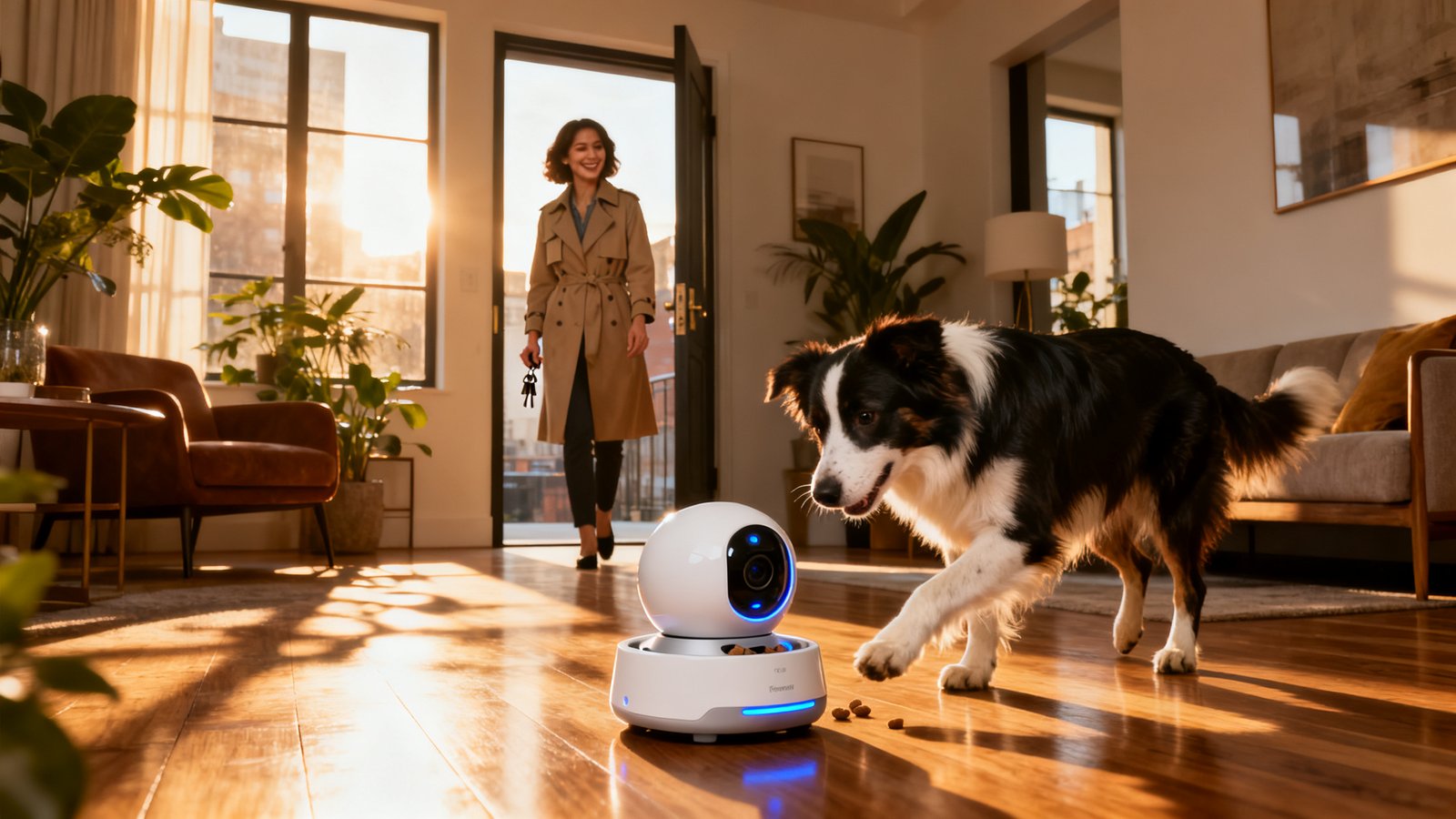
- Best budget pick: Cheerble Wicked Ball AIR
- Best for: gentle medium dogs needing regular active engagement.
- Pros: affordable (<$50), fully enclosed moving parts, decent battery life.
- Cons: not for extreme chewers; internal battery not user-replaceable; hard to find parts.
- Best mid-range: QGI Electric Interactive Dog Toy
- Best for: solo play for moderate chewers, easy cleaning.
- Pros: app-controlled, replaceable treat modules, washable shell.
- Cons: sub-2hr battery; app requires ongoing updates; premium replacement parts cost extra.
- Best premium: Furbo 360 Dog Camera & Treat Tosser
- Best for: separation-anxiety dogs and remote check-ins.
- Pros: camera, smart alerts, wide treat compatibility, security updates.
- Cons: requires WiFi & app subscription; more complex setup; treats can jam if poorly sized.
- Best for heavy chewers: WOOF Pupsicle Extreme
- Best for: power chewers that destroy regular toys.
- Pros: extra-durable, simple mechanism, no electronics to break.
- Cons: not auto-moving, limited “smart” features, more refill work for owners.
- Best camera + treat combo: Petcube Bites 3
- Best for: real-time video, talking, and multi-dog treat routines.
- Pros: secure cloud video, easy-to-clean treat tray, granular app controls.
- Cons: high upfront cost, subscription needed for past video, occasional WiFi delays.
Interactive toys held about 38.4% of the smart pet toy market revenue in 2025[1]—confirming buyers want ongoing, real engagement, not one-off novelty.
Who should (and shouldn’t) buy an interactive/automatic toy
Interactive dog toy automatic devices excel for:
- Urban and suburban owners ages 25–55 working outside the home or traveling weekly.
- Dogs prone to mild boredom, mild separation anxiety, or destructive chewing when alone (moderate intensity only).
- Owners seeking mid- to premium tech with proven durability, not just “gadget coolness.”
But not every owner—nor every dog—is a good fit:
- Not for: extremely heavy chewers left alone unsupervised (risk of breakage or swallowing parts).
- Not for: dogs whose training depends on constant handler interaction—automatic play can erode handler focus.
- Not for: dogs with zero solo-play drive or those afraid of device noises.
In 2025, interactive toys captured ≈38.4% of smart pet toy market revenue, especially in cities where owners are away longer hours.[1]
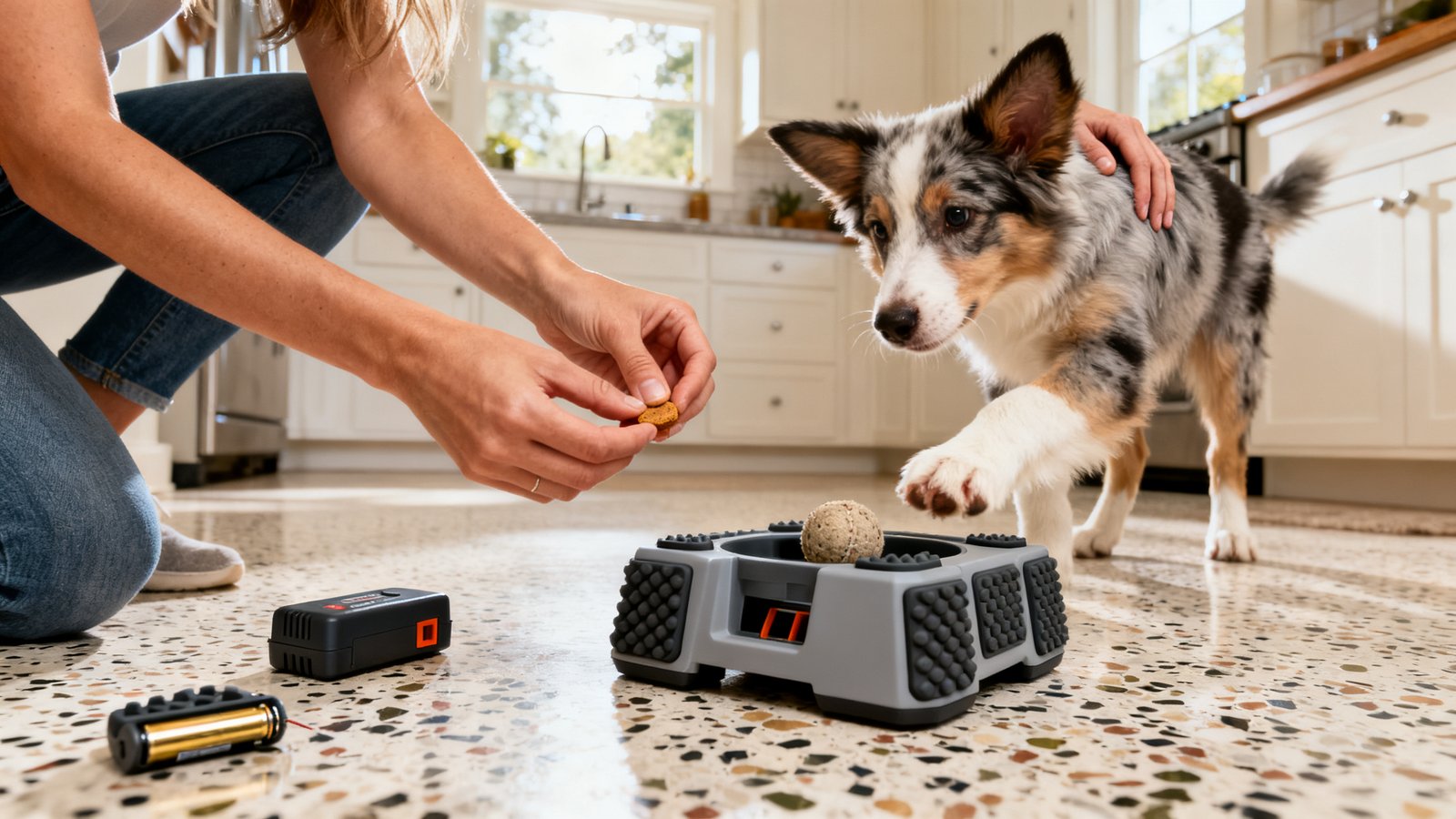
Choose device category by your needs:
- Camera/treat dispensers: All-in-one for real-time video, remote talking, and tossing treats (ideal for separation-anxiety dogs).
- Automatic ball launchers: Great for high-energy dogs needing physical release—best under supervision.
- Timed puzzles/scheduled movers: Suits dogs who thrive on solving simple mental challenges while owners are away.
If you want more ideas for remote monitoring (not just toys), see our Best Pet Camera 2026 and Smart Dog Feeder With Camera guides.
The one metric reviews ignore: long-term engagement & Total Cost of Ownership
Most “best smart toys for dogs” roundups focus on first-day excitement, not sustained dog interest or real running costs. It’s critical to analyze Total Cost of Ownership (TCO): the sum of initial price, batteries/charging, app subscriptions, replacement parts, repairs, and average device lifespan.
| Feature | Low Cost Toy | Mid-Range Toy | Premium Camera/Treat Toy | Heavy Chewer Toy |
|---|---|---|---|---|
| Upfront Price | $30–$50 | $60–$110 | $160–$230 | $40–$70 |
| Battery (Type/Runtime) | Non-removeable, 60–90 min | Rechargeable, 1–2 hrs | USB or wall power, standby drain | None |
| Replaceable Parts | No/limited | Some | Yes (trays/lids/camera) | Entire toy is replaceable |
| App Subscription | No | Maybe (updates only) | Yes/monthly | No |
| Lifespan (Gentle/Heavy Use) | 6–18 months | 1–2 years | 1–3 years | 2–3 years (chew proof) |
The biggest owner complaints:
- Short battery life or quick loss of novelty (especially for smart toy for dog boredom solutions).
- Non-replaceable batteries or motors—device becomes “throwaway” after 12–24 months.
- Replacement parts or software/app support ends after warranty.
- Subscription fees for camera treats or video history (sometimes required for full access).
For detailed GPS and collar tech breakdowns, see our Best GPS Tracker for Dogs 2026 and Fi Smart Collar Review.
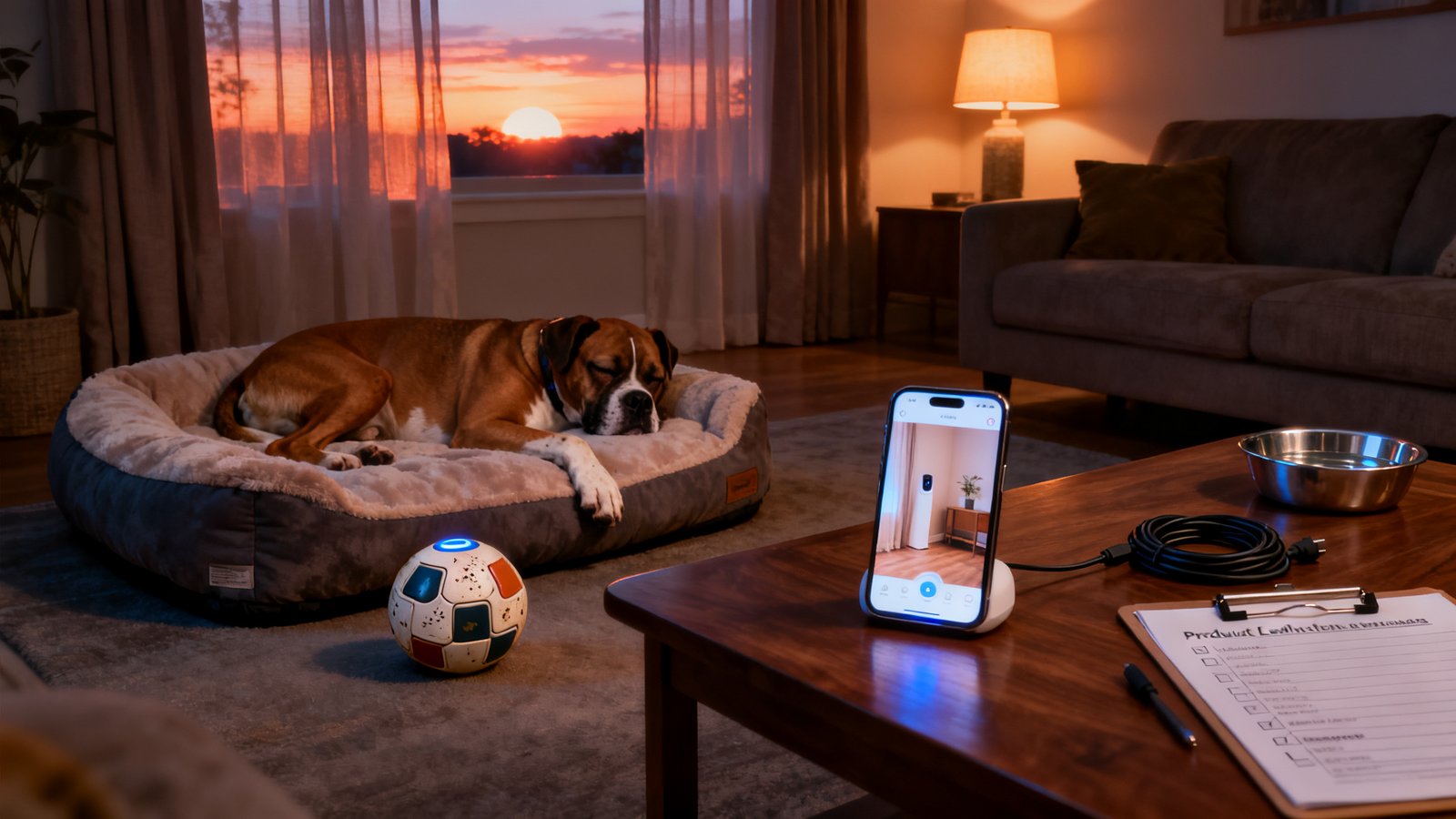
Lifespan is dramatically shorter if you use an automatic dog entertainment toy with a heavy chewer or if replacement parts aren’t easy to source—expect to replace the whole unit when something breaks.
What top-ranking roundups commonly miss (unique insight)
Most “best smart dog toys 2026” lists skip these crucial factors:
- Long-term durability for dogs that chew persistently—look for owner videos after 6 months.
- Spare part availability and cost—can you buy a new treat tray, ball, power cord, or shell?
- Battery type/replaceability—are you stuck when the battery dies?
- Data security & privacy—especially for camera-connected toys; does the app have a published privacy policy?
- Adaptability to dog size/drive—is it safe for both 15-lb and 85-lb dogs, or only “average” pets?
Academic and market research shows product roundups almost never discuss these long-term issues, even though they’re the top drivers of buyer regret.[3]
If you want smart tech for cats or multi-pet homes, see our Best Smart Litter Box 2026 guide for crossover tips.
Common owner complaints — what they are and practical mitigations
The most frequent complaints about automatic and interactive dog toys include:
- Short play cycles (toys shut off after 3–5 minutes; battery dies fast).
- Supervision needed to prevent chewing through the housing or jamming mechanisms.
- Poor battery/runtime and limited ability to buy spares for older devices.
- Difficulty training dogs to use toys alone (many pups just ignore the device until shown what to do repeatedly).
Here’s how to mitigate:
- Rotate 2–3 toys in and out every few days; don’t leave everything out at once.
- Pair interactive play with owner sessions first, then reduce your involvement.
- Use external hardcase covers or rubber sleeves for teethy pups.
- Buy at least one spare battery or motor/roller tray (if available) at checkout.
- Teach via short, high-value treat sessions daily for the first 2 weeks.
Owners most often cite short play cycles, battery problems, supervision needs, and confusion in dog training as top issues.[5] Set expectations accordingly.
Durability & maintenance checklist buyers must inspect before purchase
If you want true value and not just wishful thinking, inspect every product page with this checklist:
- Chew rating: Manufacturer claim plus owner reviews after 6+ months especially for “smart toy for dog boredom” buys.
- Replaceable parts: Is there a spare battery/motor/tray/shell? How much do they cost?
- Warranty: Minimum 1-year with clear coverage of electronics and plastics.
- IP/water rating: Is it safe if dropped in water or left outside briefly?
- Materials: Non-toxic, food-safe plastics or silicone. Reject anything with generic “ABS blend” and no third-party safety testing.
- Ease of cleaning: Removable parts for dishwasher/rinse—especially if you use food/treats.
- Modularity/upgrades: Can you upgrade firmware, add puzzle modules, or swap shells?
In 2024, the mid-range segment led the category (38.7% share), showing that most buyers prioritize durability and cost-effectiveness over fancy new features.[3]
Battery, charging and running-cost expectations
Most interactive and automatic dog entertainment toy models use internal rechargeable batteries. Here’s what to know:
- Runtime: Expect 40–120 minutes per charge with basic automatic toys; camera/treat toys rely more on “always-on” power and frequent top-ups.
- Rechargeable vs replaceable: Most are not user-replaceable. If the battery fails, the whole device can be lost unless the company sells spares.
- Charging: Fewer toys now use AAA/AA batteries—USB-C is common. Still, check if you need a proprietary cable or cradle.
- Standby drain: Connected features (WiFi/Bluetooth) deplete batteries even when “off,” especially with app-enabled notifications.
- Projected running cost: For camera/treat toys with subscriptions, budget $4–$10/month after the first year for cloud video/treat targeting features.
The chief complaints are poor battery life, high cost for spares, and lack of support for older models once a new generation is released.[8]
Training & onboarding — teaching your dog to use an automatic/interactive toy
If you want your interactive dog toy automatic to work (especially when your dog is alone), the first week is critical. Here’s a basic onboarding sequence:
- Start with 5–10 minute supervised sessions (let your dog sniff, nudge, and see how snacks come out).
- Mix high-value treats for early wins.
- Gradually increase play time as your dog learns solo triggers.
- Pair with easy training cues (“find the ball,” “get your puzzle”).
- Never leave a new toy unsupervised until you know how your dog interacts without help.
Some bold, high-drive dogs “get it” in a day—others (especially anxious or older dogs) may need 1–2 weeks with lots of positive reinforcement sessions.
Research shows progressive, supervised training builds true self-play—without it, many owners give up because their dogs ignore the device or try to destroy it.[5]
For more on canine tech and health combos, see our Best Pet Health Monitor 2026 roundup.
Safety & supervision guidelines (what to monitor and red flags)
Not every smart toy for dog boredom is safe to leave with every dog. Here’s what to watch:
- Never leave unsupervised with heavy chewers, dogs who eat plastic, or toys with exposed motors/wires.
- Monitor for device overheat—if the shell is warm, buzzing, or smells “burnt,” unplug and stop use.
- Check for cracks/chew marks every session; replace or repair if integrity is lost.
- For camera toys, use strong passwords and check manufacturer app security/recall notices. Never grant unknown third-party access.
Many owners underestimate chewing power or early device failure. Be cautious the first few weeks and perform full safety checks every month to prevent injuries or escapes.
Budget tiers — what to expect by price (economy vs mid‑range vs premium)
Here’s what different price tiers actually deliver:
- Economy ($25–$60)
- Basic movement/puzzle, fixed battery, no app, limited spare parts, often break/are ignored within a year.
- Mid-range ($60–$120)
- Rechargeable, some app/updates, spare tray/battery, >1-year average lifespan, better warranty and safety materials—dominant market tier (38.7% in 2024).
- Premium ($130–$250+)
- Camera, remote treat, app-controlled, modular parts, updates, solid warranty, responsive customer support. But often require subscriptions and have more parts that can break.
Premium smart toys are growing fastest (21.5% CAGR from 2025), while the mid-range remains the top overall choice for most cost-savvy buyers.[3]
For smart tech under $50, see our exclusive Pet Tech Gadgets Under 50 shopping guide.
Quick shopping checklist + product evaluation template (copyable)
Use this quick template before buying the best smart toys for dogs or any smart toy for dog boredom:
- Chew rating: _______________
- Battery type/runtime: _______________
- Replaceable parts (battery/motor/tray): _______________
- Warranty (length/coverage): _______________
- App requirements/subscription cost: _______________
- Privacy policy/data use: _______________
- Best for (dog size/age/chewing): _______________
- Price: _______________
Since interactive toys made up 38.4% of sales in 2025, prioritize live support, regular app updates, and transparent privacy policies for any device tied to your WiFi or cloud services.[1]
Final recommendations by scenario
- Separation anxiety: Furbo 360 Dog Camera
- Why: Video, 2-way talk, and treat toss. Downside: Needs subscription/app.
Mitigation: Test app compatibility, store device on shelf out of chewing range.
- Why: Video, 2-way talk, and treat toss. Downside: Needs subscription/app.
- Heavy chewers: WOOF Pupsicle Extreme
- Why: Chew-proof, nearly indestructible. Downside: No moving parts.
Mitigation: Use as a “reset” when other toys break—no batteries to replace.
- Why: Chew-proof, nearly indestructible. Downside: No moving parts.
- Best budget: Cheerble Wicked Ball AIR
- Why: Affordable but still interactive. Downside: Thin outer shell.
Mitigation: For gentle dogs only, store away from hardcore chewers.
- Why: Affordable but still interactive. Downside: Thin outer shell.
- Camera/treat combo: Petcube Bites 3
- Why: Reliable for remote check-ins and treat routine. Downside: Monthly subscription.
Mitigation: Budget for annual plan if you want cloud features.
- Why: Reliable for remote check-ins and treat routine. Downside: Monthly subscription.
Automated “set and forget” toys are the second most popular category (≈30% market share), perfect for low-maintenance owners.[1]
For a nuanced take on GPS vs virtual fence gadgets, compare our How To Choose GPS Tracker Dog Guide and Halo Collar 3 Review.
FAQ — short answers to top user questions
Can I leave my dog unsupervised with a smart toy?
Only if you’ve confirmed your dog cannot chew through the toy and there are no exposed parts. Heavy chewers and dogs with separation anxiety should be watched for the first few weeks. Never leave with a toy that has motors, batteries, or treat compartments unless proven safe over time.
How long should a dog play with an interactive toy per day?
Short 10–20 minute sessions are best to prevent frustration or overstimulation. Rotate toys often and let your dog tell you when interest is dropping. Avoid hours-long unsupervised play, which dulls the novelty quickly.
How do I prevent boredom with a single device?
Change the toy’s location, fill with new treats or scents, or add a puzzle piece if modular. Best practice is to rotate 2–3 toys through the week for variety.
Do I have to pay subscriptions for smart toys with WiFi/cameras?
Many cameras/toys offer basic functions free but require a subscription to access full features (video history, smart alerts). Read all app store details before buying.
What about data privacy for camera toys?
Check for published privacy policies, two-factor authentication, and regular app updates. Avoid brands with vague or nonexistent security documentation.
Conclusion
To truly get your money’s worth from the best smart dog toys 2026, focus on proven durability, low running costs, and features that match your daily life—not just new gadget hype. Compare battery, replacement part access, warranty, and breed- or dog-specific fit before buying. Want the right toy for your dog’s needs and peace of mind? Use the templates above and take the next step—your dog (and your wallet) will thank you.