

If you are searching for pet tech gadgets under 50 dollars that actually deliver on their promises, you have probably already scrolled past dozens of sponsored listings and overhyped roundups that tell you nothing useful. This guide is different. I am going to walk you through exactly what works, what breaks, and where the entire budget pet tech category leaves serious gaps, especially if you have more than one animal at home.
The pet tech market is enormous. Industry estimates for 2025 place the overall market between $8.4 billion and $15.6 billion, according to reports from Mordor Intelligence and GM Insights. But here is what nobody tells you: none of those reports break out the sub-$50 segment. That means the affordable gadgets you are actually shopping for exist in a data blind spot. Marketers make big claims. Reviews are mixed. And you are left guessing.
This post will fix that. You will learn which devices earn their price tag, which failure modes to test for immediately, and how to shop Amazon like someone who reads the fine print for a living.
Key Takeaways
- Budget pet tech under $50 can handle basic feeding and light monitoring but will not replace premium devices for durability, connectivity, or multi pet support.
- The biggest gaps in the market involve multi pet households: affordable GPS tracking, multi camera setups, and multi pet health subscriptions are all missing at this price point.
- Testing a device aggressively in the first seven days and knowing which Amazon review signals to trust will save you from throwing away money on gadgets that fail early.
- Why buy pet tech under $50: the cost first case
- Common failure modes to watch for in cheap smart pet devices
- Missing budget solutions for multi pet households
- Shortlist: affordable smart pet gadgets under $50 worth considering
- Cost benefit reality: vet savings vs. price and what the data shows
- A practical durability checklist: what to test and what warranties to insist on
- How to shop on Amazon for affordable pet gadgets
- Quick decision flow: single pet vs. multi pet buying guide under $50
- Content and product opportunity brief for brands and editors
- Conclusion
- FAQ
Why buy pet tech under $50: the cost first case
The honest reason to shop in this price range is simple. You need functional automation without the premium markup. A basic automatic feeder that dispenses kibble on a schedule costs under $50 and solves a real problem: your pet eats at consistent times even when you are stuck in traffic or sleeping in on a Saturday.
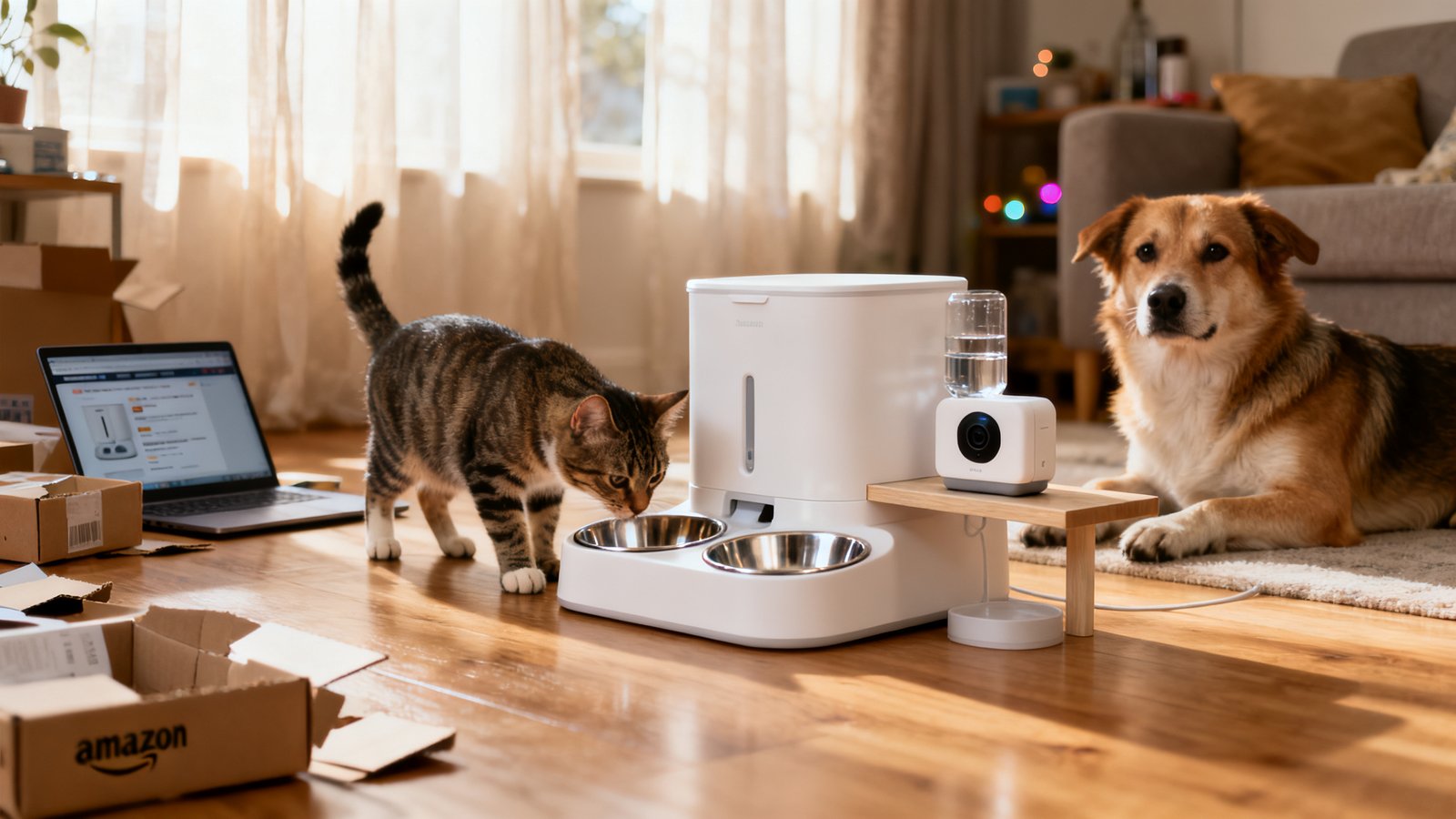
Portion control is another genuine benefit. If your veterinarian has told you to manage your dog or cat’s weight, a programmable feeder removes the guesswork. You set the portion. The machine dispenses it. No one in the household accidentally overfeeds because the animal looked hungry.
Basic monitoring also fits under $50. Budget pet cameras from brands like Eufy let you check in on your pet during the day without spending $150 or more on a Furbo. Our Eufy pet camera review covers what you actually get at this price tier, including where corners get cut on features like treat tossing and pan tilt controls.
But you must set expectations. Devices in this range focus on single function utility. A $37 feeder will not also monitor your pet’s eating habits with AI analytics. A $45 camera will not have two way audio that sounds crystal clear. You are buying one job done adequately, not an ecosystem of smart features. That tradeoff is fine as long as you know you are making it.
The broader market data backs up the demand for affordable options. While the overall pet tech sector continues growing, DataIntelo reports that no reliable segmentation exists for the sub-$50 tier specifically. This means manufacturers are serving this segment without clear market research, which helps explain why quality varies so wildly from one listing to the next.
Common failure modes to watch for in cheap smart pet devices
When you pay under $50 for a smart pet gadget, you are not paying for rigorous quality control. You are paying for the circuit board, the plastic housing, and a prayer that the assembly line worker had enough sleep the night before. This is not cynicism. It is the reality of mass produced electronics at razor thin margins.
Food jams are the most common mechanical failure, especially in automatic feeders. A 2026 budget feeder review specifically highlighted this issue, noting that even feeders with anti clogging systems can struggle with irregularly shaped kibble or treats. If your dog eats large breed kibble or your cat prefers triangular shaped dry food, test the feeder with exactly that food before trusting it.
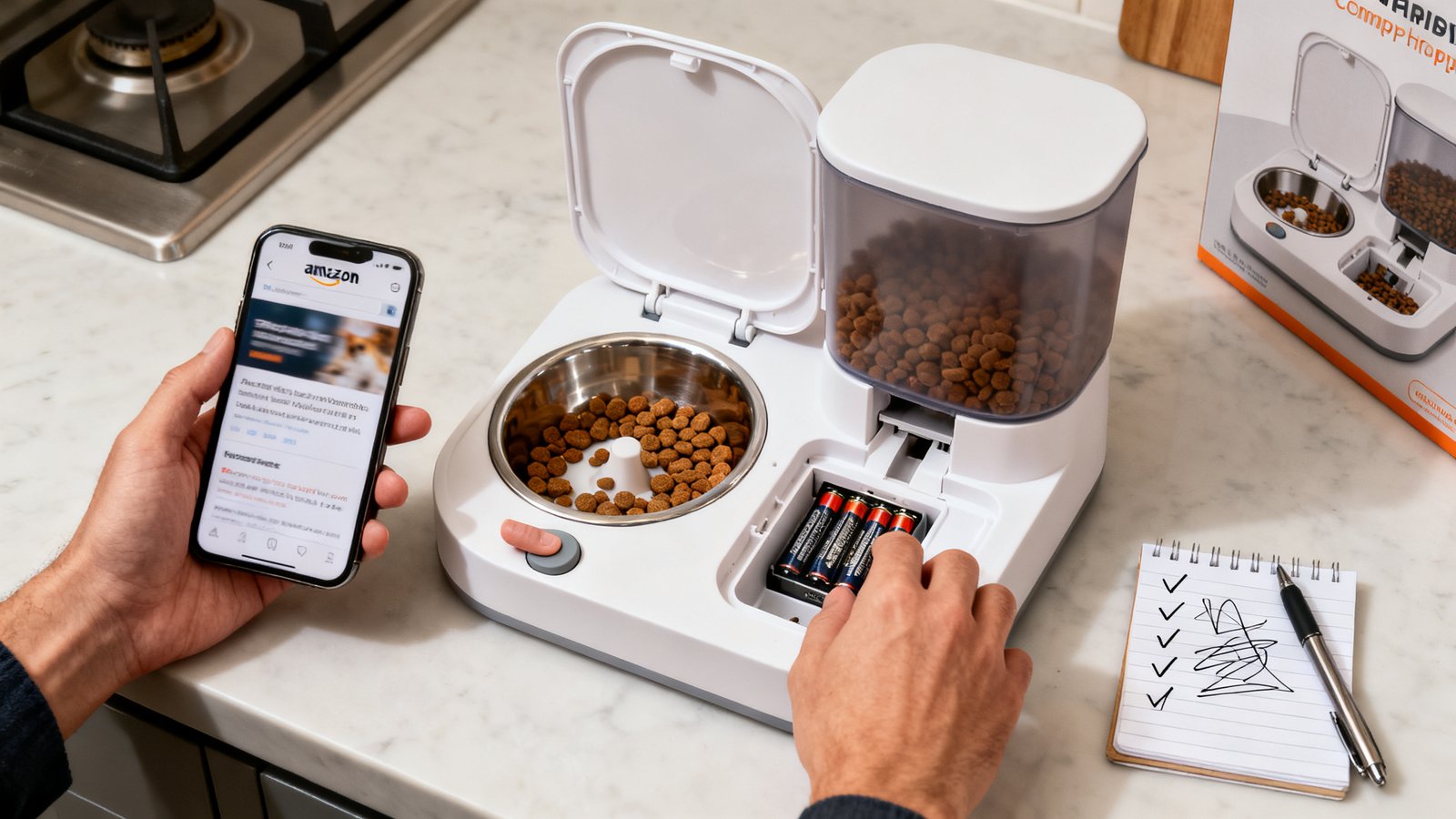
Battery backup failures come next. Many budget feeders advertise battery backup as a feature, but what they rarely disclose is that the batteries only power the timer, not the motor. If your home loses power, the clock keeps running but no food comes out. This is a critical distinction if you travel frequently or live somewhere with unreliable power.
Connectivity issues plague anything that pairs with your phone. Budget WiFi chips are notorious for dropping connections and requiring manual resets. If a device needs to be re paired more than twice in the first week, return it. That pattern will not improve over time. For a deeper look at how connectivity reliability varies across price points, our Fi smart collar review explains what premium connectivity actually looks like so you can compare.
Build quality rounds out the list. Thin plastic latches snap. Motor housings crack. LCD screens that looked bright in the listing photos turn out to be dim and unreadable from any angle except straight on. These are the failures that do not show up in a five minute unboxing video but become obvious after two weeks of daily use.
Missing budget solutions for multi pet households
This is where the entire sub-$50 category falls apart, and honestly, it is where you as a shopper need to hear the unvarnished truth. If you have more than one pet, the budget market is not built for you yet.
Research across competitor roundups and industry reports from CNET’s pet tech coverage confirms several glaring omissions. No one is selling an affordable multi pet GPS tracker under $50 that can monitor two or three animals from a single app interface. If you want GPS tracking for multiple dogs, you are looking at individual devices, each with its own subscription, and the entry price for a single tracker from Tractive starts around $50 before you even factor in the monthly plan. Our Tractive GPS review breaks down those costs in detail.
Budget pet cameras designed to monitor multiple animals from a single lens are also missing. You can buy one cheap camera and point it at the room, but if your two cats hang out in different areas or your dogs split time between the living room and the kitchen, a single fixed lens leaves blind spots. Multi camera packages with a unified app view do not exist under $50 total.
Cost effective smart water dispensers for multiple pets are another gap. Single pet fountains exist at this price, but capacity and filtration designed for two or three large dogs drinking throughout the day pushes you into the $70 to $100 range very quickly.
Finally, low cost health monitoring devices that support multiple pets on one subscription are entirely absent. Every budget health tracker on the market ties to one animal per device and one device per account tier. If you want to monitor activity, sleep, or scratching behavior for two animals, you are paying twice.
These gaps are not just shopping frustrations. They are editorial and product development opportunities, which I will address later in this post.
Shortlist: affordable smart pet gadgets under $50 worth considering
Despite the limitations, a few devices earn their place in your shopping cart. These picks come from a 2026 roundup of budget automatic feeders and focus on one thing: reliable mechanical dispensing at a fair price.
| Product | Price | Best For | Vet Savings |
|---|---|---|---|
| Hwonte Automatic Feeder | $36.99 | Single pet, basic scheduling | Not quantified |
| Voluas Automatic Feeder | $39.59 | Single pet, portion control | Not quantified |
| Gimars Dual Bowl Feeder | $45.98 | Two pets, separate bowls | Not quantified |
| Voluas (alternate model) | $46.79 | Single pet, higher capacity | Not quantified |
| Oneisall Split Bowl Feeder | $49.99 | Two pets, split portions | Not quantified |
Notice the pattern. Every single device on this list is a feeder. No cameras, no GPS units, no health monitors cracked the sub-$50 shortlist in the available research. That tells you something important about where the value actually sits at this price point. Mechanical feeding is the one category where budget engineering works well enough. Everything else either costs more or compromises too much.
The Gimars and Oneisall models deserve special attention if you have two pets. Their dual bowl and split bowl designs are the closest thing the budget market offers to a multi pet solution. They will not identify which pet ate from which bowl, and they cannot adjust portions individually if one animal needs a different diet. But they will feed two animals at the same time from one machine, which is more than any single bowl feeder can claim.
For cat owners specifically, our best automatic cat feeder 2026 guide goes deeper on portion precision and WiFi enabled models if you decide the budget tier is not cutting it.
Cost benefit reality: vet savings vs. price and what the data shows
Let me be direct here because this is where budget pet tech marketing gets slippery. You will see product descriptions and listicles claiming that smart feeders, cameras, and health monitors can reduce veterinary costs through early detection and portion control. The logic makes intuitive sense. A pet that maintains a healthy weight is less likely to develop joint problems, diabetes, or heart conditions. A camera that shows you your dog is licking a paw excessively might prompt an early vet visit before an infection sets in.
But here is the problem: no one has quantified this for budget devices under $50. Not a single study, not a single manufacturer, not a single independent review has put a dollar figure on vet savings attributable to these gadgets.
Look at the five feeders in the table above. Every one of them lists “Not quantified” in the vet savings column because the available research simply does not measure this outcome. The YouTube roundup that surfaced these products discussed convenience and portion control extensively but never attempted to calculate downstream health cost reductions.
This does not mean the devices are worthless. Portion control is a legitimate health intervention. Early behavioral detection through camera monitoring can absolutely catch problems before they escalate. But you should buy these gadgets because they make your life easier and your pet’s routine more consistent, not because you expect a measurable return on investment in avoided vet bills. That data does not exist yet.
Premium devices in the $150 to $500 range are starting to build the evidence base for health monitoring. Budget devices have not even begun that work. Manage your expectations accordingly.
A practical durability checklist: what to test and what warranties to insist on
Since you cannot rely on brand reputation or independent durability testing at this price point, you need to become your own quality control department. Here is a step by step checklist for the first seven days after unboxing any cheap smart pet device.
First, run the jam test. Fill the feeder with the exact food your pet eats, not the sample kibble that came in the box. Dispense ten portions in a row. Watch every single cycle. If the mechanism hesitates, makes grinding noises, or fails to dispense the correct amount even once, the unit is not reliable enough for unattended use.
Second, test the battery backup. Plug the device in, program a feeding schedule ten minutes from now, then unplug it from the wall. Wait. Did food come out? If the answer is no, the battery backup only powers the display, not the motor. That is a dealbreaker if you travel.
Third, test connectivity. Pair the device with your phone. Walk to the far end of your home. Try to trigger the feeder or check the camera. Then turn off your phone’s WiFi and try again on cellular data. Devices that fail this test will fail you when you are actually away from home. For reference on how stable connectivity should perform, our smart dog feeder with camera guide explains what reliable remote access looks like.
Fourth, inspect every seam, latch, and moving part. Flex the plastic gently. Does it creak or feel brittle? Look for rough edges on the food hopper lid. Check that the bowl locks into place firmly. Poor injection molding at the factory leads to cracks within weeks.
Fifth, read the warranty terms before you need them. A thirty day return window through Amazon is standard. Anything beyond that usually requires dealing with the manufacturer directly. If the warranty card lists a customer service email that looks like a personal Gmail address or a website that does not load, treat the product as disposable. If the company does not have a functioning customer service channel, your warranty is fictional.
How to shop on Amazon for affordable pet gadgets
Amazon is where most of these devices are sold, and the platform gives you tools to filter out junk if you know how to use them. Most shoppers rely on the overall star rating. That is a mistake. Star ratings on budget gadgets are inflated by early reviews, Vine program reviews, and reviews from buyers who have owned the product for forty eight hours.
Instead, open the review section and filter to verified purchases only. Then sort by most recent, not top rated. The most recent reviews reflect the current manufacturing batch, which may be completely different from the batch that earned those glowing reviews six months ago.
Now use the search bar inside the reviews. Type “jam” and read every result. Then “battery.” Then “stopped working.” Then “return.” Count how many reviews mention each failure mode. If more than ten percent of recent verified reviews mention the same mechanical problem, that problem is not a fluke. It is a design or manufacturing defect.
The Q&A section is another goldmine. Look for questions like “Does this work with large kibble?” or “How long did yours last?” The answers often reveal information the product description conveniently omits. Sellers are not incentivized to disclose that the feeder struggles with kibble larger than a certain size. Other buyers are.
Check the seller’s return policy language. “Free returns” within thirty days is the minimum you should accept. If the listing says “seller pays return shipping,” that is a small but meaningful signal that the company stands behind its product, or at least knows that Amazon will penalize them for excessive returns.
Finally, consider paying a few dollars more for a version that includes an extended warranty through Asurion or a similar provider. When a $37 feeder breaks on day forty five and the manufacturer ignores your emails, a $4 protection plan suddenly looks like the smartest money you ever spent. Our best pet camera 2026 guide covers similar shopping strategies for higher priced categories.
Quick decision flow: single pet vs. multi pet buying guide under $50
Here is the simplest way to decide what to buy based on your household.
If you have one pet: a basic automatic feeder like the Hwonte at $36.99 or the Voluas at $39.59 is your best bet. Pair it with a budget camera like the Eufy if monitoring is also a priority. You will spend around $75 total for both if you catch a sale. That is the sweet spot for a single pet home.
If you have two pets: jump straight to the Gimars Dual Bowl Feeder at $45.98 or the Oneisall Split Bowl Feeder at $49.99. These will not portion individually, but they will feed both animals simultaneously. If your pets have different dietary needs, you may need two single bowl feeders instead, which doubles your cost but solves the individual portioning problem.
If you have three or more pets: the budget market does not have a clean solution for you. The best approach is to buy multiple single or dual bowl feeders and accept that you will manage them separately. Alternatively, invest in a single higher capacity premium feeder above the $50 threshold and accept the higher upfront cost. The budget multi pet gap is real, and trying to force a $45 gadget to serve three animals will lead to frustration.
For GPS tracking across multiple pets, the budget option simply does not exist. You will need individual trackers per animal, and even the most affordable options start around $50 per device before subscription fees. If tracking is a priority, read our best GPS tracker for dogs 2026 guide to understand the full cost picture before committing.
Content and product opportunity brief for brands and editors
If you work on the brand side or create content in the pet tech space, the gaps identified in this post represent genuine opportunities. Here is what nobody is covering well right now.
Affordable multi pet GPS trackers are the biggest white space. A single device or app interface that can track two or three animals without requiring separate subscriptions per pet would dominate search results and capture a frustrated audience that currently has no good answer.
Budget multi pet camera packages are another gap. A two pack of basic cameras with a unified app view priced under $80 total would appeal to multi pet households that want full room coverage without spending $150 or more on a single pan tilt unit.
Cost effective smart water dispensers designed for multiple large dogs are underserved. Most budget fountains cater to cats or small dogs. A high capacity model with robust filtration at a $40 to $50 price point would fill a real need.
Low cost health monitoring subscriptions that cover multiple pets under one account tier do not exist. The first brand to offer a $5 per month plan covering up to three pets will clean up in this segment.
These are not just product ideas. They are SEO rich content topics that currently have almost no competition. Writing about these gaps now, before the products exist to fill them, positions a site as the authority when the category eventually matures.
Conclusion
The sub-$50 pet tech market is a mixed bag, but it is not a scam. You can buy a reliable automatic feeder for under $50 that will portion your pet’s meals consistently and free up your mornings. You cannot buy a comprehensive smart home ecosystem for your animals at that price, and anyone telling you otherwise is selling something.
The key is to shop with clear eyes. Test aggressively in the first week. Read reviews like a detective, not a casual browser. Accept that multi pet households are underserved at this price point and either buy multiple single devices or save up for premium alternatives. And never, ever trust a warranty that cannot be verified with a real customer service contact.
Pet tech gadgets under 50 dollars have a legitimate place in a budget conscious pet owner’s toolkit. They solve specific, narrow problems: scheduled feeding, basic portion control, and simple visual check ins. They do not replace veterinary care, they do not generate quantified health savings, and they will not last as long as their premium counterparts. But if you know exactly what job you are hiring them to do, and you verify that they can actually do that job before you depend on them, you will get your money’s worth.
For more guidance on monitoring your pets while you are away, our guide to monitoring pets at work covers strategies that go beyond gadgets alone.
FAQ
Are pet tech gadgets under 50 dollars reliable enough for daily use?
Yes, but only for specific functions like scheduled feeding and basic monitoring. Reliability depends heavily on the individual unit and manufacturer quality control. Test any device thoroughly during the first seven days. If it passes the jam test, battery backup test, and connectivity test described above, it is likely reliable enough for daily use. If it fails any of those tests, return it immediately.
What is the best automatic feeder under 50 dollars for a two pet household?
The Gimars Dual Bowl Feeder at $45.98 and the Oneisall Split Bowl Feeder at $49.99 are the top options for two pets. Both dispense food into two separate bowls from one machine. They cannot portion individually for each pet, so they work best when both animals eat the same food in similar amounts.
Do budget pet cameras under 50 dollars include night vision?
Some do, but the quality varies significantly. Budget cameras with night vision typically use infrared LEDs that provide black and white footage in low light. The range is usually limited to ten or fifteen feet. Check recent verified reviews specifically mentioning night vision performance before buying, as this is a feature where cheap components show their limitations quickly.
How long can I expect a cheap smart pet device to last?
Realistically, budget pet tech devices under $50 tend to last between six and eighteen months with daily use. Motors wear out, plastic components fatigue, and WiFi chips become less stable over time. Units that survive the first three months without issues often make it past the one year mark. Units that show problems in the first week almost never last beyond a few months.
What should I test first when I unbox a budget pet gadget?
Test the core mechanical function immediately. For a feeder, run ten full dispensing cycles with your pet’s actual food. For a camera, connect it to WiFi and view the feed from a different room on cellular data. For a water fountain, run it for twenty four hours and check for leaks or pump noise. If the device cannot perform its primary function flawlessly out of the box, it will not improve with age.